How to Reduce Decision Fatigue in Home Yoga Without Losing Flexibility
Spend less mental energy browsing yoga videos and more time moving by using simple constraints, predecided rules, and structured support.
https://primetempr.com/blog/how-to-reduce-decision-fatigue-in-home-yoga-without-giving-u
Why Home Yoga Choice Leads to Exhaustion
If you have spent twenty minutes scrolling through video libraries, comparing instructors, and debating whether you need a deep hip opener, a core focus, or a restorative wind-down,only to close the laptop and skip practice,you are not alone.
This friction is decision fatigue in action. When your home yoga practice is treated as an open-ended menu every day, the mental tax of choosing a sequence, duration, and style often outweighs the physical energy required to move. You exhaust your willpower before you step onto the mat. Relying entirely on pure willpower to browse, select, and execute a home routine rarely works long-term.
Recognizing that open-ended options can sabotage consistency is the first step toward a more sustainable movement habit. Any amount of physical activity is better than none, all activity counts, and muscle strengthening benefits everyone, but you cannot reap those rewards if your practice dies in the search bar.
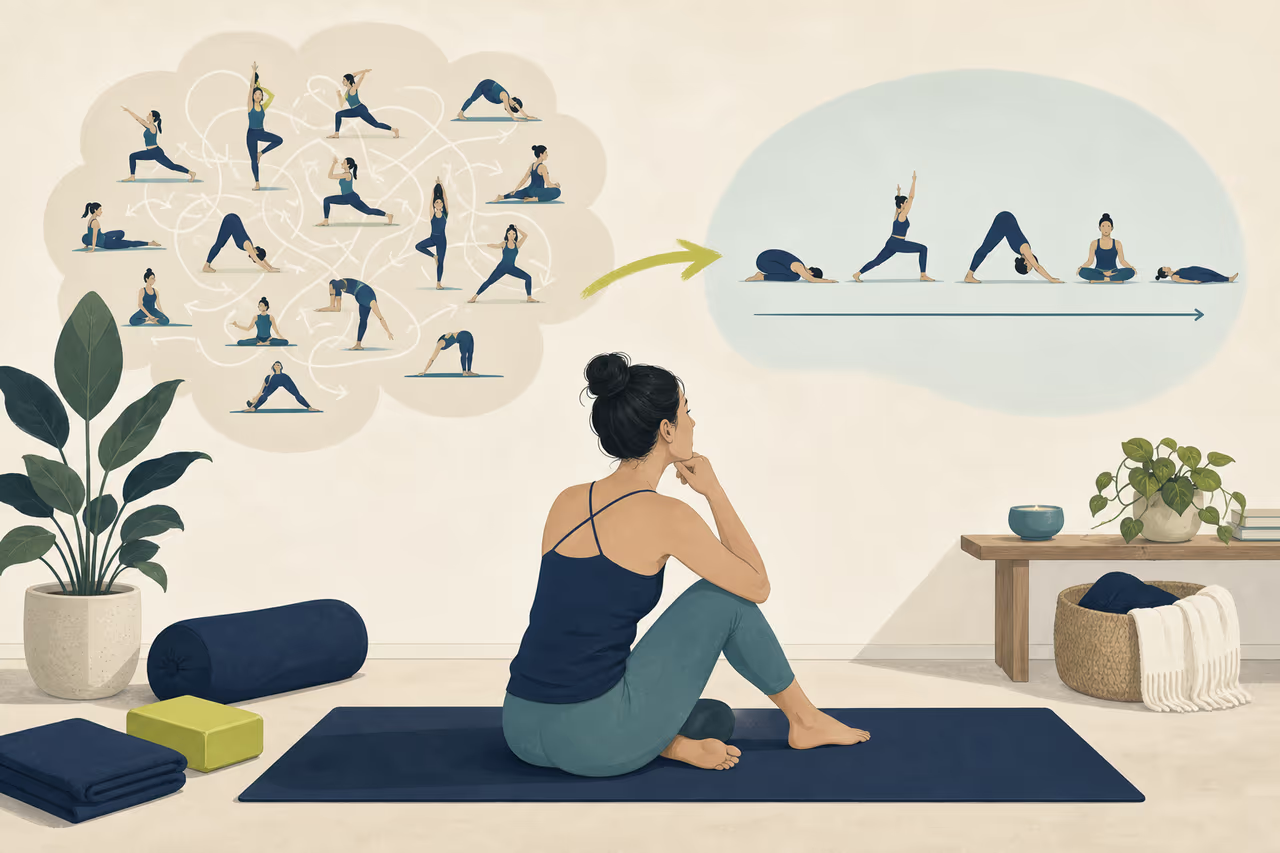
Setting Simple Constraints to Protect Your Energy
To protect your energy for actual movement, remove daily choices entirely. Predeciding your routine ahead of time shifts the mental load away from the moment you want to practice.
Adults can work toward 150 to 300 weekly minutes of moderate aerobic activity and muscle strengthening on at least two days, according to broad physical activity guidelines. Structuring your home yoga around these milestones without overcomplicating the daily entry barrier makes adherence much simpler.
| Approach | Traditional Open-Ended Practice | Constraint-Based Practice |
|---|---|---|
| Selection Time | Right before practice, while tired | Once a week (e.g., Sunday evening) |
| Library Access | Endless scrolling across multiple apps | One saved bookmark or pre-assigned format |
| Duration Anxiety | Debating 20, 30, or 60 minutes daily | Fixed duration locked in for the week |
| Failure Mode | Abandoning practice due to indecision | Executing a pre-planned minimum version |
Predeciding your routine reduces mental friction, though it comes with a trade-off by limiting spontaneous exploration of new styles. Trading novelty for consistency, however, is usually what transforms a sporadic habit into a reliable routine.
The Two-Step Home Yoga Rule
Actionable constraints help bridge the gap between intention and execution. Implement these steps to simplify your home practice:
- Select one default sequence length and style on Sunday evening for the entire week. Remove the daily debate by mapping out exactly what days you will move and for how long.
- Remove bookmark folders of unplayed videos to eliminate browsing temptation. If you only have one designated video or sequence assigned for the day, you cannot get lost in recommendations.
- Commit to a minimum viable movement version on low-energy days rather than skipping. If your planned session is thirty minutes, allow yourself a ten-minute mobility flow to keep the habit loop intact.
- Explore structured alternatives if self-directed variety continues to cause friction. When solo routines stall out, external guidance can do the heavy lifting.
When Self-Directed Practice Stops Being Enough
Self-guided home practice offers maximum flexibility, but it lacks external accountability when motivation dips. You might find that after a few weeks of strict self-management, life gets busy, decision fatigue creeps back in, and your mat stays rolled up in the corner.
When self-directed choices stall, step back from open-ended libraries, lock in a single repeatable format for two weeks, or look outside your living room for support. A lack of progress is rarely a failure of discipline; it is often a signal that your current system requires too much maintenance.
Finding Structure and Accountability
If simple constraints and solo rules are no longer generating consistency, it is usually time to introduce an external framework. Having someone else curate the progression removes the mental burden of planning entirely.
Prime Tempr helps readers find a trainer, studio or trainer-shared programme that can add structure and accountability after a self-directed routine stops being enough. Whether you choose to browse yoga programmes with pre-set weekly schedules or find ongoing practice support through local studios, shifting from a solo guess-and-check method to a guided path can revitalize your movement habit.
For further tips on establishing sustainable habits, read our guide on how to build a consistent home yoga practice without starting over.
Sources
- Physical activity, World Health Organization (WHO): https://www.who.int/news-room/fact-sheets/detail/physical-activity (opens in a new tab)
- Top 10 Things to Know About the Physical Activity Guidelines, Office of Disease Prevention and Health Promotion (ODPHP): https://odphp.health.gov/our-work/nutrition-physical-activity/physical-activity-guidelines/current-guidelines/top-10-things-know (opens in a new tab)
- Physical activity (opens in a new tab)
- Top 10 Things to Know About the Physical Activity Guidelines (opens in a new tab)
Watch alongside this guide
A 22-minute home yoga practice
Use the session as a realistic practice option while testing the article's advice on consistency and manageable scope. Source: Yoga With Adriene. This optional video is context, not evidence or personal instruction.
The YouTube player stays unloaded until you choose to watch. Loading it connects to YouTube and may allow that service to process usage data.