How to Practise Yoga With Family at Home Without the Chaos
Practising family yoga at home requires realistic steps for shared movement, managing conflicting schedules, and finding professional support.
https://primetempr.com/blog/how-to-practise-yoga-with-family-at-home-without-the-chaos
Practising yoga as a family at home succeeds when you treat movement as a shared, flexible invitation rather than a rigid group class or a silent meditation retreat. Sustaining a home practice usually collapses under conflicting schedules, different energy levels, and rigid expectations of silence or perfection. When you drop the requirement for total stillness and matching mats, home movement becomes far more accessible.
Any amount of physical activity is better than none, all activity counts, and muscle strengthening benefits everyone. Public health guidelines note that adults can work toward 150 to 300 weekly minutes of moderate aerobic activity and muscle strengthening on at least two days. Integrating short, accessible movement moments into a household routine contributes to these general activity goals without needing an intimidating studio environment.
Why Family Yoga at Home Feels Harder Than It Should
The primary reason home family yoga fails is the mismatch between idealized expectations and living room realities. Expecting total silence and stillness with children, teenagers, or a distracted partner creates immediate resistance. Treating the session as a strict, solemn workout rather than exploratory movement makes family members feel judged or bored.
Another common failure mode is quitting entirely after a single week where no one wanted to participate. Energy levels fluctuate wildly across a household. If one person wants a vigorous stretch while another feels exhausted after work or school, a uniform routine will cause friction.
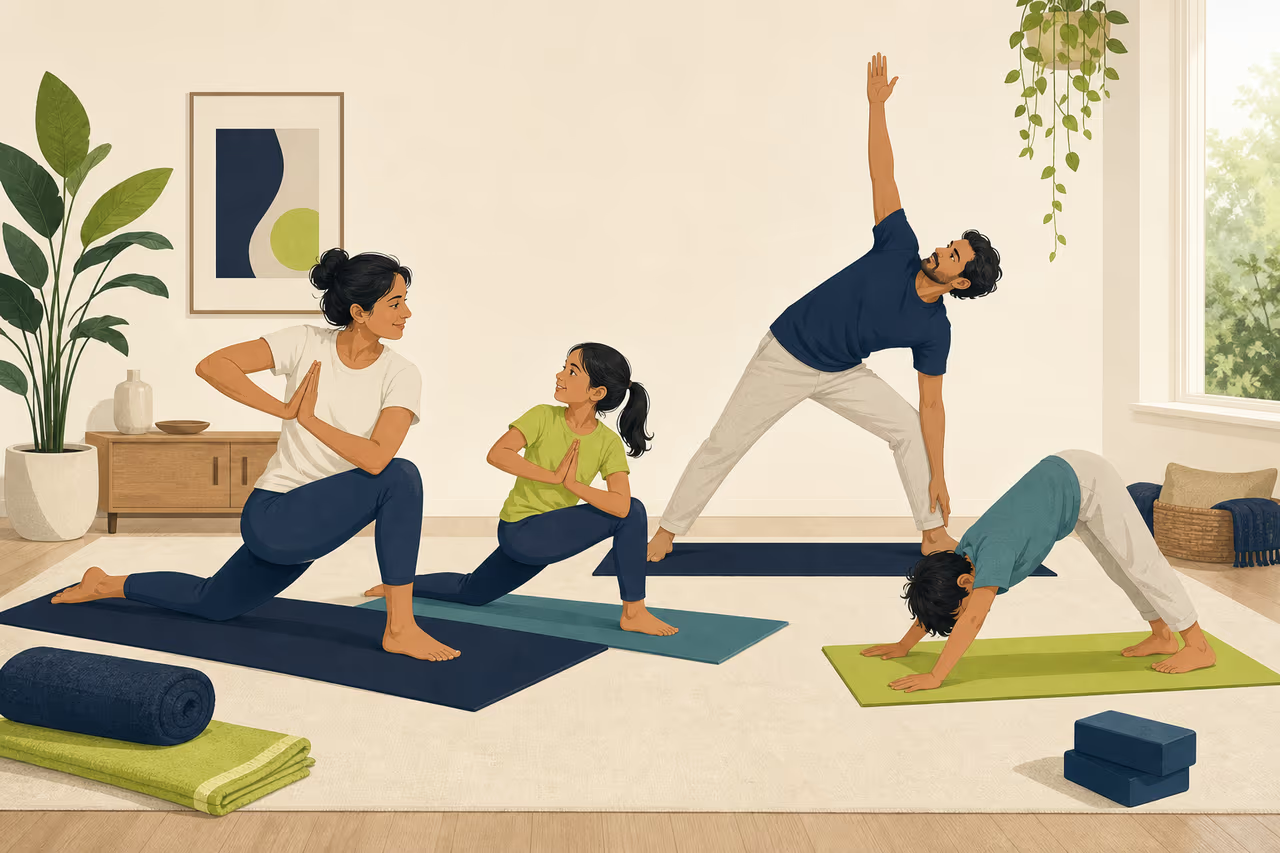
Setting Realistic Expectations for Shared Movement
Family yoga trades deep personal focus and quiet introspection for shared connection and low-friction movement. You are not running a certified studio class; you are creating space to move together.
Accept that session lengths do not need to mirror a 60-minute studio class. Keeping initial sessions between 5 to 10 minutes matches varying attention spans and prevents resistance. Allow family members to opt out, modify movements, or lie down on the floor without guilt. All activity counts, and even a brief floor stretch or mobility break fulfills the core objective of moving the body.
Building a Low-Friction Routine That Actually Lasts
Creating a sustainable household movement habit requires practical scheduling and honest trade-offs. The following checklist outlines a step-by-step approach to starting your family practice without overwhelming your schedule.
- Choose a low-pressure time slot: Pick a window that does not compete with chaotic pre-dinner cooking, late work emails, or rigid bedtimes. Weekend mornings or a quiet afternoon slot often work best.
- Keep initial sessions brief: Limit the first few weeks to 5 or 10 minutes. Consistency matters far more than duration when building a new habit.
- Keep instructions simple: Focus on basic movements like cat-cow stretches, gentle spinal twists, or standing reaches. Avoid complicated sequences that require constant supervision.
- Remove performance pressure: Let participants move at their own pace. If someone finds a pose silly or prefers to sit out a round, let them observe without commentary.
When a shared family routine falls apart, scale back to a casual five-minute floor stretch or a simple movement break without demanding a formal practice.
When Self-Directed Practice Needs More Structure
Self-guided home sessions lack external accountability, making it harder to sustain momentum over months. When initial enthusiasm fades or scheduling conflicts pull everyone in different directions, relying purely on self-motivation often leads to stopping entirely.
If your self-directed routine stops being enough to keep everyone engaged, external guidance can bridge the gap. Prime Tempr helps readers find a trainer, studio or trainer-shared programme that can add structure and accountability after a self-directed routine stops being enough. Professional guidance introduces fresh ideas, keeps participants safe, and removes the burden of planning every session yourself.
To explore options that fit your household schedule, you can browse yoga programmes or find ongoing practice support from experienced local professionals. For a deeper dive into solo habits, read our guide on how to build a consistent home yoga practice without starting over.
Family Home Practice Starter Guide
Use this concise decision guide to implement your home practice safely and realistically:
- Choose a low-pressure time slot that does not compete with major daily stressors like meals or bedtimes.
- Keep initial sessions between 5 to 10 minutes to match varied attention spans and physical capacities.
- Allow family members to opt out or modify movements without guilt or pressure to perform.
- Explore a trainer-led programme or local studio if self-directed practice loses momentum or you need expert progression.
Sources
- Physical activity (opens in a new tab) - World Health Organization
- Top 10 Things To Know About the Physical Activity Guidelines (opens in a new tab) - Office of Disease Prevention and Health Promotion
Watch alongside this guide
A 22-minute home yoga practice
Use the session as a realistic practice option while testing the article's advice on consistency and manageable scope. Source: Yoga With Adriene. This optional video is context, not evidence or personal instruction.
The YouTube player stays unloaded until you choose to watch. Loading it connects to YouTube and may allow that service to process usage data.