How to Practise Walking Meditation: A Clear, Practical Guide
Learn how to practise walking meditation safely using a step-by-step beginner guide, practical limits, and a simple 5-minute checklist.
https://primetempr.com/blog/how-to-practise-walking-meditation-a-clear-practical-guide
Walking meditation blends slow, deliberate movement with attentive breath or step awareness. It offers a gentle alternative to seated stillness while remaining a flexible practice with mixed individual responses.
Many people want to try mindfulness while moving, but feel unsure how to coordinate physical steps with breath or attention without feeling awkward. If you find seated meditation uncomfortable or difficult to maintain, moving awareness into your feet and breath provides a grounded, accessible starting point.
What is walking meditation?
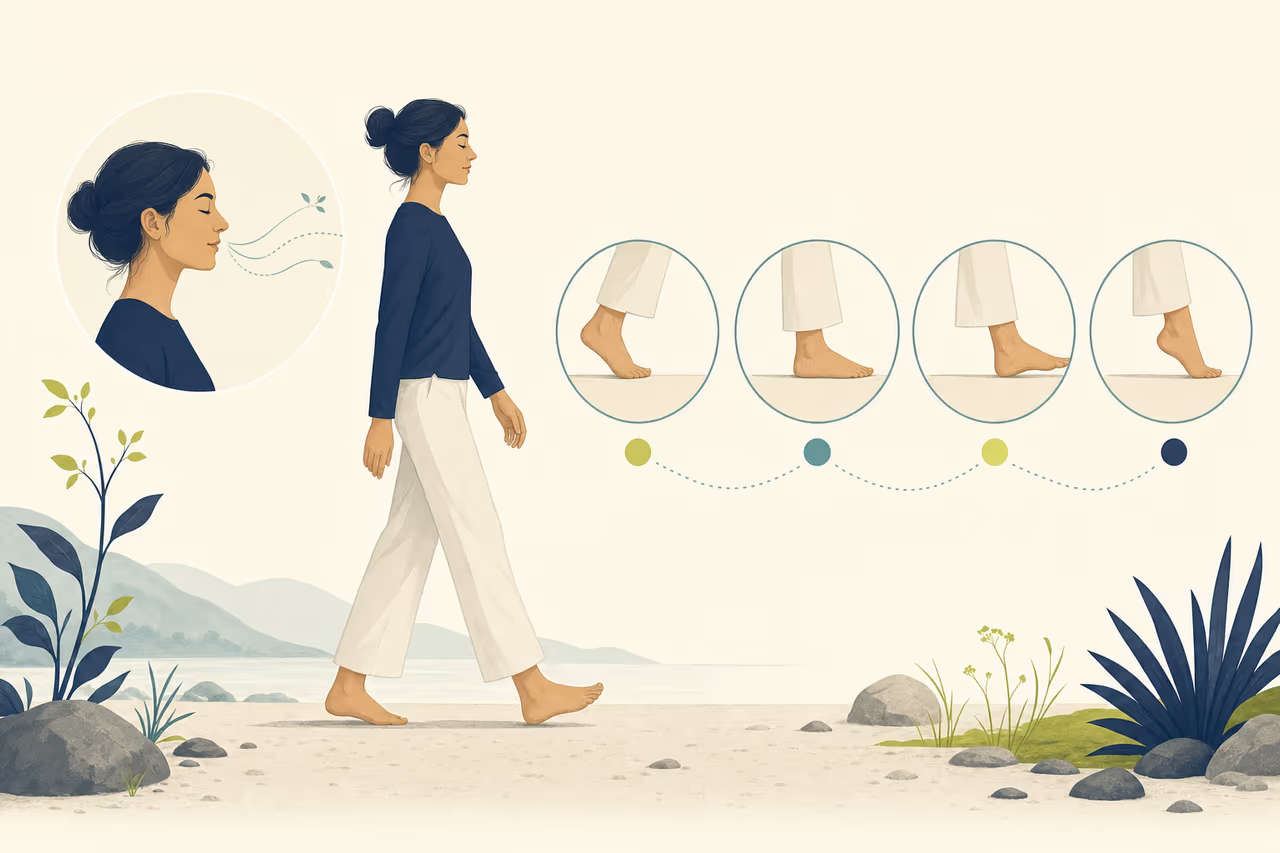
Walking meditation is an active mindfulness practice where attention rests on the physical sensations of walking rather than an internal anchor like the breath alone. Instead of trying to clear your mind or reach a specific mental state, you notice the mechanics of movement: the heel striking the ground, the weight shifting across the arch, and the toes lifting for the next step.
This approach connects active daily life and restful stillness. However, meditation practices vary, and research shows mixed outcomes, with a minority of participants reporting negative experiences. Understanding these realities helps you approach the practice without unrealistic expectations or pressure to achieve a specific emotional state.
How to set up your practice space
Choosing the right environment makes it easier to sustain attention without becoming distracted by external hazards. For your first sessions, select a quiet, unobstructed indoor or outdoor path.
- Distance: A short path of 10 to 20 paces works best. This length lets you turn around smoothly without losing your rhythm or getting distracted by navigation.
- Pace: Walk slightly slower than your normal everyday pace, but maintain a natural, comfortable posture.
- Duration: Set a gentle timer for 5 minutes so you do not have to watch a clock or worry about how long you have been moving.
If your mind races or walking feels mechanical, slow your pace further, shorten your route to a few metres back and forth, or pause to reset your breath. Never force your body into an uncomfortable posture or a rigid tempo.
Step-by-step walking meditation practice
Coordinating your steps and breathing does not require a complex mathematical formula. Start by walking at your adjusted, slower pace while keeping your gaze soft and directed a few paces ahead on the ground.
- Establish your baseline: Stand still for a few moments, feel the contact of your feet on the floor, and take two or three natural breaths.
- Begin walking: Step forward with either foot. Notice the physical sensation of lifting, moving, and placing each foot down.
- Integrate your breath: You can match your steps to your breath naturally,for example, taking two steps as you inhale and two steps as you exhale,or simply let the breath flow independently while your primary focus remains on the soles of your feet.
- Handle distractions: When your mind wanders, gently return your focus to your steps without self-criticism. Wandering is a normal part of any mindfulness practice, not a failure.
- Conclude the session: When your timer sounds, pause, stand still for a few breaths, and notice how your body feels before returning to your regular routine.
Limitations, trade-offs, and when to seek support
While moving mindfulness can be a helpful tool for relaxation and self-awareness, it comes with important practical limits. Relaxation approaches include breathing, guided imagery, and progressive relaxation, but they should not replace conventional medical or psychological care. If you are managing significant stress, trauma, or health concerns, mindfulness techniques should complement, rather than substitute for, professional treatment. Individual responses to meditation vary widely. While many people find relief and grounding, some experience discomfort, heightened anxiety, or frustration when trying to quiet their minds. If you feel dizzy, distressed, or overly fatigued, stop the session immediately.
Because self-guided practice has its limits, working with an experienced professional can help you navigate these nuances safely. Prime Tempr helps readers find trainers who can explain breathing and meditation in context, so an introductory article becomes a starting point rather than a substitute for responsive guidance. Exploring Breathwork & Meditation or reviewing guides like How to Start Meditating for Beginners: A Practical Guide can help you decide your next step, whether that means continuing solo or connecting with qualified teachers through our platform to Find guided breath and meditation support.
Your First 5-Minute Walking Meditation Checklist
- Choose a quiet, unobstructed indoor or outdoor path of 10 to 20 paces.
- Set a gentle timer for 5 minutes so you do not have to watch a clock.
- Begin walking slightly slower than your normal, everyday pace.
- Notice the physical sensation of lifting, moving, and placing each foot.
- When your mind wanders, gently return your focus to your steps without self-criticism.
- Stop if you feel dizzy, distressed, or overly fatigued.
Sources
- Meditation and Mindfulness: Effectiveness and Safety (opens in a new tab), National Center for Complementary and Integrative Health
- Relaxation Techniques: What You Need To Know (opens in a new tab), National Center for Complementary and Integrative Health
Watch alongside this guide
Breathing meditation
This short guided meditation lets you follow the basic attention and breathing ideas described in the article. Source: UCLA Health. This optional video is context, not evidence or personal instruction.
The YouTube player stays unloaded until you choose to watch. Loading it connects to YouTube and may allow that service to process usage data.