How to Practise Getting Up From A Chair With More Control
Master smooth chair rises using everyday leg strength, stable positioning, and mindful physical control for daily independence.
https://primetempr.com/blog/how-to-practise-getting-up-from-a-chair-with-more-control
Standing up from a chair with more control relies on intentional weight shifting and lower body engagement rather than sudden momentum or forceful arm pushing. Any amount of physical activity is better than none, all activity counts, and muscle strengthening benefits everyone. When daily tasks feel abrupt or heavy, simple physical adjustments can make movement smoother and more sustainable.
Why chair control matters for daily life
Getting up from a chair is one of the most frequent functional movements in daily life, underpinning long-term independence. Whether rising from a desk, a dining seat, or public transport, lower body strength dictates how easily this transition happens. Any amount of physical activity is better than none, all activity counts, and muscle strengthening benefits everyone. Building confidence in this movement pattern supports overall physical resilience without requiring complex gym routines or heavy weights.
A minimum version to start today
If time or energy is short, you can begin with a minimal version right at your desk. Sit near the front edge of your seat, place your feet firmly on the floor, and practise leaning your torso forward from the hips without actually standing up. This brief weight shift activates the leg muscles and familiarises your body with the initial phase of rising. Any amount of physical activity is better than none, all activity counts, and muscle strengthening benefits everyone.
Step-by-Step practice for controlled movement
Approaching this skill methodically helps prevent abrupt movements and reduces unnecessary joint strain during everyday transitions.
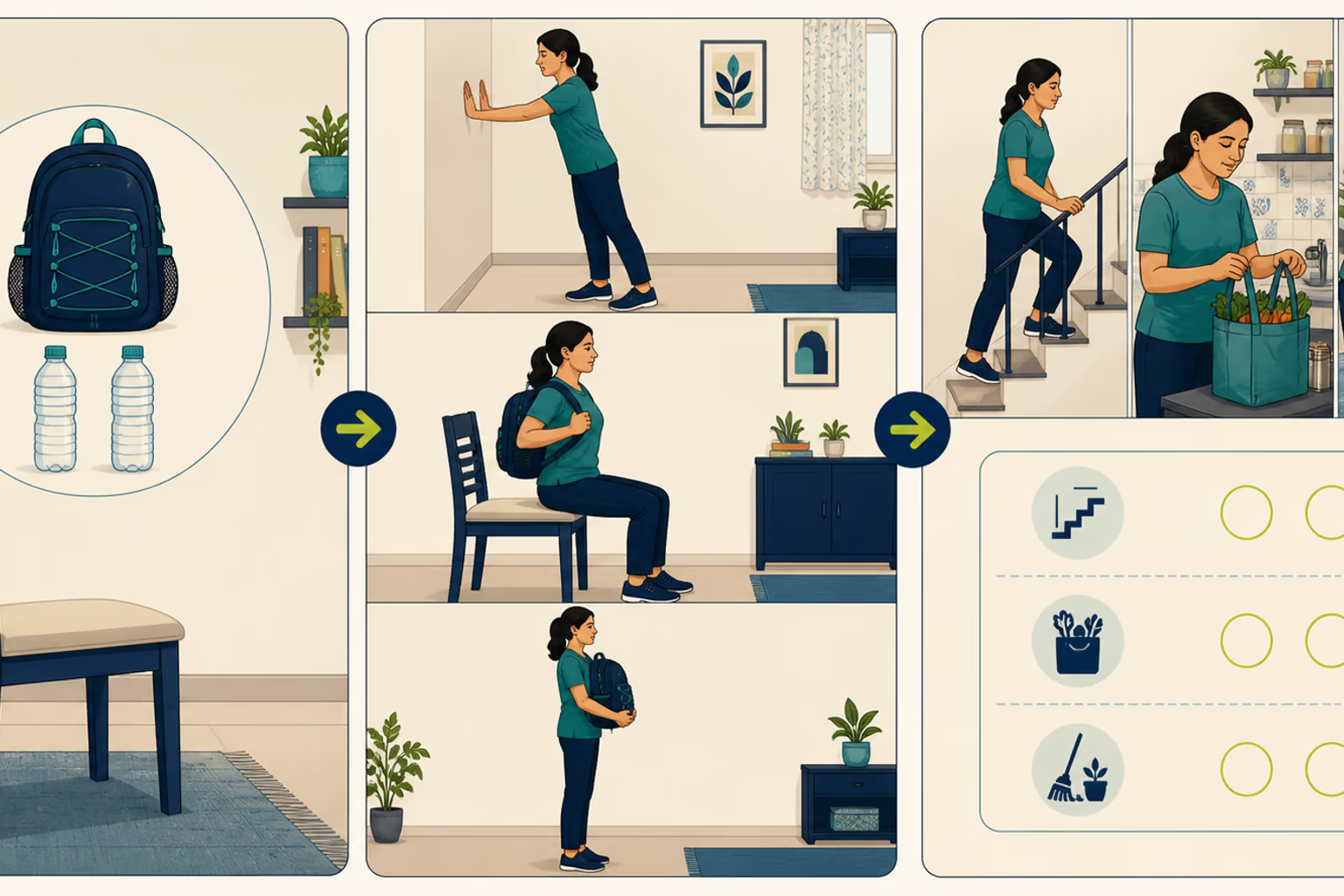
- Choose a stable, non-sliding chair at a comfortable height.
- Plant your feet firmly hip-width apart with knees tracking over toes.
- Hinge slightly forward from the hips before initiating the rise.
- Press evenly through both feet to stand with steady, controlled momentum.
- Lower back down slowly with control on the return phase.
Adults can work toward 150 to 300 weekly minutes of moderate aerobic activity and muscle strengthening on at least two days. Integrating this movement into your week contributes directly to that strengthening goal.
Recognizing trade-offs and failure modes
Practising chair rises builds functional lower body strength for daily independence, but it does not replace a comprehensive physical activity routine or medical treatment for joint pain. Common failure modes include relying entirely on sudden momentum or using hands to push off forcefully without engaging lower body control. Another frequent challenge is attempting too deep a seated angle too soon without supporting stable setup. If a full chair rise feels too demanding on a given day, reduce the depth using a higher seat cushion, use firm arm support, or focus purely on controlled eccentric lowering before standing.
Your Sit-to-Stand practice checklist
- Choose a stable, non-sliding chair at a comfortable height.
- Plant your feet firmly hip-width apart with knees tracking over toes.
- Hinge slightly forward from the hips before initiating the rise.
- Press evenly through both feet to stand with steady, controlled momentum.
- Lower back down slowly with control on the return phase.
Choosing your next step with guidance
While simple home practice is an effective starting point, personal constraints or changing physical needs can make professional guidance valuable. Prime Tempr helps readers compare strength, yoga and mobility trainers who can turn general everyday goals into an appropriately progressed practice. Working with a qualified guide ensures your routine matches your personal context, whether you practise in a busy household or seek tailored feedback on your mechanics. Adults can work toward 150 to 300 weekly minutes of moderate aerobic activity and muscle strengthening on at least two days, and a local professional can help you structure those sessions safely.
For further exploration of functional fitness, you can read more about Strength for Everyday Life or Build useful strength with guidance.
Follow-along reflection
Use these prompts to review the movement in context, without treating it as a fixed medical rule.
Questions to carry forward
- Why does getting up from a chair feel difficult on some days?
- How can I practise sit-to-stand movements safely at home?
- What is the minimum version of this practice if I am short on time or energy?
- How do I know if I need a trainer or studio guide to help me progress?
- How often should I incorporate muscle strengthening into my routine?
Sources
- Physical activity (opens in a new tab), World Health Organization
- Top 10 Things to Know About the Physical Activity Guidelines (opens in a new tab), U.S. Department of Health and Human Services
Watch alongside this guide
Functional training explained
This ACE Fitness overview adds visual context for linking strength practice to everyday tasks while the article provides the more specific home progression.
The YouTube player stays unloaded until you choose to watch. Loading it connects to YouTube and may allow that service to process usage data.