How to Practise Controlled Stair Climbing Without Racing
Build lasting leg strength and steady breath control on stairs without rushing or heavy equipment.
https://primetempr.com/blog/how-to-practise-controlled-stair-climbing-without-racing
Rushing up a flight of stairs leaves you breathless and tense, but avoiding them weakens the leg strength needed for daily independence. Many people treat stairs as a race against the clock, relying on momentum rather than muscular control. This habit creates unnecessary strain and leaves you depleted before the day even begins.
Controlling your pace on stairs builds durable leg strength and breath awareness more effectively than racing to the top. When you slow down, you give your muscles time to engage properly, turning a mundane chore into a steady strength practice.
Why stair climbing feels like a race
Habit and time pressure often turn every flight of stairs into an emergency sprint. When you rush, you rely on sudden bursts of momentum rather than engaging your leg muscles. This causes ragged breathing and joint discomfort, reinforcing the idea that stairs are exhausting rather than strengthening.
Relying entirely on momentum is a common failure mode. Another is attempting too many flights at once, which strains the knees and spikes your heart rate unnecessarily. Treating stair practice as a cardio race instead of a strength exercise prevents your lower body from adapting in a healthy, sustainable way.
The case for slow and steady movement
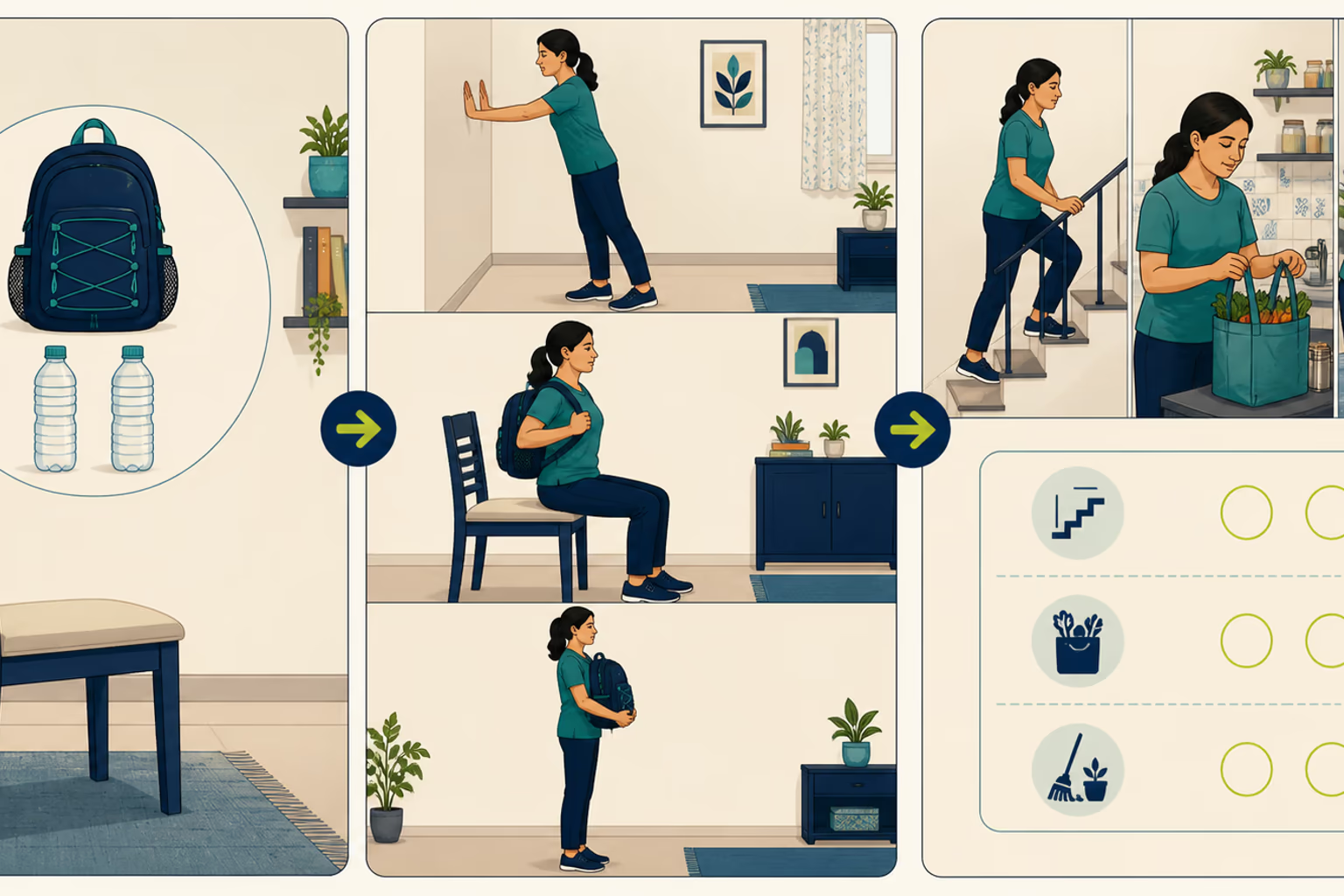
Any amount of physical activity is better than none, all activity counts, and muscle strengthening benefits everyone. When applied to everyday movements like climbing stairs, this principle changes how you interact with your environment. Public health guidance notes that adults can work toward 150 to 300 weekly minutes of moderate aerobic activity and muscle strengthening on at least two days.
Climbing stairs with control counts toward this effort. It builds lower body resilience without requiring a gym membership or complicated equipment. However, there are trade-offs to keep in mind. Controlled stair climbing takes longer than rushing, requiring patience during busy daily routines. It also does not replace a complete aerobic endurance routine, but it provides an accessible foundation for lower body strength.
How to practise stair control at home
You do not need special equipment to build strength on stairs. You only need a single flight and a willingness to slow your tempo.
The minimum version of this practice involves ascending just half a flight of stairs using a sturdy handrail, focusing entirely on placing your whole foot on each step. The normal version involves climbing one or two full flights at an even, conversational pace, pausing briefly if your breathing becomes ragged.
Controlled Stair Practice Checklist
- Position your whole foot securely on each stair tread before lifting your body weight.
- Keep your torso upright without leaning heavily on the handrail for lifting.
- Ascend at an even, conversational tempo without rushing.
- Pause briefly between flights if your breathing becomes ragged.
- Limit your initial practice to one or two flights of stairs.
Knowing your limits and seeking guidance
Slow, steady progress keeps practice safe, but every body has different needs. If you experience sharp joint discomfort, stop the practice immediately. Static guidance is not enough if you are recovering from a lower-body injury or managing chronic pain.
When you want personalized progression, Prime Tempr helps readers compare strength, yoga and mobility trainers who can turn general everyday goals into an appropriately progressed practice. A qualified professional can help you scale your routine to match your home environment and physical history. To explore professional support, you can Build useful strength with guidance or review A Beginner Strength Plan for Climbing Several Flights of Stairs.
Follow-along reflection
Use the prompts below to review the idea in context, without turning it into a diagnosis or a fixed rule.
Trade-offs to keep in view
- It does not replace aerobic endurance training but builds crucial lower-body strength.
If this approach does not fit
Slow down your cadence, use a sturdy handrail for balance, reduce the number of steps practised in one session, and consult a qualified trainer if joint discomfort occurs.
Questions to carry forward
- Why does stair climbing often feel exhausting instead of strengthening?
- How can I practise stair control at home without special equipment?
- What is the difference between racing up stairs and stepping with control?
- How do physical activity guidelines support everyday movements like stairs?
- When should I seek guidance from a professional trainer?
Sources
- Physical activity (opens in a new tab), World Health Organization.
- Top 10 Things to Know About the Physical Activity Guidelines (opens in a new tab), Office of Disease Prevention and Health Promotion.
Watch alongside this guide
Functional training explained
This ACE Fitness overview adds visual context for linking strength practice to everyday tasks while the article provides the more specific home progression.
The YouTube player stays unloaded until you choose to watch. Loading it connects to YouTube and may allow that service to process usage data.