How to Practise Balance Safely in a Narrow Space
Practise balance safely in tight corridors or small rooms using reliable wall support, modified stances, and controlled movements.
https://primetempr.com/blog/how-to-practise-balance-safely-in-a-narrow-space
Practising balance in a narrow hallway, small bedroom, or shared living area does not require wide clearance or expensive gear. By leaning on walls, adjusting your stance length, and treating stability as a controlled micro-movement, you can build strength safely right where you live. Any amount of physical activity is better than none, all activity counts, and muscle strengthening benefits everyone. Adults can work toward 150 to 300 weekly minutes of moderate aerobic activity and muscle strengthening on at least two days.
When your corridor or bedside floor is restricted by walls, doors, or furniture, forcing traditional wide yoga stances leads to frustration and bumped elbows. Instead of abandoning movement, you can adapt your posture to fit the perimeter you actually have.
The reality of narrow-space balance work
Working on stability in cramped quarters involves distinct trade-offs. Narrow-space balance limits wide lateral movements and dynamic pacing. When you cannot step out wide for traditional warrior stances or expansive side stretches, your routine must rely on vertical alignment and linear weight shifts. Reliance on nearby walls or doorframes changes how weight is distributed compared to open-room floor work. This is not a disadvantage if you use it intentionally. Light contact with a vertical surface provides feedback and security, allowing you to focus on muscular engagement rather than fear of falling.
Trying to force wide traditional yoga stances in a hallway that is too narrow creates friction with your environment. Another common failure mode is refusing to use wall or furniture support out of pride, which often leads to abrupt stumbles. Finally, rushing transitions on slippery floors or uneven tiles compromises your joints. If a narrow stance feels too unsteady or cramped, widen your contact points using a wall for light fingertip support, shorten your range of motion, or transition to seated stability work until your joints adapt.
Setting up your narrow practice perimeter
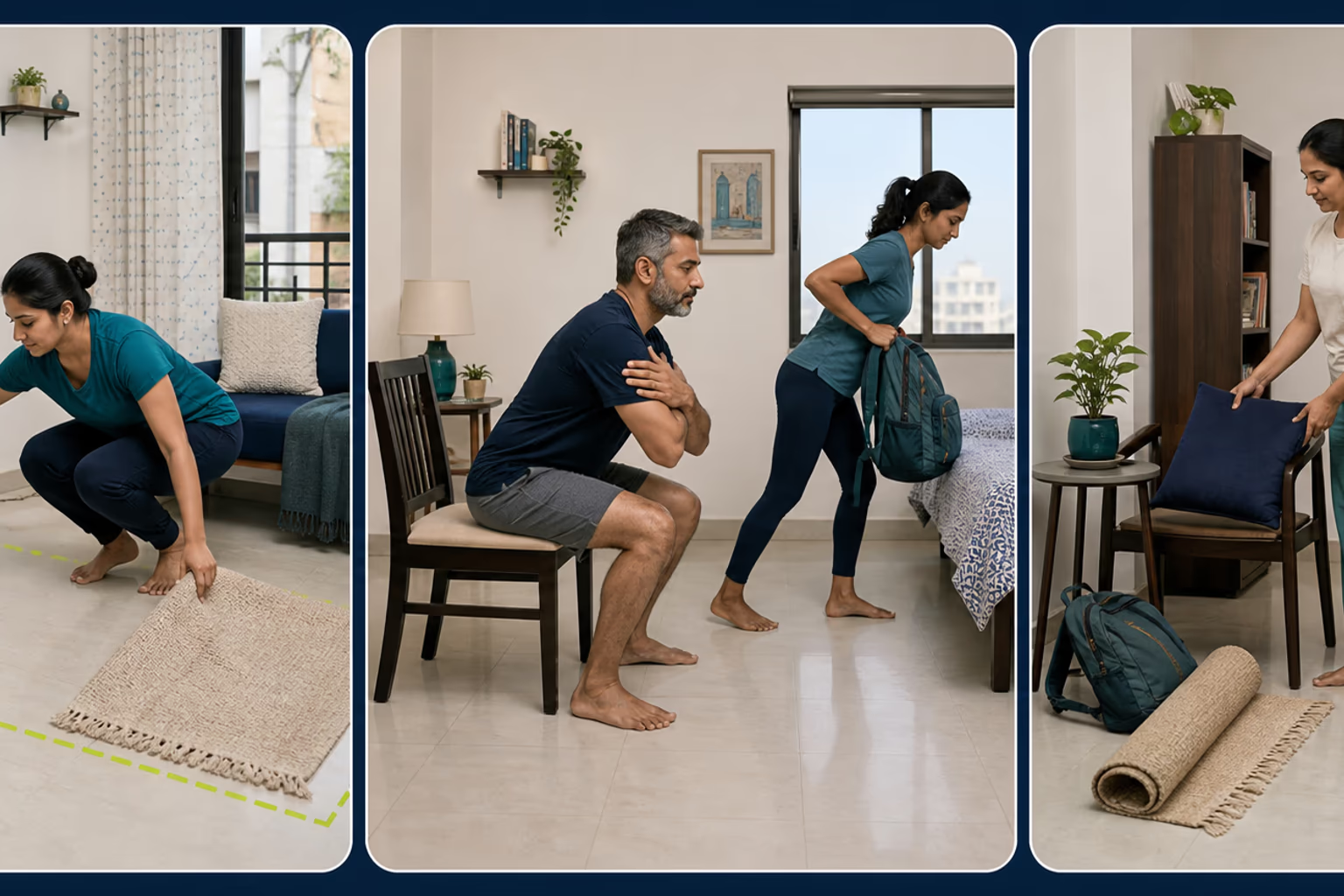
You do not need to rearrange your living room or buy specialized floor mats to begin. Clear a strip of floor just long enough for your mat or standing foot placement. Check the area for sharp furniture corners, electrical cords, or loose rugs that could catch your heel.
Positioning yourself parallel to a wall allows you to use minimal space while keeping a safety net within reach. Wear bare feet or high-friction grip socks to prevent slipping on smooth laminate or tile flooring. Keeping your movements slow and deliberate ensures that even if a small pet or family member walks past, you retain complete control over your center of gravity.
Three wall-supported balance modifications
You can modify standard balance postures to suit restricted floor plans without losing the muscular benefit.
- The Wall-Glance Mountain Pose: Stand with one shoulder roughly two inches away from a solid wall. Press your feet into the floor while letting the outer edge of your hip or shoulder rest lightly against the vertical surface if you sway. This removes the panic of tipping sideways.
- The Tandem Heel-to-Toe Stance: Instead of stepping wide, place one foot directly in front of the other in a straight line, matching the geometry of a narrow hallway. Keep your fingertips resting against the doorframe or wall ahead of you to moderate the challenge.
- The Micro-Lift Single-Leg Stand: Lift one foot only an inch off the floor rather than drawing the knee high toward your chest. This keeps your center of gravity low and prevents your lifted leg from swinging into surrounding furniture.
Narrow-Space balance safety checklist
Use this structured checklist before every home session to ensure your practice remains safe and controlled.
- Check your immediate perimeter for sharp furniture corners, electrical cords, or loose rugs.
- Position yourself near a stable wall, doorframe, or heavy piece of furniture for light fingertip support.
- Wear bare feet or grip socks to prevent slipping on smooth flooring.
- Keep movements slow and controlled, focusing on a fixed eye-gaze point rather than depth.
- Stop immediately if you feel joint pain or dizziness.
When practising movement in small or shared households, consistency matters more than expansive gestures. Prime Tempr helps home exercisers find trainers who offer online sessions, prop-light programmes and realistic modifications for the space they actually have.
When to get professional guidance
Static articles and self-guided checklists provide a starting point, but they cannot replace individualized feedback. If you experience persistent joint discomfort, recurring dizziness, or uncertainty about how to adapt movements for a specific structural limitation at home, working directly with a qualified professional is essential. A trained instructor can observe your alignment during online sessions and tailor prop-light programmes to your exact room dimensions. Explore our resources to Find a home-practice trainer or read more about Small-Space Home Exercise for additional ways to maintain your routine.
Sources
- Physical Activity (opens in a new tab), World Health Organization
- Top 10 Things to Know About the Physical Activity Guidelines (opens in a new tab), Office of Disease Prevention and Health Promotion
Watch alongside this guide
Yoga for complete beginners
This complete beginner session shows how a guided practice can fit into one mat-sized area. Pause freely, use stable support and skip movements that do not suit the room or body.
The YouTube player stays unloaded until you choose to watch. Loading it connects to YouTube and may allow that service to process usage data.