How to Plan Exercise When Tomorrow Is Unpredictable
Maintain daily movement when schedules shift constantly by using flexible routines and minimum viable fallback plans for unpredictable days.
https://primetempr.com/blog/how-to-plan-exercise-when-tomorrow-is-unpredictable
Traditional fitness advice assumes a predictable calendar, leaving many adults feeling like they failed when late nights, family duties, or shifting work hours disrupt the plan. When tomorrow is entirely uncertain, rigid weekly schedules break down quickly. Adult sleep and daily recovery needs vary widely, making strict routines difficult to maintain without flexible adjustments.
Relying entirely on a fragile early morning time slot means one late night collapses the entire plan. Instead of treating missed sessions as a broken streak that requires starting over, or attempting to make up for lost time with a punishing, overly long session, you can design a system that survives real-world friction.
Why rigid exercise schedules fail when days get chaotic
Standard wellness guides often demand fixed morning hours and identical daily calendars. When a late shift, family obligation, or unexpected errand interrupts that single window, the entire day is written off as a loss. This all-or-nothing mindset ignores the reality of modern life, where desk jobs, family duties, and changing responsibilities mean no two days look alike.
Adult sleep and daily recovery needs vary, meaning your energy and available time will naturally fluctuate. Trying to force a rigid structure onto an unpredictable schedule creates unnecessary guilt. The solution is not to try harder to wake up earlier, but to change how you structure the goal itself. Consistency does not require an identical daily schedule; it survives by maintaining a minimum viable movement version that fits into unpredictable days.
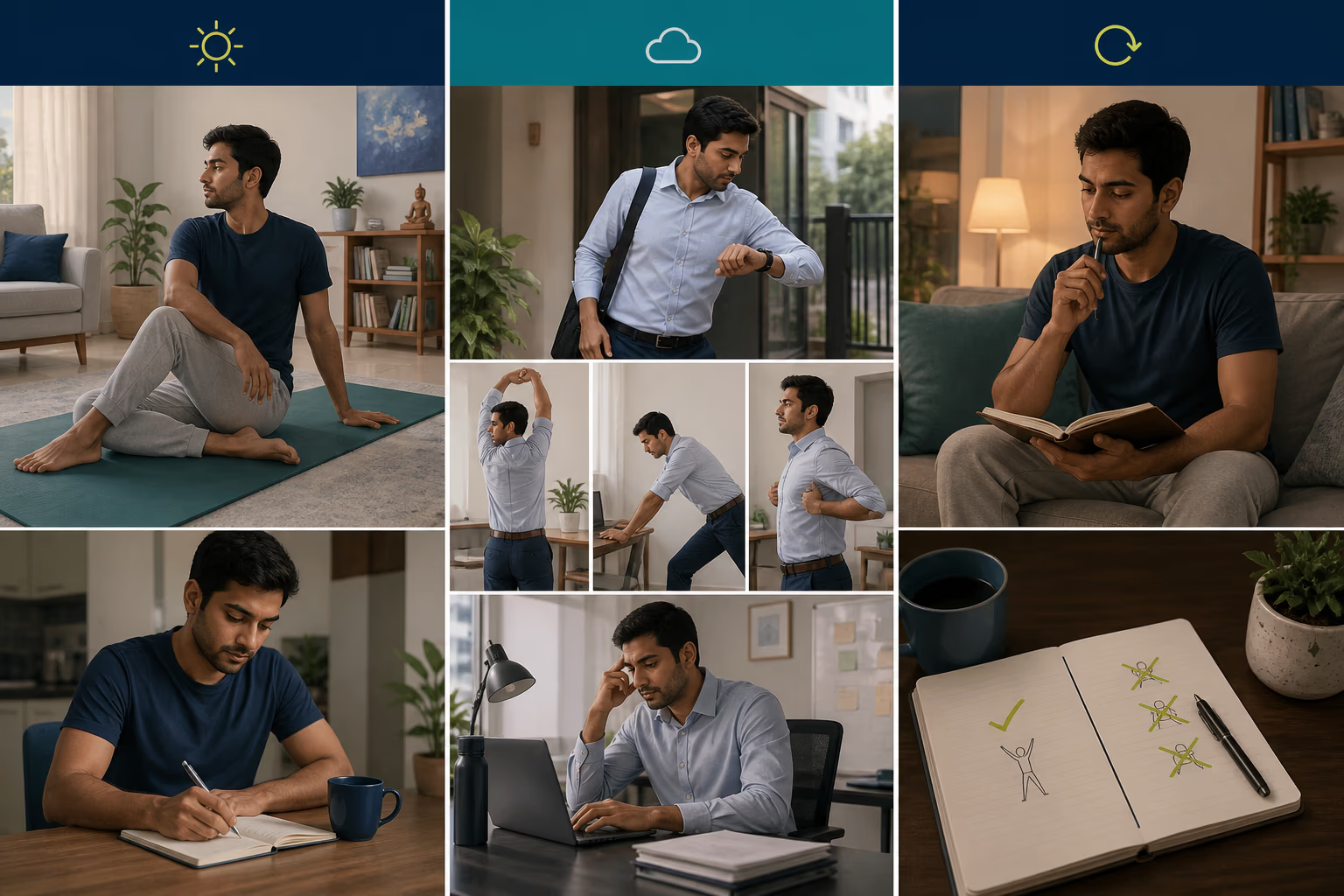
Designing your minimum and normal practice versions
When your calendar is volatile, having a single workout length is a liability. Instead, separate your movement into two distinct formats: a normal session for standard days and an emergency minimum version for chaotic days.
Relaxation approaches like controlled breathing and gentle movement can support daily wellbeing when adapted to individual constraints. On a normal day, you might have twenty-five minutes for a complete sequence. On a chaotic day, you drop down immediately to a seven-minute minimum fallback version rather than abandoning movement altogether.
- Normal Practice: A twenty-five to thirty-minute session that builds strength, mobility, and deeper unwinding when time permits.
- Minimum Fallback Version: A seven-minute sequence of gentle movement and breathing designed to keep the habit alive during high-friction days.
Shorter, flexible routines build less peak intensity than structured long sessions, but they survive real-world disruptions much more reliably. Letting go of the satisfaction of an identical daily calendar is the trade-off required for long-term consistency.
Anchoring movement to daily reality instead of strict clocks
Instead of anchoring your exercise to a fragile hour on the clock, attach movement to existing daily events. Tie your practice to coming home from work, finishing morning tea, or starting your post-dinner wind-down.
When your trigger is an event rather than a specific time, the routine becomes portable. If your evening gets delayed by an hour, the anchor simply shifts with it. This approach accommodates changing work hours, household chores, and shifting family commitments without breaking your rhythm.
Using flexible tools to adapt your routine day by day
Adapting to an unpredictable schedule requires having your options ready before chaos hits. Prime Tempr lets readers save short practices and compare trainer schedules so a routine can flex around real days instead of depending on one perfect time slot.
By saving short sessions and reviewing available trainer times in advance, you remove decision fatigue from exhausted evenings. When tomorrow looks uncertain, you already know your fallback option and where it fits into your day.
The unpredictable day movement selector
Use this decision guide to maintain consistency when your schedule changes without warning.
- Identify your daily schedule anchor: Choose a reliable daily marker, such as coming home from work, morning tea, or post-dinner wind-down, rather than a fixed clock time.
- Define your normal and minimum sessions: Set up a 25-minute normal session and a 7-minute minimum fallback version so you are never caught without a plan.
- Default instantly on high-friction days: When an unpredictable day disrupts your plans, drop directly to the minimum version without guilt or hesitation.
- Review and adjust weekly: Check your flexibility at the end of the week and adjust saved routines or trainer schedules to match your actual life constraints.
Keep learning
Ready for the next step? Routines for Busy Days.
Sources
- Heart-Healthy Living: Get Enough Good-Quality Sleep (opens in a new tab) - National Heart, Lung, and Blood Institute
- Relaxation Techniques: What You Need To Know (opens in a new tab) - National Center for Complementary and Integrative Health
Watch alongside this guide
A flexible home yoga practice
This optional home session helps readers see how a complete practice can be scaled to the time and energy available rather than treated as a compulsory daily target.
The YouTube player stays unloaded until you choose to watch. Loading it connects to YouTube and may allow that service to process usage data.