How to Make a Rented Room Feel Ready for Practice Without Redeveloping
Turn any small rented room into a functional practice space using one clear mat footprint and zero permanent interior changes.
https://primetempr.com/blog/how-to-make-a-rented-room-feel-ready-for-practice-without-re
You do not need a dedicated studio or landlord approval to make a rented room ready for practice; you only need to clear a single mat-length zone and manage boundary cues. Wanting to practice movement or yoga in a rented room is common, but the space often feels cluttered, temporary, or unsuited for exercise without making permanent changes or annoying flatmates and landlords. Waiting until you can afford a larger flat or a dedicated yoga room before starting creates an unnecessary barrier to consistency. Any amount of physical activity is better than none, all activity counts, and muscle strengthening benefits everyone.
The minimum viable practice footprint
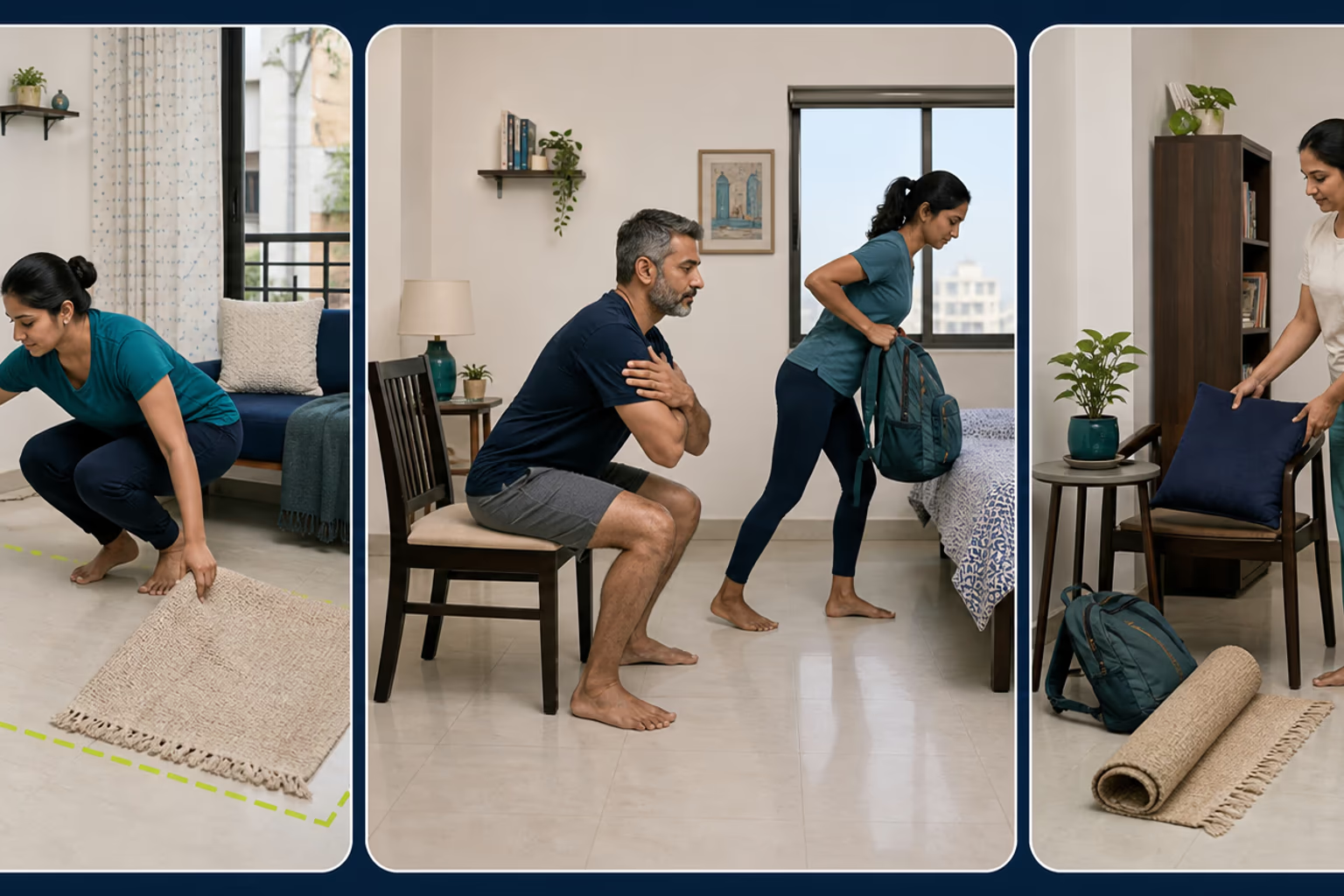
To start moving without redecorating, shrink your workspace to a single mat footprint beside your bed or desk. You do not need to rearrange heavy wardrobes or desks before every single session, because that kind of friction quickly leads to quitting. Instead, identify a rectangular patch of floor roughly the size of a standard yoga mat. Sweep away loose dust if necessary, roll out your mat, and leave surrounding furniture exactly where it is.
Working within your existing furniture layout prevents setup fatigue. If your room feels too cramped, rely on online trainer guidance to adapt movements to your exact perimeter. Adults can work toward 150 to 300 weekly minutes of moderate aerobic activity and muscle strengthening on at least two days, which is entirely achievable within a compact floor zone when you remove unnecessary preparation steps.
Managing floors, furniture and noise without permanent changes
Rented rooms often feature cold tiles, creaky wooden boards, or thin carpets that complicate home movement. If your floor is uncomfortably hard or cold, place a folded cotton blanket or a sturdy non-slip mat directly over the surface. Avoid using slippery rugs or unstable household objects for support, because these can shift unexpectedly under body weight.
For those living in shared apartments or upper floors, keep your practice low-noise by avoiding jumping, heavy stomping, or high-impact transitions. Focus instead on controlled, grounded movements that respect your downstairs neighbours while still delivering effective strength and mobility benefits. If you need balance support, use a sturdy, stationary piece of furniture like a heavy chair or the edge of a stable desk rather than leaning on flimsy decor items.
Storage and boundary cues for shared spaces
When you live with family or flatmates in a small home, visual clutter and a lack of privacy can disrupt your routine. Keep your props minimal. A rolled-up blanket and a firm cushion work well as substitutes for specialized studio blocks and bolsters. Store these items neatly in a designated corner, inside a basket, or under the bed immediately after your session ends.
To manage privacy without hanging curtains or altering walls, establish a simple time boundary. Inform housemates when you plan to use the room for movement, or use a visual cue like a closed door or a placed-out mat to signal that the space is occupied. This temporary demarcation helps signal your focus without requiring any permanent alterations to the rented interior.
The one-mat rented room setup checklist
Before beginning your next movement session in a shared or rented room, use this practical checklist to prepare the space efficiently:
- Clear a single mat-length floor zone without moving heavy furniture.
- Roll out a stable, non-slip mat or place a folded towel on hard flooring.
- Stack any props (like cushions or a rolled blanket) neatly in a corner.
- Check that nearby furniture (like a sturdy chair) is stable if used for balance.
- Set a simple time boundary so housemates know when the room is in use.
Choose your next step
A temporary setup requires rolling and unrolling your mat daily rather than leaving a permanent practice space, and you sacrifice elaborate props and large-scale sequencing for compact, stable movements. Despite these trade-offs, consistent movement remains entirely accessible in any room. Prime Tempr helps home exercisers find trainers who offer online sessions, prop-light programmes and realistic modifications for the space they actually have. To take your next step, explore our resource on how to Find a home-practice trainer or learn more about structuring your routine with How to Use One Yoga Mat of Floor Space for a Full Session.
Follow-along reflection
Use the prompts below to review the idea in context, without turning it into a diagnosis or a fixed rule.
Trade-offs to keep in view
- A temporary setup requires rolling and unrolling your mat daily rather than leaving a permanent practice space.
If this approach does not fit
If your room feels too cramped or cluttered, shrink your workspace to a single mat footprint beside the bed or desk, and rely on online trainer guidance to adapt movements.
Questions to carry forward
- How can I set up a practice space in a rented room without redecorating?
- What should I do if the floor is cold, dusty or uneven?
- How do I manage privacy and shared room constraints?
- What are the best non-permanent ways to store props and mats?
- How do I keep my practice low-noise to protect downstairs neighbours?
- What is a realistic minimum version of a home practice setup?
Sources
- Physical activity (opens in a new tab) - World Health Organization
- Top 10 Things to Know About the Physical Activity Guidelines (opens in a new tab) - ODPHP
Watch alongside this guide
Yoga for complete beginners
This complete beginner session shows how a guided practice can fit into one mat-sized area. Pause freely, use stable support and skip movements that do not suit the room or body.
The YouTube player stays unloaded until you choose to watch. Loading it connects to YouTube and may allow that service to process usage data.