How to Loosen Up After Spreadsheet Work Without a Workout
Release spreadsheet stiffness with simple, low-friction position changes that fit into your busy workday without requiring any exercise equipment.
https://primetempr.com/blog/how-to-loosen-up-after-spreadsheet-work-without-a-workout
After hours of staring at rows and columns, your lower back aches, your shoulders creep toward your ears, and your neck feels locked in place. Starting a formal workout or changing into gym clothes feels like too much friction when you are mentally exhausted from work.
You do not need a workout session to release spreadsheet stiffness. Small, deliberate changes in position and simple movement breaks are enough to reset your body without turning your workday into a fitness project.
Why spreadsheet work stiffens your body
Prolonged sitting creates physical fatigue and stiffness even if you own an ergonomic chair and a standing desk. A workstation should support neutral, comfortable positions, but even a good setup should allow regular changes of position.
When you focus on data entry or financial models, your gaze fixes on a single point. You hold your breathing shallow, and your muscles maintain constant, low-level contraction to keep your posture upright. Over hours, this static load restricts blood flow and stiffens connective tissue. Waiting until pain sets in before changing position makes it harder to release the tension.
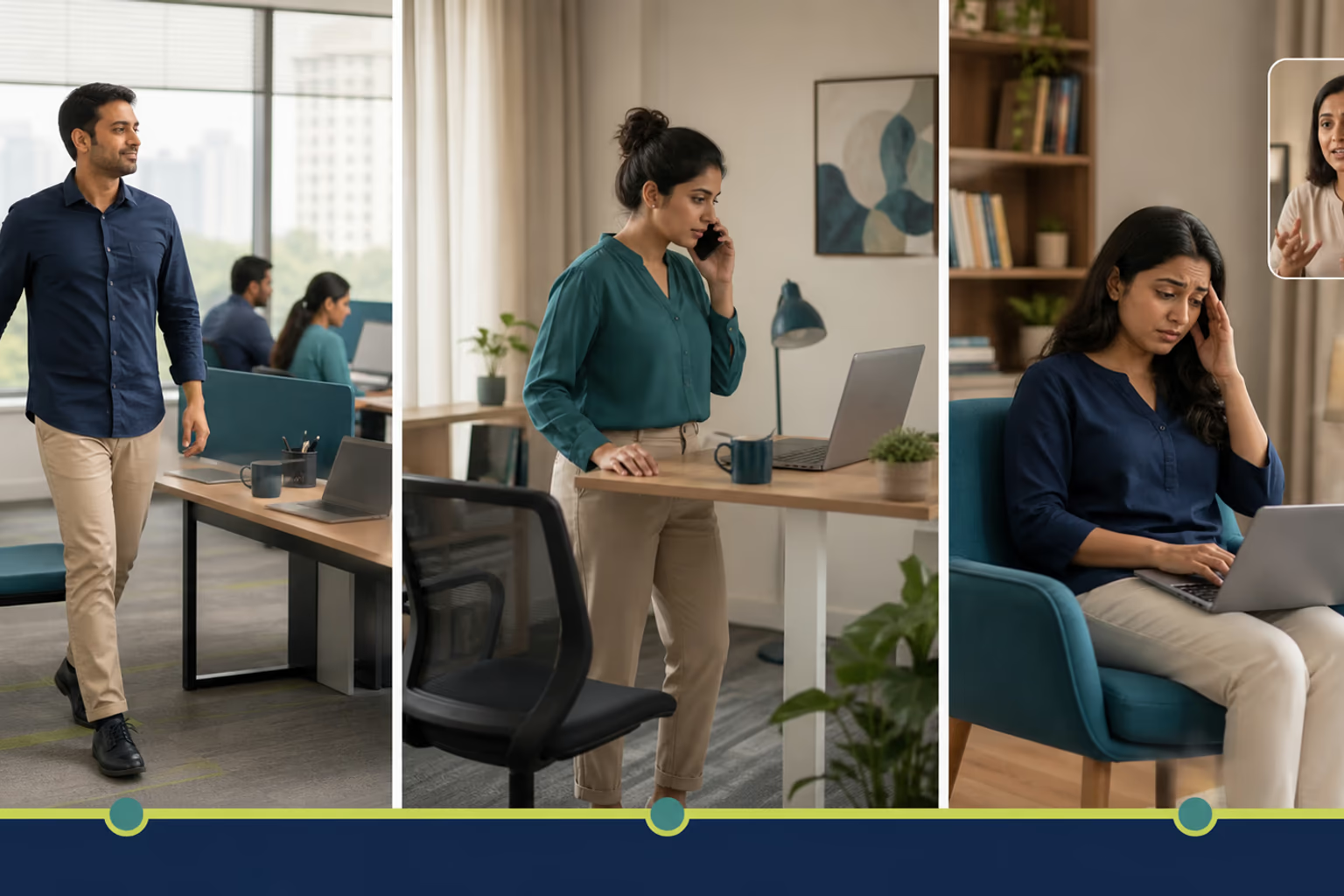
The minimum version: simple position changes
If a five-minute movement break feels too demanding, start with the minimum version. All physical activity counts, any amount is better than none, and adults should limit sedentary time.
You do not need special equipment or privacy to change your position. Stand up while taking a phone call, roll your shoulders backward twice while waiting for a spreadsheet to load, or shift your weight from one foot to the other. These micro-movements interrupt static loading without requiring you to step away from your screen or break your workflow.
A normal version: five minutes of movement
When you have a brief gap between tasks, expand your reset into a structured, low-friction sequence. This approach takes five minutes and requires no floor mats or athletic gear.
- Stand and Reach: Stand up slowly, interlace your fingers, and reach your arms overhead. Breathe into your ribs for thirty seconds.
- Shoulder Rolls: Draw your shoulders up toward your ears, roll them backward, and let them drop down your back five times.
- Neck Release: Gently drop your right ear toward your right shoulder until you feel a light stretch along the left side of your neck. Hold for three breaths, then switch sides.
- Hip Hinge: Place your hands on your lower back and gently hinge forward a few inches to open the front of your hips after prolonged sitting.
If a movement break is missed or feels too disruptive, scale back to a simple one-minute standing stretch or repositioning cue during your next task transition. Treat these pauses as functional resets rather than a rigid chore or workout routine.
Short movement breaks relieve immediate stiffness but do not replace overall physical conditioning. Expecting instant posture transformation from a single stretch will only lead to frustration.
The no-workout spreadsheet reset checklist
Use this practical checklist to guide your movement breaks throughout the workday without adding unnecessary friction.
- Step away from the screen for at least 60 seconds every hour.
- Alternate between sitting and standing postures where possible.
- Perform simple, comfortable shoulder and neck rolls without forcing range of motion.
- Hydrate or use natural transition moments, like a water break, to reset your position.
- Stop immediately if you feel pain, numbness, or dizziness.
When to seek professional guidance
Self-directed breaks lack the personalized correction of a trained instructor. If your stiffness persists, recurs daily, or shifts into sharp discomfort, self-guided adjustments are no longer enough.
This is when Prime Tempr helps desk-based readers compare trainers, short practices and nearby classes when self-directed movement breaks need more structure or personal observation. A qualified professional can evaluate your daily habits, observe your movement patterns, and offer targeted guidance that generic stretches cannot provide. Explore options to find practical movement support or read more about movement for desk-job days to build a sustainable routine.
Follow-along reflection
Use the prompts below to review the idea in context, without turning it into a diagnosis or a fixed rule.
The no-workout spreadsheet reset checklist
- Hydrate or use natural transition moments (like a water break) to reset your position.
Questions to carry forward
- Why does spreadsheet work cause physical stiffness even with a good chair?
- How can I loosen up without changing clothes or starting a workout?
- What is the minimum version of a movement break?
- How do I fit position changes into a busy workday?
- When should I move from self-guided breaks to professional instruction?
Sources
- Computer Workstations, Occupational Safety and Health Administration (OSHA), https://www.osha.gov/etools/computer-workstations (opens in a new tab)
- Physical Activity, World Health Organization (WHO), https://www.who.int/news-room/fact-sheets/detail/physical-activity (opens in a new tab)
Watch alongside this guide
Five movements you can do at your desk
This concise Mayo Clinic demonstration gives readers a visual menu for changing position during a workday. Use only comfortable options and stop for pain, dizziness, numbness or unusual symptoms.
The YouTube player stays unloaded until you choose to watch. Loading it connects to YouTube and may allow that service to process usage data.