How to Keep Practising Yoga While Travelling Without Rigid Streaks
Maintain your yoga practice while travelling, adapt to disrupted schedules without guilt, and know when to seek external structure.
https://primetempr.com/blog/how-to-keep-practising-yoga-while-travelling-without-rigid-s
Travel disrupts regular routines, schedules, and environments, making it difficult to maintain a consistent yoga practice and often leading to all-or-nothing thinking. When you are away from home, trying to replicate a 60-minute studio class in a cramped hotel room usually leads to frustration and giving up entirely after a single missed day.
Maintaining a yoga practice while travelling does not require a rigid schedule or a quiet studio. Shrinking your practice to fit your exact circumstances keeps movement alive until you return to routine. Any amount of physical activity is better than none, all activity counts, and muscle strengthening benefits everyone. Rather than waiting for perfect conditions, you can adapt your expectations and preserve your connection to movement on the road.
The Minimum Effective Dose: What Travel Yoga Actually Looks Like
When your schedule is packed with flights, meetings, or sightseeing, a full practice is rarely realistic. Public health guidelines note that adults can work toward 150 to 300 weekly minutes of moderate aerobic activity and muscle strengthening on at least two days, but these totals do not need to come in long, uninterrupted blocks.
On the road, your practice can shift from an intensive workout to a maintenance tool. A travel session can be as short as 10 to 15 minutes of floor-based mobility, gentle stretching, or breathwork. This reduced version has clear trade-offs: a travel-adapted practice is inherently less structured and intense than a dedicated studio routine, serving primarily to maintain mobility and connection rather than advanced progression. However, keeping a shortened version active prevents the friction of starting over when you return home.
| Practice Type | Typical Duration | Primary Focus | Best Used For |
|---|---|---|---|
| Home Studio Routine | 45 to 75 minutes | Progression, skill building, deep focus | Regular weekly consistency |
| Travel Mini-Session | 10 to 15 minutes | Mobility, joint health, tension release | Hotel rooms and tight schedules |
| Transit Day Stretch | 5 to 8 minutes | Circulation, relieving stiffness | Airports, train stations, rest stops |
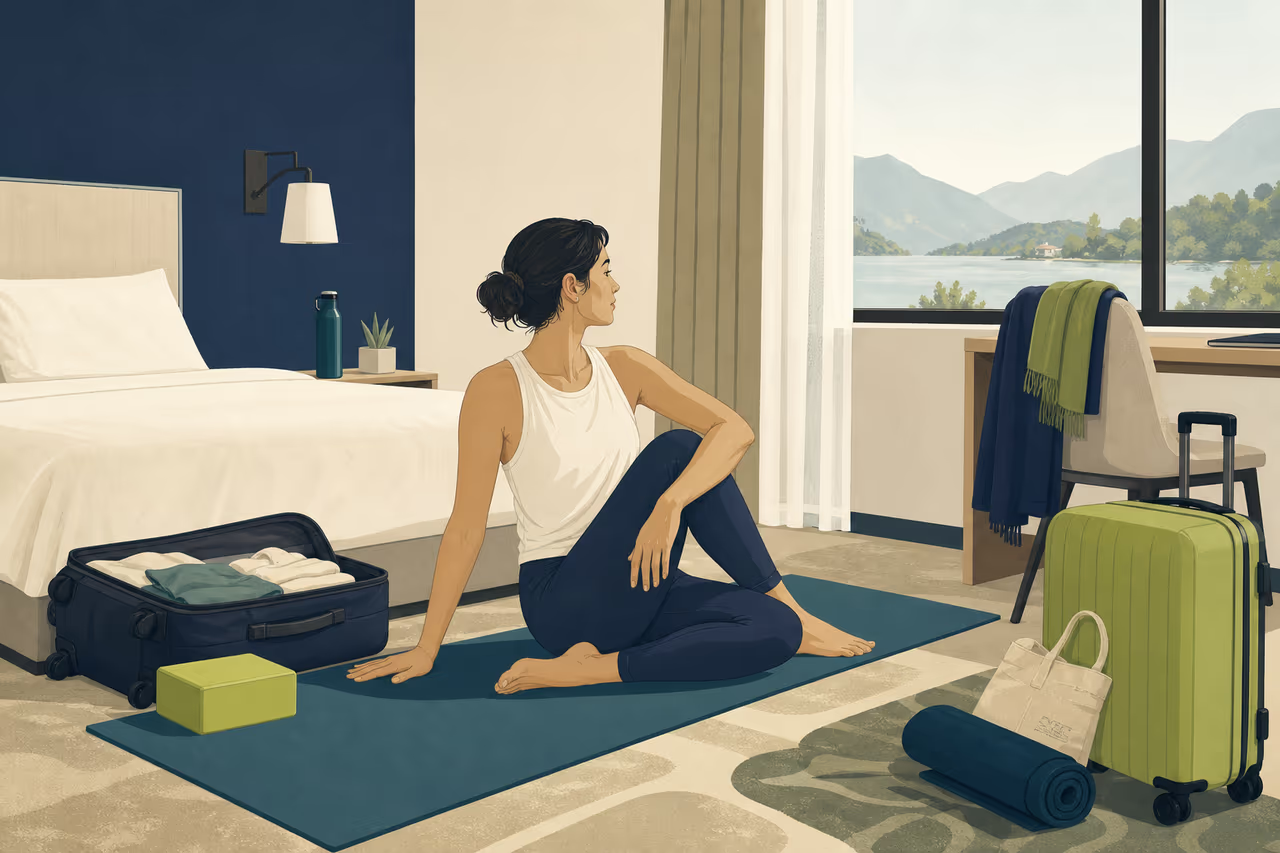
Practical Strategies for Hotel Rooms, Tight Schedules, and Transit Days
Unfamiliar environments introduce friction. Hotel carpets can feel unclean, floor space is often limited by furniture, and exhaustion from travel makes motivation drop. Overcoming these barriers requires lowering your logistical requirements.
- Redefine the space: You do not need a mat. A clean towel on the floor or even standing stretches by the window can substitute for a full setup.
- Anchor movement to a fixed daily trigger: Tie your movement to something you already do, such as waking up in the morning or returning to your room before dinner.
- Drop the guilt of missed days: If an entire day passes without movement, accept it without abandoning your broader routine. You can explore resources like Missed a Week of Yoga? Here Is How to Return Without Guilt for strategies on shaking off inertia.
- Scale down duration: On exceptionally busy days, recognize that a very brief sequence still counts. For guidance on working with limited windows, see Five-Minute Yoga on Busy Days: What It Can (and Can't) Do.
The Travel Yoga Mini-Plan
To keep things straightforward during a trip, use this concise checklist to guide your movement choices:
- Pack light: choose versatile, comfortable clothing or rely on regular sleepwear for early morning stretches.
- Redefine your session: accept 10 to 15 minutes of floor-based mobility or breathwork as a complete session.
- Anchor movement to a fixed daily trigger, such as waking up or returning to your room before dinner.
- Know when to seek external support: browse trainer-shared programmes if self-guided travel routines leave you feeling unmotivated.
When Self-Directed Travel Routines Stop Being Enough
Self-guided travel routines have natural limits. After a few weeks of ad-hoc stretching in hotel rooms, or following frequent trips, it is common to feel that your practice lacks direction, depth, or accountability. When travelling highlights the limitations of going it alone, relying solely on willpower can cause your habit to fade.
Prime Tempr helps readers find a trainer, studio or trainer-shared programme that can add structure and accountability after a self-directed routine stops being enough. Whether you want to find ongoing practice support or browse yoga programmes designed by experienced professionals, external guidance helps bridge the gap between sporadic travel stretching and a sustainable, long-term movement habit.
Sources
- Physical activity (opens in a new tab), World Health Organization
- Top 10 Things to Know About the Physical Activity Guidelines (opens in a new tab), Office of Disease Prevention and Health Promotion
Watch alongside this guide
A 22-minute home yoga practice
Use the session as a realistic practice option while testing the article's advice on consistency and manageable scope. Source: Yoga With Adriene. This optional video is context, not evidence or personal instruction.
The YouTube player stays unloaded until you choose to watch. Loading it connects to YouTube and may allow that service to process usage data.