How to Keep One Personal Anchor During a Chaotic Week
Maintain consistency through unpredictable schedules by choosing a single unbreakable anchor and scaling it down to a minimum version.
https://primetempr.com/blog/how-to-keep-one-personal-anchor-during-a-chaotic-week
When life gets chaotic with desk jobs, family duties, or unpredictable schedules, wellness plans that require uninterrupted time or perfect streaks immediately collapse. Maintaining consistency through a chaotic week does not require an unbroken streak or an ideal morning slot. It depends on choosing a single unbreakable anchor and scaling it to a minimum version when time and energy vanish.
This guide covers why rigid routines fail, how to build a realistic anchor, and how to use digital tools to keep your practice flexible when your schedule breaks down.
Why rigid routines break during chaos
Normal wellness routines often fail the moment a week becomes chaotic because they depend on ideal conditions. When your alarm goes off late, or family duties shift your morning window, the temptation is to abandon the entire plan until next week. Perfectionist streaks create a fragile mental model where missing one day feels like total failure.
Trying to keep an elaborate morning routine during a high-chaos week adds unnecessary stress. Adult sleep needs vary, and consistent schedules, quiet dark rooms, daytime activity, and calmer pre-bed routines can support sleep, but a sudden work emergency or family demand will override these plans. When your normal routine collapses entirely, drop all supplementary goals and execute just the three-minute minimum anchor version at the next available pause in your day.
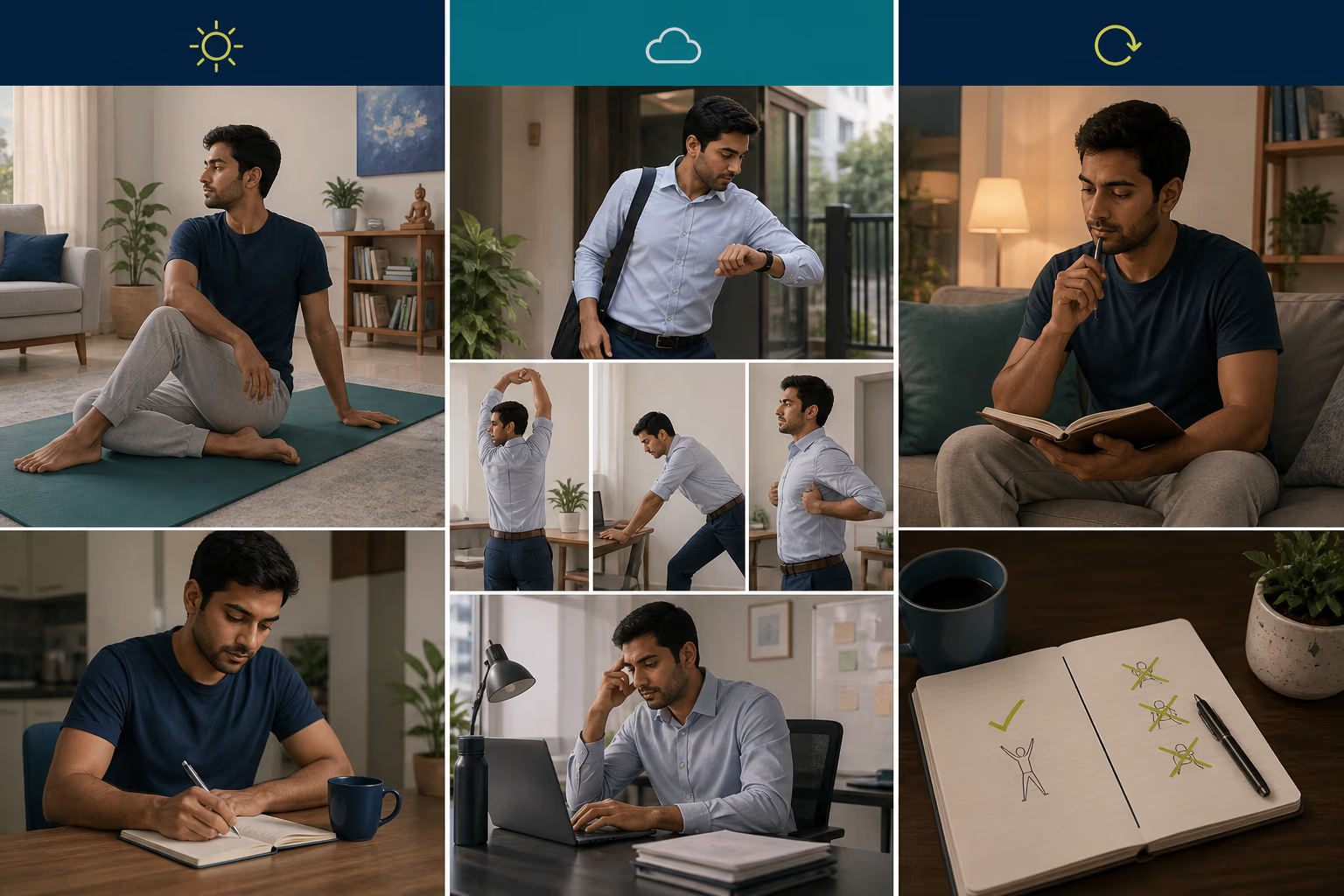
Designing your single personal anchor
A personal anchor works when schedules are completely unpredictable by attaching itself to an unmovable daily trigger rather than a specific time on the clock. Instead of relying on motivation, you anchor your practice to an existing habit, such as finishing your morning coffee, closing your laptop at the end of a desk shift, or stepping into your home after a commute.
Relaxation approaches include breathing, guided imagery, and progressive relaxation, but they should not replace conventional care. By keeping your anchor simple, you reduce the mental friction required to start.
Here are the core attributes of a sustainable personal anchor:
- It takes less than ten minutes to complete.
- It requires zero equipment or studio travel.
- It relies on a fixed daily trigger event rather than a preferred hour.
The minimum, normal and expanded versions
To survive fluctuating energy levels and unpredictable workloads, you must scale your practice across three distinct tiers. This approach prevents you from quitting entirely when your schedule tightens.
| Practice Tier | Time Investment | When to Use It | Objective |
|---|---|---|---|
| Expanded Version | 30 to 60 minutes | Days off, calm weekends, stable work periods | Deep skill building and physical conditioning |
| Normal Version | 15 to 20 minutes | Standard workdays with predictable schedules | Maintaining baseline mobility and mental focus |
| Minimum Anchor | 3 to 5 minutes | Late nights, family duties, shift changes, high chaos | Preserving the habit loop without fatigue |
Scaling your practice ensures continuity even on high-pressure days. A minimum anchor version maintains continuity but delivers less physical output than a full session. Flexibility requires letting go of rigid calendar ideals and accepting irregular practice times.
Your chaotic week anchor checklist
Use this checklist to set up your routine before your schedule becomes overwhelming:
- Pick one single non-negotiable anchor activity under 10 minutes.
- Define your normal version and your absolute minimum three-minute version.
- Attach your anchor to an unmovable daily trigger, like finishing dinner or starting your commute.
- Save your short practice and check trainer schedules on Prime Tempr to stay flexible.
Using Prime Tempr to keep your routine flexible
Rigid wellness plans fail because they demand one perfect time slot every single day. Prime Tempr lets readers save short practices and compare trainer schedules so a routine can flex around real days instead of depending on one perfect time slot.
When your schedule shifts mid-week, you do not need to abandon your progress. You can access saved short practices or adjust your schedule by reviewing available trainer slots that match your new hours. This flexibility allows you to Build a realistic routine that adapts to your actual life constraints rather than an idealized calendar. For more strategies tailored to high-demand periods, explore Routines for Busy Days and learn how to implement A Three-Minute Version of Your Normal Morning Practice.
Follow-along reflection
Use the prompts below to review the idea in context, without turning it into a diagnosis or a fixed rule.
Your chaotic week anchor checklist
- Attach your anchor to an unmovable daily trigger (like finishing dinner or starting your commute)
Questions to carry forward
- Why do normal wellness routines fail the moment a week becomes chaotic?
- What makes a personal anchor work when schedules are completely unpredictable?
- How do I scale my practice down to a minimum version on high-stress days?
- How can I use digital tools to flex my routine around real life rather than rigid slots?
Sources
Watch alongside this guide
A flexible home yoga practice
This optional home session helps readers see how a complete practice can be scaled to the time and energy available rather than treated as a compulsory daily target.
The YouTube player stays unloaded until you choose to watch. Loading it connects to YouTube and may allow that service to process usage data.