How to Increase the Effectiveness of Your Home Weights
Build functional strength with light weights by slowing your movement, specifically during the lowering phase of each repetition.
https://primetempr.com/blog/how-to-increase-the-effectiveness-of-your-home-weights
You do not need heavy gym equipment to build strength that supports your daily life. If your home weights feel too light, you are likely focusing on the wrong metric. Instead of chasing heavier objects, increase the challenge of your current equipment by changing your tempo. By slowing the lowering phase of an exercise, you increase the time your muscles spend under tension, making even a light water bottle feel significantly more effective.
Why speed matters less than control
Many people believe that strength is only built by lifting the heaviest weight possible. However, muscle strengthening benefits everyone, and you can achieve meaningful results by focusing on how you move rather than what you lift. Any amount of physical activity is better than none, and all activity counts toward your health.
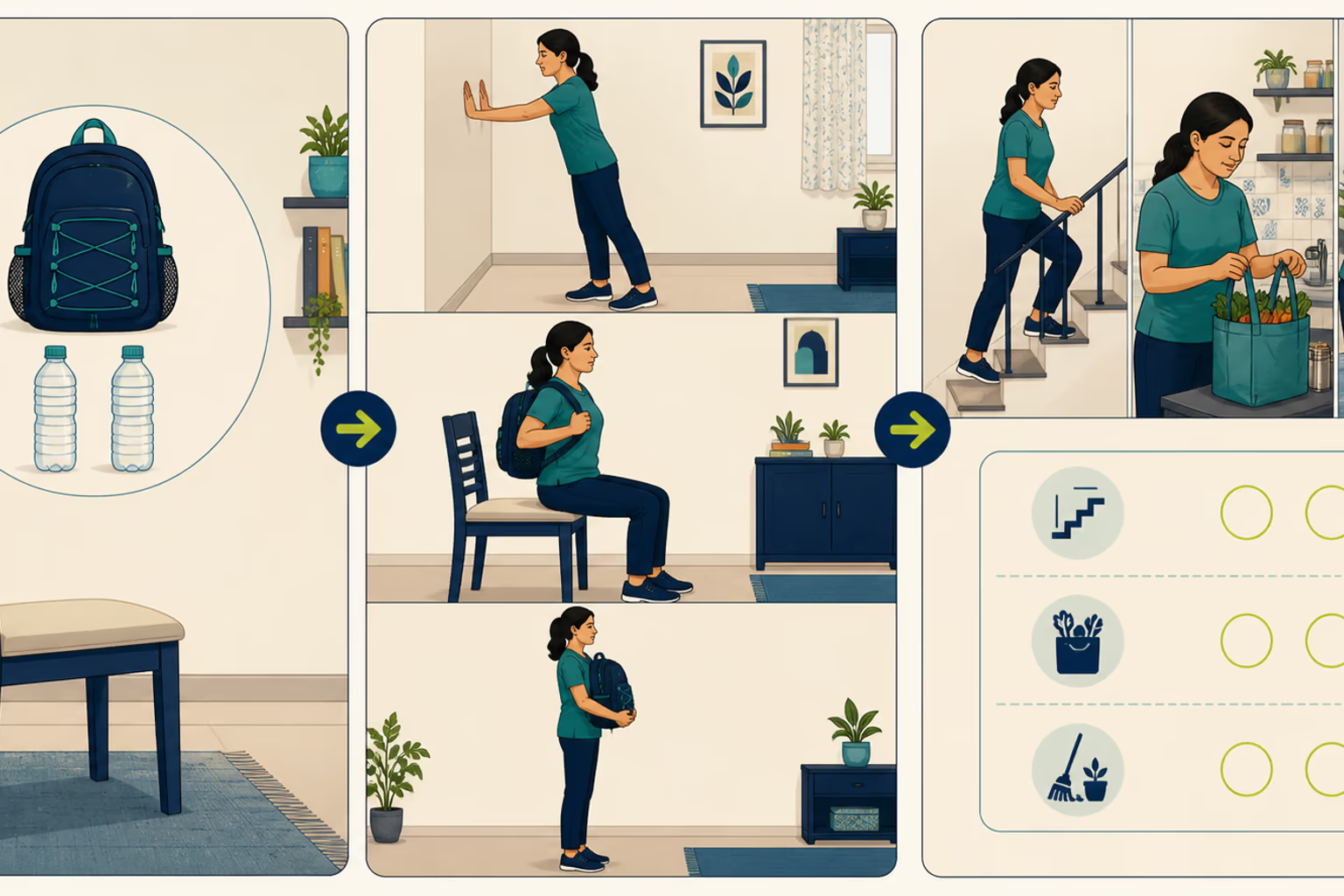
When you rush through a movement, you rely on momentum to complete the repetition. Momentum allows your joints and tendons to take over the work, giving your muscles a break. By slowing down, you remove that momentum. This forces your muscles to remain engaged throughout the entire range of motion. This approach is about building the strength that makes carrying groceries, climbing stairs, or standing up from a chair easier and more sustainable.
The power of the lowering phase
In exercise science, movement is split into two parts: the lifting phase, or concentric, and the lowering phase, or eccentric. Most people focus entirely on the lift, but the lowering phase is where you create the most control and stability.
When you lower a weight slowly, your muscle fibers are lengthening while under tension. This is a highly effective way to build strength and improve your body awareness. If you lift a weight in one second and drop it instantly, you miss the opportunity to train your muscles to stabilize the load. By intentionally taking three seconds to return to the starting position, you force your body to work harder to resist gravity. This simple shift turns a light, seemingly "easy" object into a tool that demands focus and effort.
Applying tempo to your daily routine
You can apply this 1-3 tempo to almost any movement you perform at home. Whether you are using a pair of light dumbbells, a heavy book, or a filled water bottle, the principle remains the same.
- Pick one movement: Choose a simple action, such as a bicep curl, a shoulder press, or even standing up from a chair.
- Lift with purpose: Spend one second moving the weight or your body into the starting position.
- Lower with control: Spend three full seconds returning to the start. Keep the movement smooth and steady.
- Breathe: A common failure mode is holding your breath during the slow phase. Keep your breathing rhythmic and natural. If you find yourself gasping, you are likely moving too slowly or using too much tension.
The 3-Second lowering rule
| Step | Action | Timing |
|---|---|---|
| 1 | Prepare | Stand tall with your weight. |
| 2 | Lift | Raise the object in one second. |
| 3 | Lower | Lower the object over three seconds. |
| 4 | Repeat | Perform 8-10 reps, focusing on stability. |
Stop rule: If your form breaks, if you feel shaky, or if you cannot maintain the three-second count, stop the set. Return to a faster, more natural rhythm and focus on your range of motion before trying the slow tempo again.
Trade-offs and limits
Be realistic about what this method can do. Tempo training increases the time your muscles spend under tension, but it does not provide the same absolute force as heavy external loading. If your goal is to lift very heavy objects, tempo training is a foundational tool, but it will eventually reach a point of diminishing returns. This method requires more mental focus than standard "rep counting." You cannot "zone out" while performing slow, controlled repetitions. You must pay attention to your posture and the path of the weight. If you find that the slow tempo makes you feel unstable, do not force it. Your safety and the quality of your movement are more important than the speed of your progress.
When to seek professional guidance
While tempo training is a great way to start, it is not a replacement for personalized instruction. As you progress, you may find that you need more specific guidance to reach your goals. Adults can work toward 150 to 300 weekly minutes of moderate aerobic activity and muscle strengthening on at least two days, but staying consistent requires a plan that fits your life.
Prime Tempr helps readers compare strength, yoga and mobility trainers who can turn general everyday goals into an appropriately progressed practice. If you are unsure if your form is correct, or if you want to move beyond basic home movements, build useful strength with guidance by connecting with a professional who understands how to adapt exercises to your specific home environment and constraints. Whether you are working around a busy desk job or a small living space, a trainer can help you refine your technique so you can continue to build strength for everyday life safely and effectively.
Sources
Watch alongside this guide
Functional training explained
This ACE Fitness overview adds visual context for linking strength practice to everyday tasks while the article provides the more specific home progression.
The YouTube player stays unloaded until you choose to watch. Loading it connects to YouTube and may allow that service to process usage data.