How to Follow an Online Yoga Video Safely: A Practical Guide
Master safe online yoga practice by navigating style differences, respecting physical limits, setting up your space, and knowing when to seek live feedback.
https://primetempr.com/blog/how-to-follow-an-online-yoga-video-safely-a-practical-guide
Following an online yoga video safely requires respecting your body's limits, recognizing that yoga styles vary and injuries can occur without live guidance, and prioritizing steady movement over intensity. Pressing play on a screen removes the real-time adjustments and personalized oversight that a live instructor provides. Without those safeguards, it is easy to slip into awkward alignment, overexert yourself, or ignore warning signs from your joints.
Understanding these limitations before you roll out your mat helps you build a sustainable, injury-aware home practice.
Understanding the Risks of Self-Guided Online Yoga
Yoga combines postures, breathing, and meditation; styles vary, benefits should be described with uncertainty, and injuries can occur. Because online classes cannot see your form, you carry the sole responsibility for monitoring your range of motion.
A common failure mode is trying to match the instructor's exact flexibility or depth without regard for personal limits. Instructors often demonstrate advanced expressions of a posture or work within their own specialized physical capacity. Trying to replicate that depth immediately can put undue stress on your hamstrings, lower back, or wrists.
Ignoring physical discomfort or sharp pain in pursuit of completing a video compromises your long-term mobility. Another frequent misstep is assuming all online yoga videos are low-risk or suitable for absolute beginners. A vigorous vinyasa flow or power class places very different demands on your cardiovascular and musculoskeletal systems than a gentle restorative or yin session.
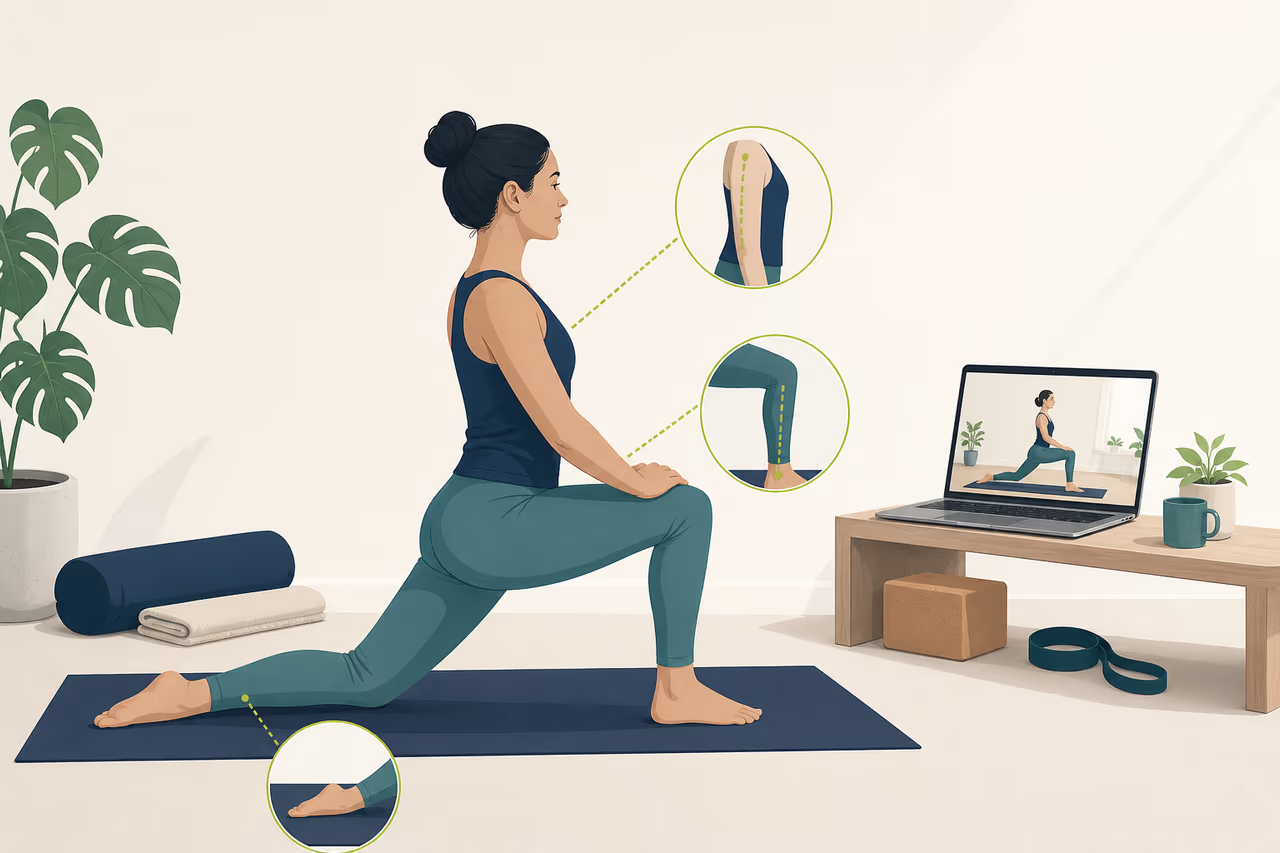
Applying Physical Activity Principles to Home Practice
Any amount of physical activity is better than none, all activity counts, and people should limit sedentary time. Bringing this perspective to your yoga practice helps reframe home workouts away from toxic perfectionism or intense visual standards.
You do not need to practice for ninety minutes every day or achieve a flawless handstand for your movement to count. Consistent, moderate engagement supports your overall wellbeing far better than sporadic, high-intensity sessions that leave you strained or exhausted.
Self-guided practice requires heightened self-awareness. Because no one is present to tell you to rest, you must actively listen to your fatigue signals and avoid arbitrary streaks that encourage you to push through pain. Treat your movement as an exploration of steady pacing rather than a performance to be conquered.
Practical Steps to Set Up and Follow a Video Safely
Preparing your environment and choosing the right content significantly reduces the risk of home practice accidents. Use the checklist below to guide your setup and pacing before every session.
Online Yoga Safety Checklist
- Clear a slip-free space around your mat with enough room for full arm and leg extension.
- Check that the video style matches your current experience level before pressing play.
- Keep your focus on steady breathing rather than matching the instructor's depth.
- Pause or modify any posture that causes joint strain, pinching, or sharp pain.
- Treat all activity as optional and listen to fatigue signals over arbitrary streaks.
If you find yourself feeling unstable or short of breath, take a recovery break. Pause the video immediately if you feel sharp pain or instability, rest, modify the posture, or switch to a gentler class level.
The Trade-Offs of Online Practice
Online videos offer incredible flexibility and cost savings, allowing you to practice on your own schedule without traveling to a facility. However, they completely lack real-time personalized feedback or posture correction. If you want to deepen your understanding or ensure your alignment is safe, online videos are best used as a supplement rather than a permanent substitute for human insight.
When you feel ready to move beyond pre-recorded content, Prime Tempr helps a reader move from general education to guided practice by comparing trainer profiles, local studio listings and trainer-shared practice content in one place. You can explore a beginner-friendly trainer to get tailored feedback, read through our guide on how to choose a beginner yoga video without getting overwhelmed, or learn foundational habits with how to start yoga at home: a beginner's practical guide.
Frequently Asked Questions
What should I do if a yoga video feels too difficult halfway through?
Pause the video, lower your knees to the mat or come into child's pose, and rest. You do not need to finish every sequence or keep up with the instructor's pace.
How do I know if a video is suitable for beginners?
Look for descriptions that explicitly mention foundational alignment, slower transitions, and accessible modifications. Avoid classes labeled as advanced, power, or fast-paced until you are comfortable with basic postures.
Can online yoga completely replace a live class?
Online videos are convenient for daily maintenance, but they cannot replace the individualized adjustments and tactile feedback provided by a qualified instructor in a live setting.
Sources
Watch alongside this guide
Yoga for complete beginners
Use this optional beginner session to see pacing, transitions, and rest choices in a complete home practice. Source: Yoga With Adriene. This optional video is context, not evidence or personal instruction.
The YouTube player stays unloaded until you choose to watch. Loading it connects to YouTube and may allow that service to process usage data.