How to Follow an Exercise Video in a Small Room
Adapt wide exercise video movements to a single mat space without hitting furniture, walls, or disturbing neighbours.
https://primetempr.com/blog/how-to-follow-an-exercise-video-in-a-small-room
The instructor in an exercise video moves across a vast studio floor, while you are cramped between a bed, a desk, or family members. Trying to copy large travelling steps, wide lunges, or dynamic leaps inside a compact room often leads to stubbed toes, bumped furniture, and frustration. You do not need a studio floor to follow a movement video. Instead, you need a scale-down rule that translates large travelling steps into stationary, mat-bound variations.
Any amount of physical activity is better than none, all activity counts, and muscle strengthening benefits everyone. This foundational principle means your home session holds equal value to a studio class, even if your physical boundary is limited to a single yoga mat.
The studio contrast: why video instructors need so much room
Most fitness videos are filmed in wide-angle commercial studios designed to shows expansive choreography. Instructors use lateral bounds, sweeping turns, and heavy forward strides because they have empty square footage. When viewed on a small screen in a living room shared with a sofa, a coffee table, and other family members, those same movements create an immediate logistical conflict.
Trying to match an instructor's exact stride length in a tight apartment introduces distinct failure modes: kicking walls, doors, or heavy furniture during lateral movements; stopping the video entirely out of frustration rather than modifying the exercise; and holding your breath or rushing to keep up with a fast-paced instructor while off-balance.
Recognising these constraints is the first step toward a sustainable home practice. You do not have to abandon video workouts just because your room is modest in size.
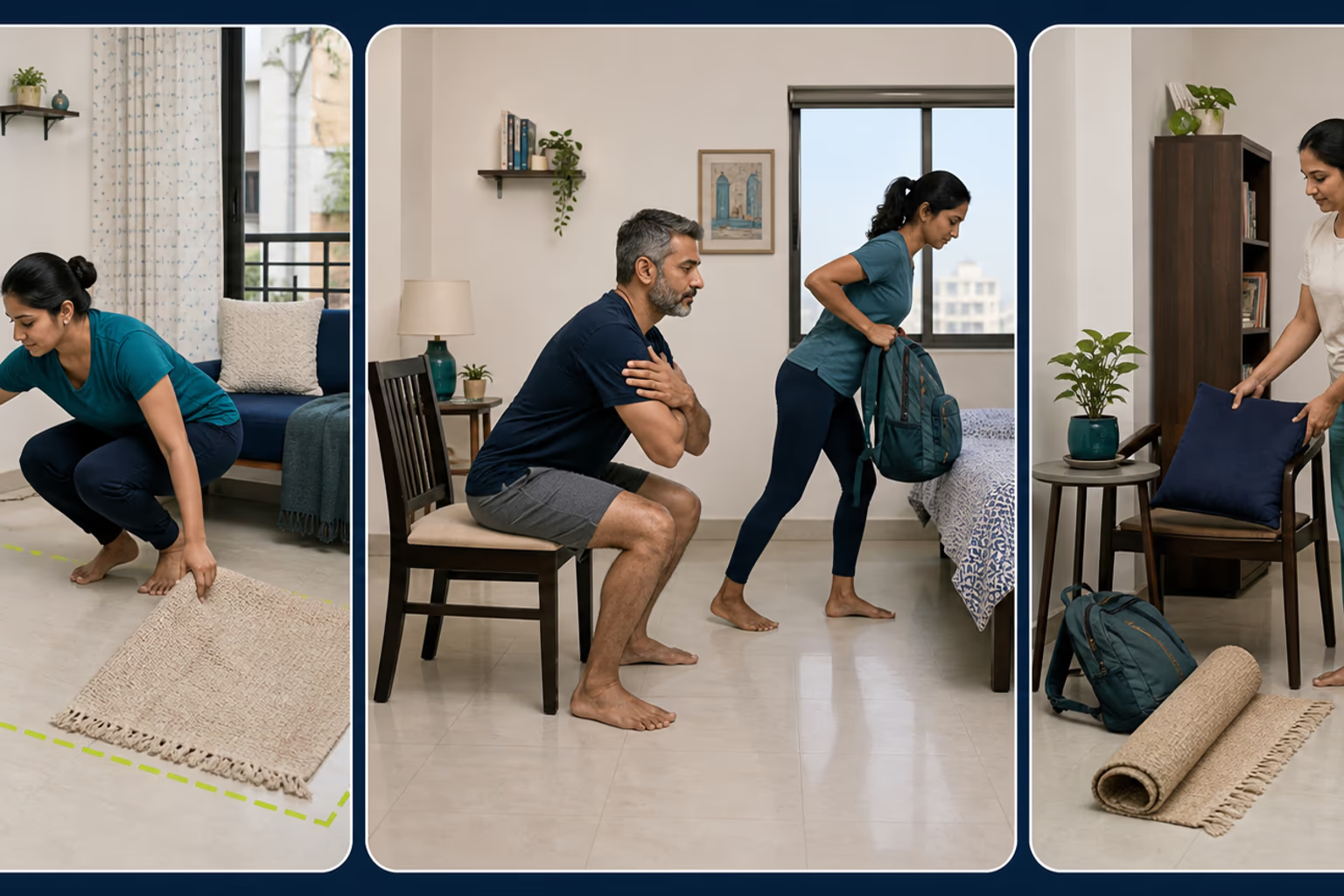
Translating travelling movements into stationary footprints
To keep pace with a video without risking injury or property damage, convert all horizontal travel into vertical or in-place loading. When the instructor steps wide to the left and right, keep your feet planted near the edges of your mat and shift your weight from side to side without lifting your feet off the floor.
If the routine calls for forward lunges that send you crashing toward your television stand, shorten your stance and drop straight down into a stationary split squat. This approach preserves muscle engagement without requiring extra square footage.
| Studio Movement | Small-Space Modification | Primary Benefit |
|---|---|---|
| Wide lateral leaps | Stationary side-to-side weight shifts | Protects shins and shins from hitting furniture |
| Forward travelling lunges | Stationary split squats or pulsing drops | Maintains knee alignment in a fixed footprint |
| Running across the room | High knees or fast marching in place | Keeps heart rate elevated without forward momentum |
Scaling down wide movements reduces aerobic momentum slightly, but it protects your joints, your furniture, and your downstairs neighbours. At the same time, stationary variations often require more core stability since you are not using forward or lateral momentum to travel.
A simple follow-along practice plan for tight spaces
Adults can work toward 150 to 300 weekly minutes of moderate aerobic activity and muscle strengthening on at least two days. Integrating this movement into a cramped home environment requires a structured approach that respects your physical boundaries.
Use a practical decision guide and follow-along checklist to evaluate your space and adapt your next video session safely.
- Check your perimeter: Clear a single mat-sized area of stray objects, bags, or charging cables before pressing play.
- Convert travel to stationary: Turn side-to-side leaps into step-touches or stationary squats.
- Ignore the instructor's travel: Match their upper-body work and tempo while keeping your feet anchored.
- Pause freely: Stop the video whenever furniture or household movement gets in the way of your breathing or balance.
- Seek tailored guidance: Choose trainer-led online programmes built for compact rooms when pre-recorded videos become too frustrating to adapt.
What you need for a small-space session
- Time range: 15 to 30 minutes.
- Equipment: One nonslip yoga mat and a clear wall for balance support if needed.
- Scaling options: Reduce your depth in squats and lunges if your knees feel strained, or slow your tempo to match your breathing rather than the instructor's audio track.
- Stop rule: Stop immediately if you feel sharp joint pain, lose your balance repeatedly, or find yourself holding your breath to keep pace.
- When static guidance is not enough: If persistent joint discomfort, tight living quarters, or complex instructions make pre-recorded videos unworkable, static guides will fall short.
Prime Tempr helps home exercisers find trainers who offer online sessions, prop-light programmes, and realistic modifications for the space they actually have. Professional guidance bridges the gap between generic studio routines and the living room reality of your day-to-day life.
When to move beyond pre-recorded videos
Pre-recorded videos cannot see your living room layout or adjust for a coffee table sitting two feet behind your heels. When you spend more time translating movements than actually moving, or when you find yourself modifying every single exercise to avoid noise complaints from neighbours, it is time to look for interactive support.
Working with a live online instructor allows you to communicate your physical constraints before the session begins. A qualified trainer can design prop-light routines that account for low ceilings, shared family areas, and narrow floors. Exploring options through Find a home-practice trainer connects you with professionals who understand that effective movement requires neither a ballroom nor expensive equipment. You can maintain a consistent routine by matching your practice to the room you actually inhabit today.
Sources
Watch alongside this guide
Yoga for complete beginners
This complete beginner session shows how a guided practice can fit into one mat-sized area. Pause freely, use stable support and skip movements that do not suit the room or body.
The YouTube player stays unloaded until you choose to watch. Loading it connects to YouTube and may allow that service to process usage data.