How to Fit Yoga Into a Busy Schedule Without the Guilt
Build a realistic yoga practice that adapts to your actual daily capacity, eliminates guilt, and supports true consistency over time.
https://primetempr.com/blog/how-to-fit-yoga-into-a-busy-schedule-without-the-guilt
The pressure to maintain a "perfect" yoga practice,usually defined as a 60-minute class, several times a week,is the fastest way to ensure you stop practicing altogether. When your schedule becomes demanding, the first thing to go is often the time you set aside for yourself. If you view yoga as an "all or nothing" commitment, missing a few days can feel like a failure, leading to guilt and the eventual abandonment of your routine.
The reality is that yoga consistency is not about finding more time; it is about matching the "dose" of movement to your current capacity. By shifting your perspective from rigid time commitments to flexible, low-friction habits, you can maintain a practice that supports your wellbeing without adding to your daily stress.
Why 'All or Nothing' Fails
The "all or nothing" mindset assumes that if you cannot complete a full-length session, the effort is not worth making. This is a common failure mode that ignores the reality of a busy life. When you force a 60-minute class into a 15-minute window, you create friction, rushing through movements and missing the mental benefits of the practice.
Recognize that any amount of physical activity is better than none, and all activity counts. Whether you have five minutes or fifty, the goal is to show up in a way that is sustainable for your current circumstances. Relying on willpower alone to maintain a rigid schedule is rarely effective. Instead, build a system that allows for fluctuations in your energy and availability.
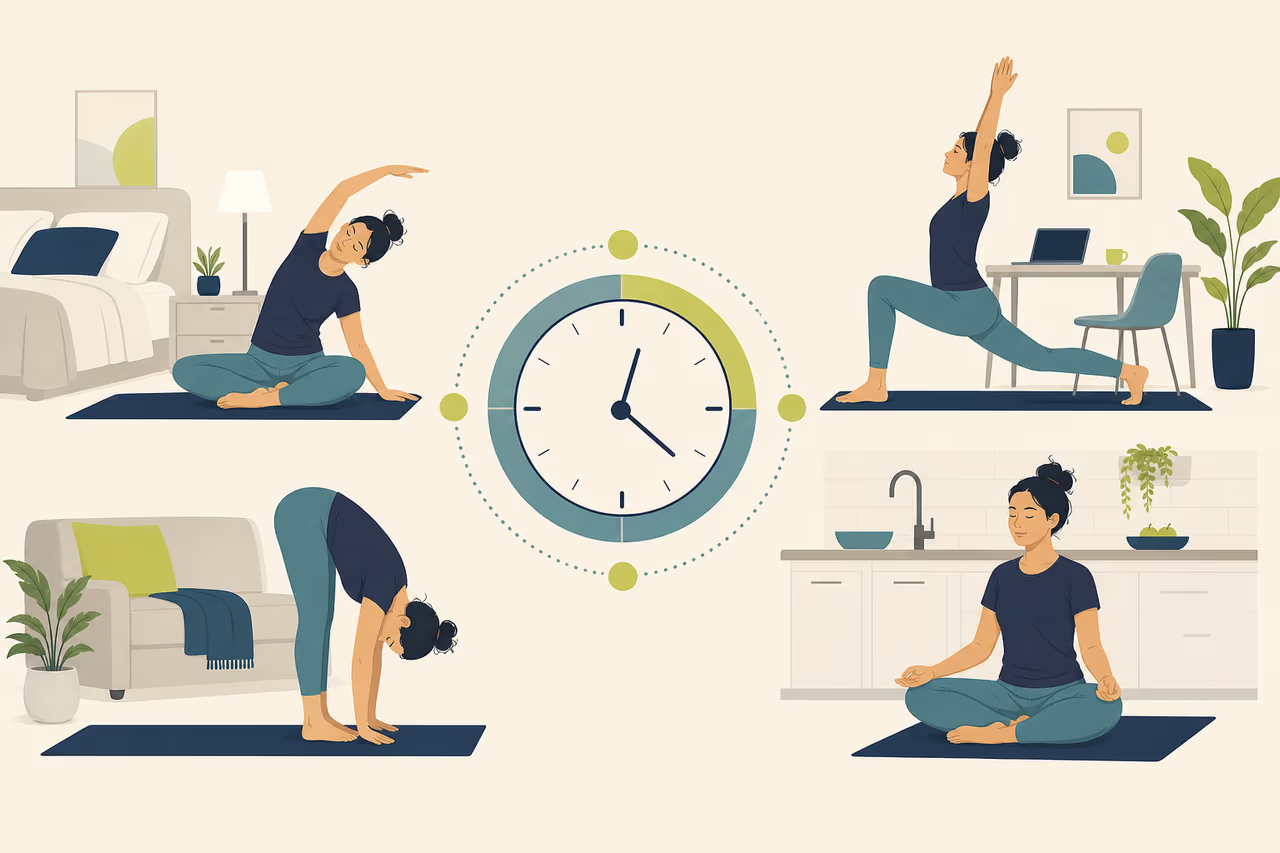
The Minimum Effective Dose
To build a lasting habit, you need a framework that accommodates your busiest days. According to physical activity guidelines, adults can work toward 150 to 300 weekly minutes of moderate aerobic activity and muscle strengthening on at least two days. While yoga can contribute to these goals, it is helpful to view your practice as a menu of options rather than a single, fixed requirement.
Short sessions provide movement and mental benefits, though they may not offer the same depth as longer, immersive classes. When you only have a few minutes, focus on quality and intention rather than intensity.
Your 'Capacity-Based' Practice Menu
Use this menu to match your practice to your daily reality:
- The 5-Minute Reset: Use this for high-stress days. Focus on simple breathwork or gentle movement to transition from work mode to rest mode. This is about nervous system regulation, not physical exertion.
- The 20-Minute Maintenance: A focused sequence for mobility or strength. This is your "standard" day practice,enough to feel the benefits without needing to clear your entire evening.
- The 45-Minute Deep Dive: A full session for when time and energy allow. Save these for weekends or days when your schedule is lighter.
- The Accountability Check: If you haven't practiced in two weeks, it is time to reassess. Browse trainers for external support to help you regain momentum.
How to Handle Missed Sessions
Missing a scheduled session is not a failure; it is a normal part of life. When your routine fails, the recovery path is simple: reset to a "minimum viable practice." On the days following a missed session, commit to just five minutes of breathwork or light stretching.
By lowering the barrier to entry, you prevent the "all or nothing" cycle from taking hold. If you find that you are consistently missing sessions, it may be a sign that your self-directed routine has hit its limit.
When to Seek External Support
Self-guided practice offers significant convenience, but it lacks the personalized feedback and external accountability of a teacher. If you find yourself repeatedly starting and stopping, or if you feel unsure about how to progress safely, it may be time to seek external structure.
Prime Tempr helps readers find a trainer, studio, or trainer-shared programme that can add structure and accountability after a self-directed routine stops being enough. A teacher can help you tailor your practice to your specific needs, provide the feedback necessary to improve, and offer the external nudge that keeps you showing up even when life gets busy.
For more guidance on choosing the right approach, see our resources on how to choose the right yoga session length for your schedule and the benefits of five-minute yoga on busy days. If you are ready to add structure to your routine, you can find a yoga teacher who understands the realities of a busy life.
Sources
- Physical activity (opens in a new tab), World Health Organization.
- Top 10 Things to Know About the Physical Activity Guidelines (opens in a new tab), Office of Disease Prevention and Health Promotion.
Watch alongside this guide
A 22-minute home yoga practice
Use the session as a realistic practice option while testing the article's advice on consistency and manageable scope. Source: Yoga With Adriene. This optional video is context, not evidence or personal instruction.
The YouTube player stays unloaded until you choose to watch. Loading it connects to YouTube and may allow that service to process usage data.