How to Finish a Desk Day Without Carrying Work Tension Into the Evening
Use realistic position changes and simple boundary breaks to leave desk tension behind without starting a grueling workout.
https://primetempr.com/blog/how-to-finish-a-desk-day-without-carrying-work-tension-into-
Ending a long desk day often leaves you carrying physical stiffness and mental fatigue right into your evening family or personal time. Sitting for hours creates a familiar loop of tight shoulders, a tired lower back, and a restless mind that refuses to log off.
Transitioning out of a desk day does not require a grueling workout or an hour of intense exercise that feels like just another chore on your to-do list. Small, consistent changes in position and a deliberate evening boundary break the cycle of physical and mental carryover.
Why work tension lingers after a desk day
Sitting all day creates both physical and mental exhaustion because the body remains fixed in one position while the mind processes endless digital inputs. A workstation should support neutral, comfortable positions, but even a good setup should allow regular changes of position. When you stay seated for hours without interruption, blood flow slows, muscles stiffen to hold you upright against gravity, and your nervous system stays locked in a low-grade state of alert.
When evening arrives, that physical stiffness mimics emotional stress. You close your laptop, but your shoulders remain elevated and your breathing remains shallow. Waiting until physical pain or deep exhaustion sets in before attempting to change position makes it much harder to unwind.
All physical activity counts, any amount is better than none, and adults should limit sedentary time. You do not need a major fitness overhaul to make a difference; you simply need a reliable way to interrupt the sedentary loop before the evening begins.
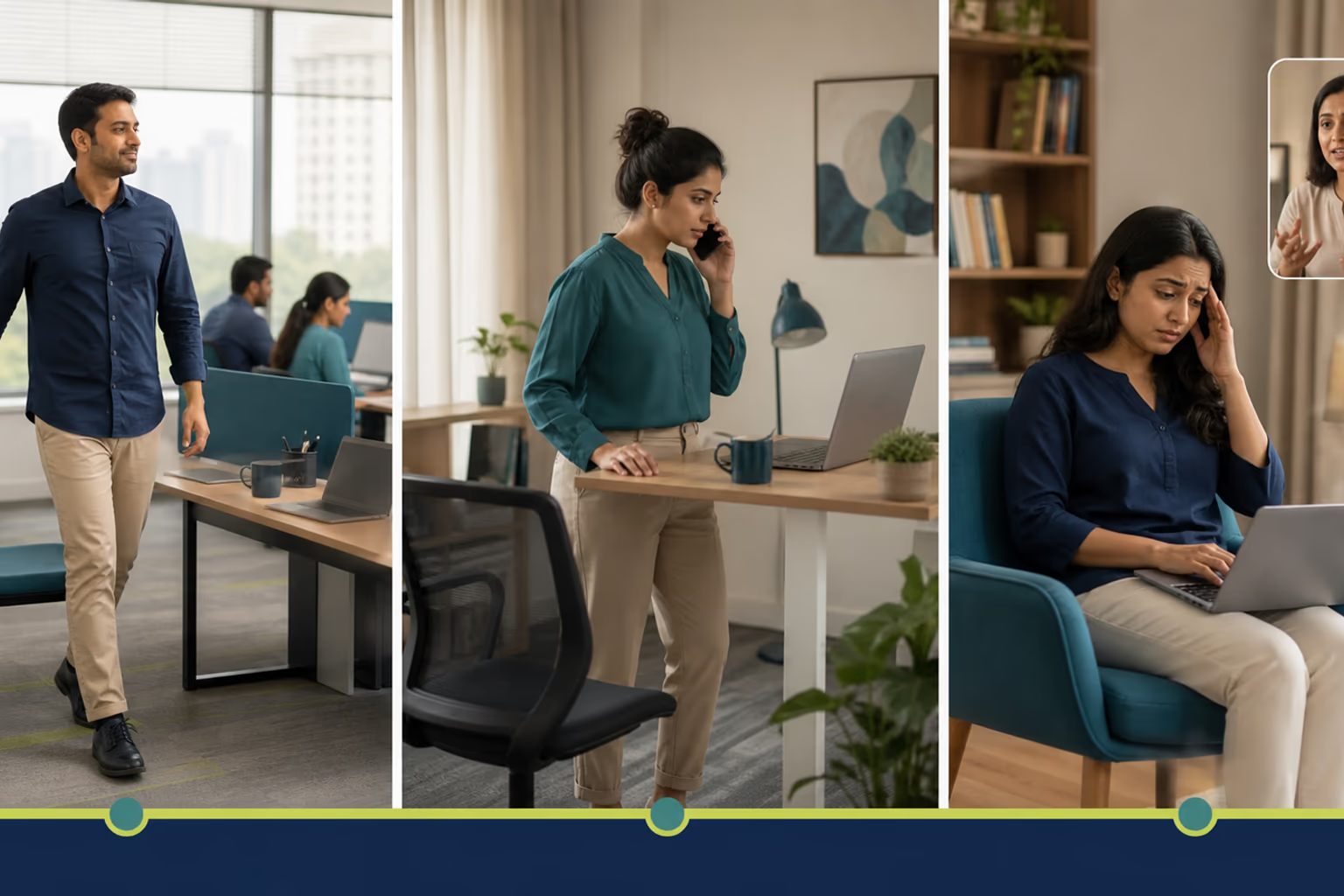
The minimum version: A simple End-of-Day shift
If a full exercise routine feels too difficult on heavy deadline days, scale back to a single two-minute position change or a short walk around your living space. The goal is not to burn calories or build strength, but to signal to your nervous system that the working day has concluded.
Here is a straightforward minimum version you can use immediately when you close your laptop:
- Close all work tabs, turn off your primary monitor, and physically stand up away from your desk setup.
- Spend two minutes changing your physical position, such as reaching your arms overhead, gently rolling your shoulders, or taking a few slow steps around the room.
- Change your clothes or step outside for a brief walk to create a distinct sensory boundary between screen work and home life.
This simple sequence requires minimal willpower and fits easily into tight schedules, small homes, or busy households.
Practical trade-offs and when to seek guidance
Self-directed movement breaks require personal discipline and may not address persistent postural habits without professional guidance. Relying solely on short walks or quick stretches can help you decompress, but it has limits. If you have chronic aches or find that you repeat the same tension patterns week after week, self-directed adjustments might not be enough.
Prime Tempr helps desk-based readers compare trainers, short practices and nearby classes when self-directed movement breaks need more structure or personal observation. Working with an instructor provides personalized feedback on your posture and helps you build a sustainable movement habit tailored to your actual work schedule and physical needs.
The desk day closure checklist
Use this structured checklist to close out your workday and protect your personal evening time:
- Close all work tabs and step away from the primary desk setup completely.
- Perform a simple two-minute position change or standing stretch to release postural stiffness.
- Take a brief walk or change clothes to signal the end of the workday to your mind and body.
- Choose one structured support option, such as a local class or a qualified trainer, if self-directed breaks fall short of relieving your recurring tension.
If a full routine feels too difficult on heavy deadline days, scale back to a single two-minute position change or short walk, and restart structured breaks the following day. Consistency matters far more than intensity when you are trying to reclaim your evenings.
Follow-along reflection
Use the prompts below to review the idea in context, without turning it into a diagnosis or a fixed rule.
The desk day closure checklist
- Close all work tabs and step away from the primary desk setup.
- Perform a simple two-minute position change or standing stretch.
- Take a brief walk or change clothes to signal the end of the workday.
- Choose one structured support option if self-directed breaks fall short.
Questions to carry forward
- Why does sitting all day make me feel physically and mentally exhausted?
- What is the minimum version of an evening transition routine?
- How can I set a clear boundary between screen work and evening family time?
- When should I move from self-directed breaks to working with a trainer?
Keep learning
Ready for the next step? Movement for Desk-Job Days.
Sources
- Computer Workstations. Occupational Safety and Health Administration. https://www.osha.gov/etools/computer-workstations (opens in a new tab)
- Physical activity. World Health Organization. https://www.who.int/news-room/fact-sheets/detail/physical-activity (opens in a new tab)
Watch alongside this guide
Five movements you can do at your desk
This concise Mayo Clinic demonstration gives readers a visual menu for changing position during a workday. Use only comfortable options and stop for pain, dizziness, numbness or unusual symptoms.
The YouTube player stays unloaded until you choose to watch. Loading it connects to YouTube and may allow that service to process usage data.