How to Exercise Privately When You Share a Room
Practice quietly in a shared room using mat-sized routines, clear timing, and minimal equipment for simple daily movement.
https://primetempr.com/blog/how-to-exercise-privately-when-you-share-a-room
Exercising at home becomes complicated when you share a room or live in close quarters with family or roommates. You lack privacy, fear disturbing others with noise or heavy movement, and do not have space for large equipment. Waiting for an empty room that never becomes available leads to frustration. Private home exercise in a shared room does not require heavy equipment, jumping, or a separate gym. It relies on quiet, mat-sized movement patterns and clear boundaries. Any amount of physical activity is better than none, all activity counts, and muscle strengthening benefits everyone. Adults can work toward 150 to 300 weekly minutes of moderate aerobic activity and muscle strengthening on at least two days.
The reality of exercising in a shared room
Sharing a living space means accepting lower-impact, quieter movements instead of explosive cardio. High-impact jumping shakes the floor, creates noise, and disturbs household members or downstairs neighbours. Privacy relies on timing and clear communication rather than a locked studio.
Many people fall into common failure modes when trying to build a routine in tight quarters. They wait for an empty house or room that never materializes, or they buy bulky equipment that clutters the shared floor and creates friction with roommates. When a full routine is not possible due to household activity, scale back to a 10-minute mat-sized mobility sequence or do breathing and gentle stretching while seated on a chair or bed.
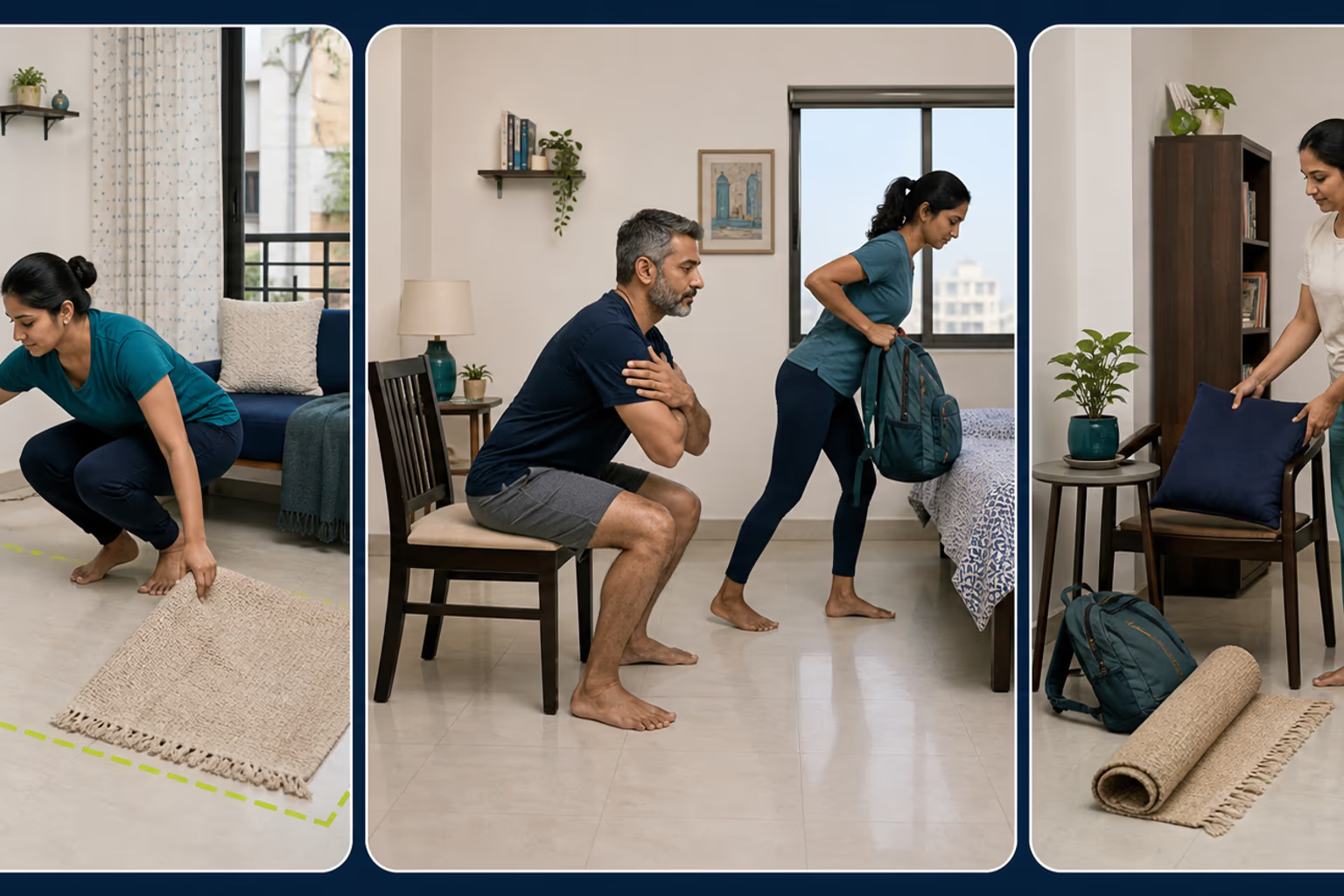
Designing a mat-sized, quiet practice
You do not need a sprawling home gym to meet your movement goals. A single mat-sized area is enough for a complete practice if you select movements that stay close to the floor.
| Movement Type | Best For Shared Rooms | What to Avoid |
|---|---|---|
| Floor Mobility | Slow cat-cow stretches, seated twists, and gentle hip openers. | Rapid transitions that require sliding or scuffing the floor. |
| Bodyweight Loading | Slow squats, wall sits, and modified push-ups. | Jumping jacks, burpees, and drop squats that create noise. |
| Stability Work | Balancing poses and controlled core holds. | Heavy equipment drops or flailing limbs. |
Keep your movements contained within the boundary of a single mat to maintain privacy and peace. Focus on controlled tempos where you lower and raise your body with intention instead of speed. This approach keeps the practice silent and builds muscle strength effectively without requiring dumbbells or resistance bands.
Timing, privacy, and household communication
Finding privacy in a shared household is rarely about locking a door. It is about rhythm and communication. Talk openly with the people you live with about your practice window. Let them know you need a ten or fifteen minute block of uninterrupted floor space. Stating your intention often prevents people from walking through your workspace unexpectedly.
If morning or evening hours are too chaotic, look for micro-windows during the day. A short mobility sequence completed while others are eating or watching television can satisfy your daily movement goals. Prime Tempr helps home exercisers find trainers who offer online sessions, prop-light programmes and realistic modifications for the space they actually have, making it easier to adapt your timing to your household's natural rhythms. You can explore options through Find a home-practice trainer or read more about Small-Space Home Exercise.
Shared-Room private exercise checklist
Use this checklist to set up your practice without causing friction in your household:
- Select a single mat-sized corner or floor space that requires zero furniture rearranging.
- Choose low-impact, quiet movements such as slow bodyweight loading or floor mobility over jumping.
- Communicate your practice window clearly to roommates or family members.
- Keep props minimal, relying on your bodyweight or a stable wall instead of bulky weights.
- Stop immediately if movement causes joint pain or creates friction in the shared space.
If static guidance is not enough or if you experience persistent discomfort, consult a qualified healthcare professional before continuing your routine.
Follow-along reflection
Use the prompts below to review the idea in context, without turning it into a diagnosis or a fixed rule.
Shared-Room private exercise checklist
- Choose low-impact, quiet movements (such as slow bodyweight loading or floor mobility) over jumping.
- Keep props minimal,rely on bodyweight or a stable wall instead of bulky weights.
Trade-offs to keep in view
- Working out in a shared room means accepting lower-impact, quieter movements rather than explosive cardio.
If this approach does not fit
If a full routine is not possible due to household activity, scale back to a 10-minute mat-sized mobility sequence or do breathing and gentle stretching while seated on a chair or bed.
Questions to carry forward
- How can I practice without disturbing anyone else in the room or downstairs?
- What kind of movement fits into a single mat-sized area?
- How do I manage privacy and timing when living in a shared household?
- Do I need any equipment for a private room workout?
- What is a realistic minimum version of exercise when space is tight?
Sources
- World Health Organization, Physical activity, https://www.who.int/news-room/fact-sheets/detail/physical-activity (opens in a new tab)
- Office of Disease Prevention and Health Promotion, Top 10 Things to Know About the Physical Activity Guidelines, https://odphp.health.gov/our-work/nutrition-physical-activity/physical-activity-guidelines/current-guidelines/top-10-things-know (opens in a new tab)
- Physical activity (opens in a new tab)
- Top 10 Things to Know About the Physical Activity Guidelines (opens in a new tab)
Watch alongside this guide
Yoga for complete beginners
This complete beginner session shows how a guided practice can fit into one mat-sized area. Pause freely, use stable support and skip movements that do not suit the room or body.
The YouTube player stays unloaded until you choose to watch. Loading it connects to YouTube and may allow that service to process usage data.