How to Exercise in a Small Bedroom Without Moving Furniture
Build muscle strength and maintain moderate movement inside a tight bedroom using a single mat footprint and quiet modifications.
https://primetempr.com/blog/how-to-exercise-in-a-small-bedroom-without-moving-furniture
Effective home exercise requires only a single mat-length footprint, vertical stability, and quiet vertical movement rather than an open room. If you want to exercise in a cramped or shared bedroom, moving heavy furniture every day is tedious, and loud floor movements disturb others. You do not need a dedicated fitness room or a sprawling layout to build a sustainable physical routine. Any amount of physical activity is better than none, all activity counts, and muscle strengthening benefits everyone.
The reality of small-space movement
Trying to perform wide dynamic jumps or sprawling floor stretches in a room cluttered with bed frames and side tables creates immediate frustration. Giving up entirely because you assume exercise requires a fitness studio leads to inactivity. Your room layout dictates your boundaries, but those boundaries still leave enough space for meaningful movement.
When your ideal full-range sequence does not fit your room, reduce your footprint to a single yoga mat, swap horizontal movements for upright or chair-supported options, and focus on steady control rather than range of motion. You sacrifice wide, sprawling movements and high-impact cardio jumps for quiet, controlled strength and mobility work. Your workout selection is shaped by your furniture layout rather than an idealized studio template.
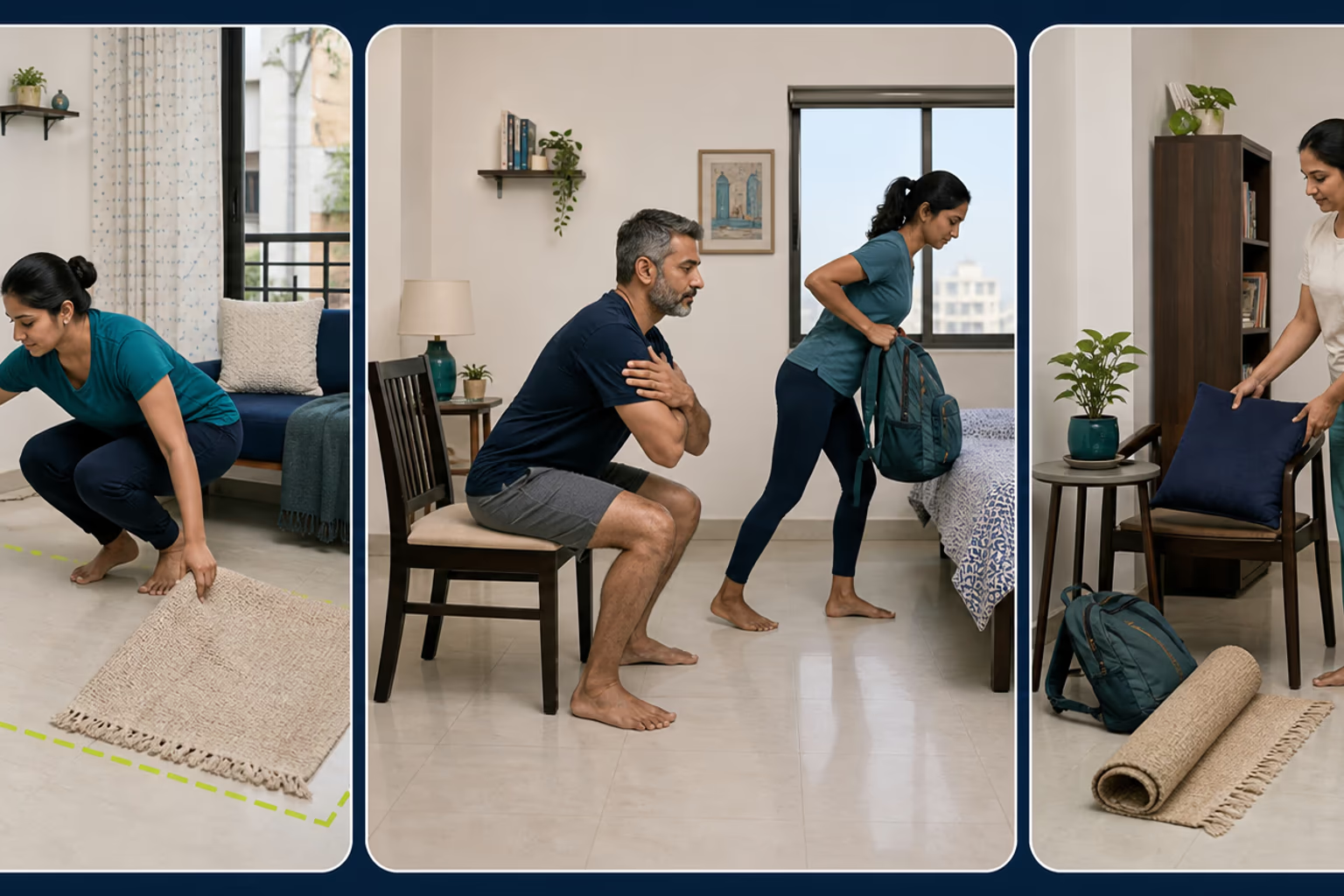
Measuring your minimal footprint
How much physical space do you actually need for a safe home practice? You only need a perimeter of approximately six by two feet. This single-mat boundary allows you to complete foundational movements without striking your bed, wardrobe, or nightstand.
Before starting any session, scan the floor within your reach. Ensure your arms can extend overhead and your feet can step forward or backward without catching on loose rugs or stray items. If an exercise requires you to extend horizontally into a piece of furniture, modify the angle or switch to a vertical variation that stays directly above your base of support.
Building a quiet, equipment-light routine
Can you meet weekly activity guidelines without jumping or rearranging furniture? Adults can work toward 150 to 300 weekly minutes of moderate aerobic activity and muscle strengthening on at least two days. You can achieve this standard in a tight bedroom by selecting exercises that emphasize slow eccentric lowering, isometric holds, and bodyweight control.
Replace wide jumping jacks with quiet, controlled squats. Substitute sprawling floor lunges with stationary split squats or chair-supported step-backs. Keep your movements grounded or use a stable wall for balance. By eliminating high-impact jumps, you protect downstairs neighbours from sudden thuds while keeping your joints safe from repetitive impact.
The one-mat small room exercise checklist
Use this decision guide to set up your practice space and choose appropriate movements without moving your furniture.
- Clear a single mat-sized perimeter (approx 6x2 feet) without shifting heavy furniture.
- Choose low-impact, vertical movements, such as squats, chair-supported lunges, and controlled holds, over jumping.
- Keep movements grounded or use a stable wall or bed frame for balance rather than sprawling out.
- Substitute noisy floor slaps or drops with slow, deliberate eccentric lowering.
- Commit to a sustainable schedule targeting moderate activity without burning out on day one.
Stop rules and safe modifications
Ignoring joint discomfort or stability limits while squeezing into awkward corners leads to unnecessary strains. Pay attention to how your body responds to tight angles. If a movement forces your spine into a twist to avoid a bedside table, stop immediately.
Scale your session down by shortening your range of motion or shifting from standing balances to seated variations on a sturdy chair. If you feel sharp joint pain, dizziness, or unusual fatigue, pause your practice and rest. When static home guidance is not enough or your living space presents unique architectural challenges, personalized support can help you adapt. Prime Tempr helps home exercisers find trainers who offer online sessions, prop-light programmes and realistic modifications for the space they actually have.
Next steps for guided home practice
Finding professional instruction tailored to tight living spaces removes the guesswork of adapting standard routines. You can explore structured options through Small-Space Home Exercise resources, connect with instructors directly via Find a home-practice trainer, or review complete options at Browse yoga programmes. Matching your movement goals to your actual room dimensions keeps your practice realistic, quiet, and sustainable over the long term.
Follow-along reflection
Use the prompts below to review the idea in context, without turning it into a diagnosis or a fixed rule.
The one-mat small room exercise checklist
- Choose low-impact, vertical movements (such as squats, chair-supported lunges, and controlled holds) over jumping.
- Keep movements grounded or use a stable wall/bed frame for balance rather than sprawling out.
Trade-offs to keep in view
- Your workout selection is dictated by your furniture layout rather than an idealized fitness studio template.
If this approach does not fit
When the ideal full-range sequence does not fit your room, reduce your footprint to a single yoga mat, swap horizontal movements for upright or chair-supported options, and focus on steady control rather than range of motion.
Questions to carry forward
- How much physical space do I actually need for a safe home practice?
- Can I meet weekly activity guidelines without jumping or rearranging furniture?
- How do I protect downstairs neighbours from noise in a tight room?
- What exercises work best when my arms and legs have limited extension room?
- How do I find professional guidance tailored to tight living spaces?
Sources
- Physical Activity (opens in a new tab), World Health Organization
- Top 10 Things to Know About the Physical Activity Guidelines (opens in a new tab), Office of Disease Prevention and Health Promotion
Watch alongside this guide
Yoga for complete beginners
This complete beginner session shows how a guided practice can fit into one mat-sized area. Pause freely, use stable support and skip movements that do not suit the room or body.
The YouTube player stays unloaded until you choose to watch. Loading it connects to YouTube and may allow that service to process usage data.