How to Cool Down When There Is No Room to Lie Flat
Learn practical upright stretches and breathing methods to lower your heart rate safely when you lack floor space.
https://primetempr.com/blog/how-to-cool-down-when-there-is-no-room-to-lie-flat
An effective cool-down does not require lying flat on a floor. Seated, standing, and supported adjustments allow you to lower your heart rate and ease tension in minimal space.
Standard cool-down routines assume floor space for lying flat, which is impossible when living in cramped quarters, shared rooms, or cluttered spaces. Many people face tight layouts where a yoga mat cannot be unrolled. This constraint often leads exercisers to skip recovery entirely or attempt awkward stretches against unstable furniture. Adapting your transition from movement to rest helps you maintain consistency without friction or conflict with neighbours.
Why lying flat is not mandatory for a cool-down
You can lower your heart rate and ease breathing effectively while standing or sitting upright. The primary goal of any post-activity transition is to gradually reduce your heart rate and relax working muscles, rather than to achieve a specific supine posture. Any amount of physical activity is better than none, all activity counts, and muscle strengthening benefits everyone. Physical guidelines note that adults can work toward 150 to 300 weekly minutes of moderate aerobic activity and muscle strengthening on at least two days, and none of these targets depend on having a sprawling room for floor-based recovery.
Upright movements avoid the need for sprawling floor space while still signaling to your nervous system that the active phase of your session has concluded. By utilizing a chair seat, a sturdy wall, or a clear patch of floor just wide enough for your two feet, you retain full control over your recovery routine.
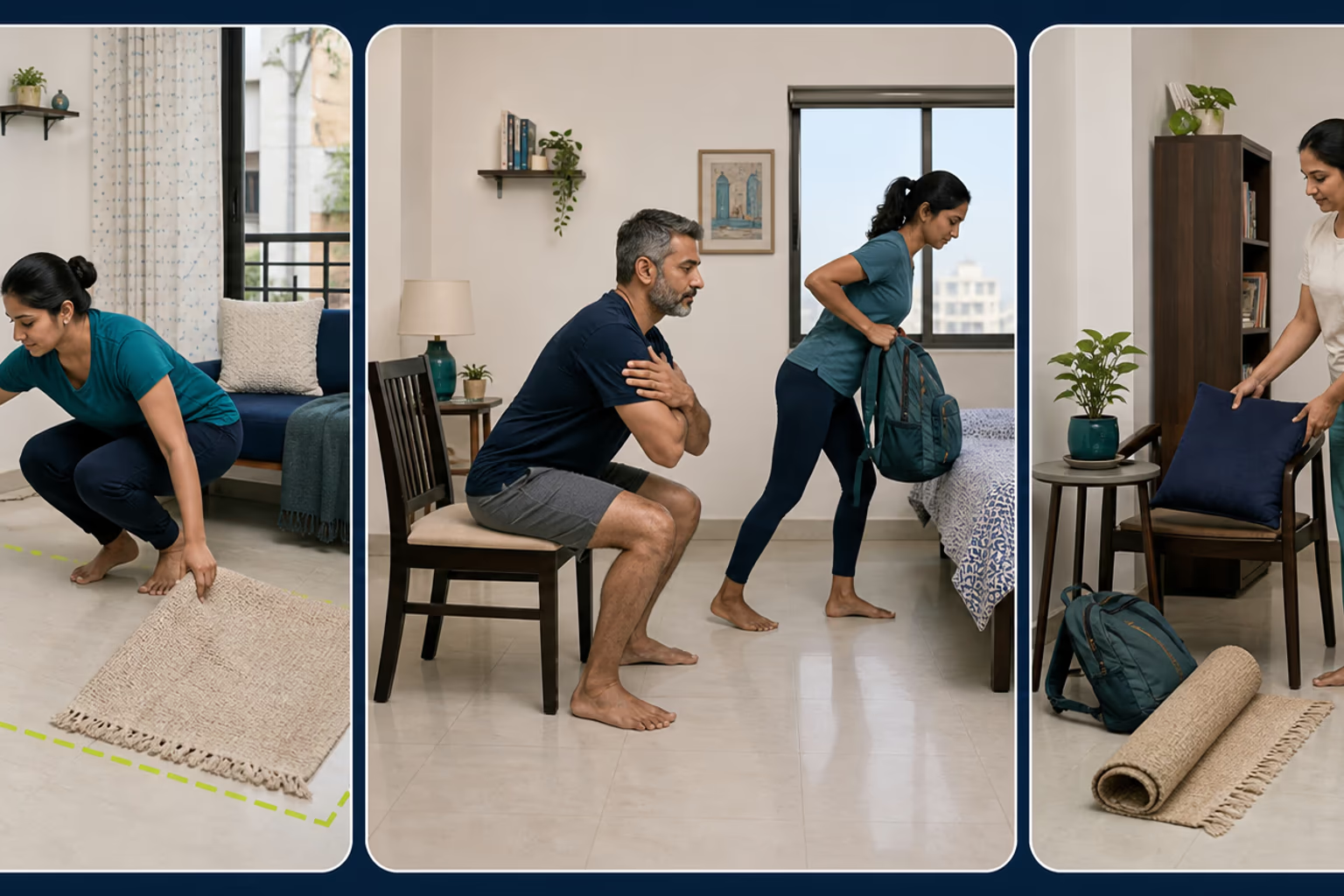
A minimal upright cool-down routine for tight spaces
When floor space is unavailable, keep your sequence simple, quiet, and vertical. You do not need sweeping movements or elaborate props.
- Seated Centering: Sit upright on a sturdy chair with your feet flat on the ground. Rest your hands gently on your thighs, close your eyes or soften your gaze, and take slow, controlled breaths for two minutes to let your pulse settle.
- Upright Neck and Shoulder Rolls: While seated or standing tall, gently roll your shoulders backward in slow circles. Incline your ear toward one shoulder for a few breaths, then switch sides to release upper-body tightness accumulated during your workout.
- Wall-Supported Calf Stretch: Stand facing a wall, place your hands against it at shoulder height, and step one foot back. Press your heel toward the floor to ease tension in your lower legs without needing to lie down.
If you want structured guidance tailored to cramped home environments, Prime Tempr helps home exercisers find trainers who offer online sessions, prop-light programmes and realistic modifications for the space they actually have. You can explore options such as Find a home-practice trainer or browse Browse yoga programmes to maintain a steady routine. For additional tips on utilizing household items, review How to Use a Sturdy Chair in a Small Space Routine and our guide on Small-Space Home Exercise.
Practical trade-offs and safety limits in cramped rooms
Adapting your cool-down to a small space involves distinct trade-offs. Upright cool-downs may not relieve spinal compression as completely as a full supine rest position. Shared or tight environments require quiet, subtle movements rather than sweeping stretches that might knock over household items or disturb others.
Safety remains a priority in confined quarters. Always verify that your chair is steady on a non-slip surface and that walls used for balance are secure. Avoid leaning against unstable shelving units or doors that might shift unexpectedly. If seated or standing stretches still feel awkward due to room layout, pause entirely, sit steadily on a chair or edge of the bed, focus on slow breathing, and let your heart rate settle before moving on.
The space-saving upright cool-down checklist
Use this structured checklist to complete a safe, floor-free recovery after your activity session.
- Find stability: Locate a stable chair, wall space, or cleared edge to stand or sit against.
- Breathe deliberately: Perform 2 minutes of controlled, slow breathing to lower your heart rate.
- Release the upper body: Do gentle seated neck and shoulder rolls to release upper-body tension.
- Stretch the legs: Take standing or seated calf stretches using a wall for stable support.
- Plan your next move: Review your progress and choose a realistic next step for your home practice.
When physical fatigue or tight layouts make even upright movements impractical, stop immediately and rest in a comfortable seated position until your breathing returns to normal.
Choosing your next step for home practice
Consistency in movement comes from adapting to your actual environment rather than waiting for ideal conditions. By replacing floor-bound stretches with upright breathing, supported wall stretches, and seated mobility, you protect your body and maintain your weekly activity goals. Select one small adjustment from the checklist above for your next session, and build your recovery habit around the space you have today.
Sources
- Physical activity (opens in a new tab) - World Health Organization
- Top 10 Things to Know About the Physical Activity Guidelines (opens in a new tab) - ODPHP
Watch alongside this guide
Yoga for complete beginners
This complete beginner session shows how a guided practice can fit into one mat-sized area. Pause freely, use stable support and skip movements that do not suit the room or body.
The YouTube player stays unloaded until you choose to watch. Loading it connects to YouTube and may allow that service to process usage data.