Combining Walking and Strength Training: A Practical, Sustainable Guide
Build a sustainable routine by balancing walking and strength training with weekly schedules that prevent burnout.
https://primetempr.com/blog/how-to-combine-walking-and-strength-training-a-practical-sus
Combining walking and strength training avoids complex, high-intensity schedules. You skip hours in the gym and rigid fitness splits to gain benefits. A sustainable routine focuses on low-impact integration and consistency over perfection.
Any amount of physical activity is better than none, and all activity counts. A balanced routine pairs moderate aerobic activity with at least two days of muscle strengthening. Understanding how these exercises complement each other builds a repeatable habit that fits your lifestyle.
The Simple Math of a Balanced Routine
When planning weekly movement, health guidelines serve as a flexible framework rather than strict rules. Adults can work toward 150 to 300 weekly minutes of moderate aerobic activity and muscle strengthening on at least two days.
Walking is an accessible moderate aerobic activity that requires no specialized equipment and adapts to your energy levels. Strength training targets major muscle groups using resistance through bodyweight exercises, resistance bands, or weights.
If reaching 150 minutes of walking or scheduling two strength sessions feels overwhelming, remember any physical activity beats none, and all activity counts. Reaching maximum targets immediately is unnecessary for well-being. Starting with a 10-minute walk or a single short strength session is a valuable step forward.
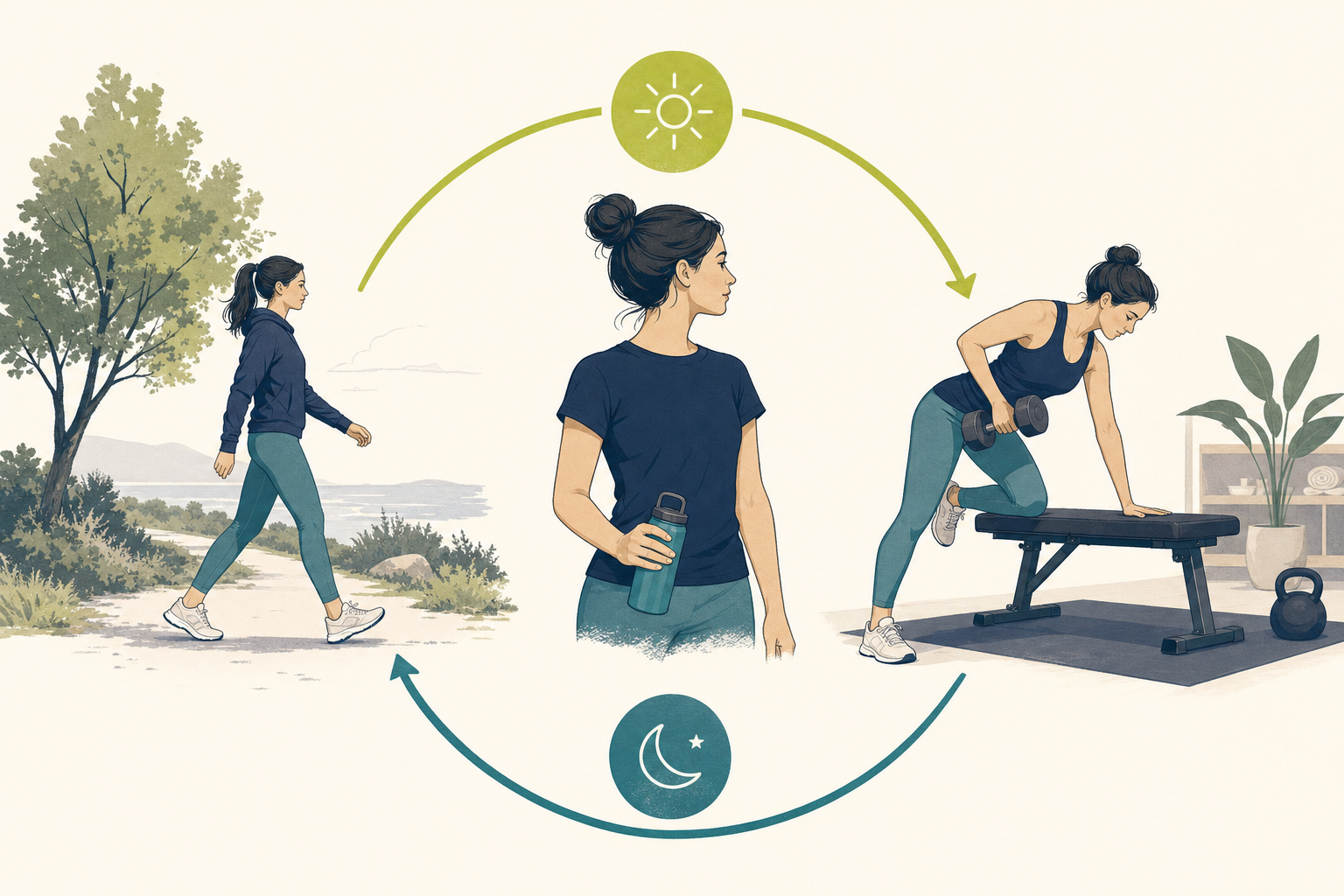
Should You Walk or Strength Train First?
If you plan to walk and strength train on the same day, you might wonder which activity you should perform first. The answer depends entirely on your personal goals, energy levels, and schedule. There is no single "correct" sequence, but there are clear trade-offs to consider for each approach.
Option A: Walking First
Using your walk as the initial activity is a excellent, low-impact warm-up. It increases your heart rate, joint mobility, and blood flow, preparing your body for resistance work.
- The Trade-off: If you go for a long or brisk walk first, you might slightly limit your energy and physical strength for the strength training session that follows. Your muscles may feel pre-fatigued, meaning you might need to lift lighter weights or perform fewer repetitions.
Option B: Strength Training First
Prioritizing strength training allows you to perform resistance exercises when your muscles and nervous system are completely fresh. This is highly beneficial if your primary goal is to build physical strength or improve your lifting form.
- The Trade-off: Walking after a challenging strength session can feel more physically demanding. Your legs may feel heavy, and your overall stamina might be lower.
Both sequences prove highly effective. Since any physical activity beats none, the best sequence feels most comfortable and encourages completing the session. Enjoying diverse movement styles lets you also explore how Walking and Yoga: Building a Sustainable Movement Routine supports overall mobility and recovery.
How to Structure Your Week (Without Burnout)
Burnout causes people to abandon new movement routines. Attempting too much too soon, such as scheduling long walks and heavy strength sessions on the same day, leads to fatigue.
Another common pitfall is the "all-or-nothing" mindset. Believing that missing a single day ruins your entire routine often leads to giving up entirely. To avoid these failure modes, Be sure to build flexibility into your schedule and choose a structure that matches your weekly availability.
The following table outlines the trade-offs of the two main scheduling methods.
| Scheduling Method | Practical Benefits | Practical Trade-offs |
|---|---|---|
| Same-Day Integration (Combined) | • Saves time by grouping activities together; • Allows for complete rest days later in the week | • Can lead to higher physical fatigue during the second activity; • Requires a longer single block of time |
| Alternating Days (Split) | • Allows for higher focus and energy during each session; • Promotes better recovery between strength sessions | • Requires you to schedule movement more frequently throughout the week; • Can feel harder to maintain if your schedule is unpredictable |
During a busy or tiring week, or if you miss a scheduled session, use the recovery path: scale back to a 10-minute walk or gentle mobility session. This keeps the habit alive without overtaxing your body. Remember, working toward 150 to 300 weekly minutes of moderate aerobic activity and muscle strengthening on at least two days is a gradual process, not a daily test of perfection.
The Sustainable Weekly Movement Planner
Use this adaptable planner to design a routine that fits your life. Treat it as a guide to balance your movement rather than a rigid requirement.
- Aim for Consistency: Work toward 150 to 300 weekly minutes of moderate aerobic activity like walking. You can break this down into 20 to 30 minutes a day, or even shorter, more frequent walks.
- Prioritize Strength: Schedule muscle-strengthening activities on at least two days of the week. Focus on simple, compound movements that target major muscle groups.
- Choose Your Sequence: Walk first if you want a gentle, low-impact warm-up. Choose to strength train first if your main goal is building muscle or lifting weights with fresh energy.
- Keep It Flexible: If you are short on time or feeling fatigued, use a 10-minute walk or a micro-movement session. Every step and movement counts toward your physical well-being.
Making It Stick: The Power of Personalization and Support
Applying guidelines for walking and strength training to daily life can feel confusing. Doubting your form or struggling with consistency during busy periods is common.
Professional guidance and community support are valuable. Prime Tempr helps readers connect broad activity guidance with trainers and yoga businesses that can provide a balanced, repeatable programme and human accountability. Working with a qualified professional allows you to move away from high-intensity fitness trends and focus on a sustainable, personalized approach that respects your body's limits.
Whether you want to build a balanced practice with a personal trainer or explore how social connections keep you motivated by reading Beyond the Walk: Using Social Accountability to Build a Routine, support remains available. You do not have to navigate your movement journey alone.
Sources
- World Health Organization (WHO): Physical activity (opens in a new tab)
- Office of Disease Prevention and Health Promotion (ODPHP): Top 10 Things to Know About the Physical Activity Guidelines (opens in a new tab)
Watch alongside this guide
Just walk
This short walking overview reinforces the guide's focus on accessible, repeatable movement rather than elaborate equipment. Source: American Heart Association. This optional video is context, not evidence or personal instruction.
The YouTube player stays unloaded until you choose to watch. Loading it connects to YouTube and may allow that service to process usage data.