How to Choose the Right Yoga Session Length for Your Schedule
Compare short daily yoga practices against longer routines to build a sustainable habit that fits your real schedule.
https://primetempr.com/blog/how-to-choose-the-right-yoga-session-length-for-your-schedul
The right yoga session length is the one you can repeat consistently without burning out. Any amount of activity counts, and all movement adds up toward weekly wellbeing goals.
Many practitioners struggle between unrealistic long sessions and guilt over short ones. Believing that only 60-minute classes count as a real practice is a common trap that leads to complete abandonment of a routine when life gets busy. Similarly, relying on rigid streaks that collapse at the first sign of a schedule change or mistaking physical intensity for genuine long-term progress creates unnecessary friction.
Understanding the practical limits of different session lengths and establishing a flexible approach will help you build a sustainable movement habit.
The Core Principle: Any Amount of Activity Counts
When trying to figure out how long a yoga session needs to be to matter, the most important guideline is that any amount of physical activity is better than none. All activity counts, and muscle strengthening benefits everyone.
You do not need an uninterrupted hour on the mat for a practice to be valid or beneficial. Public health guidelines note that adults can work toward 150 to 300 weekly minutes of moderate aerobic activity and muscle strengthening on at least two days. A balanced weekly approach can combine shorter movement snacks with a couple of more immersive sessions, helping you accumulate meaningful physical activity without requiring large, unyielding blocks of free time.
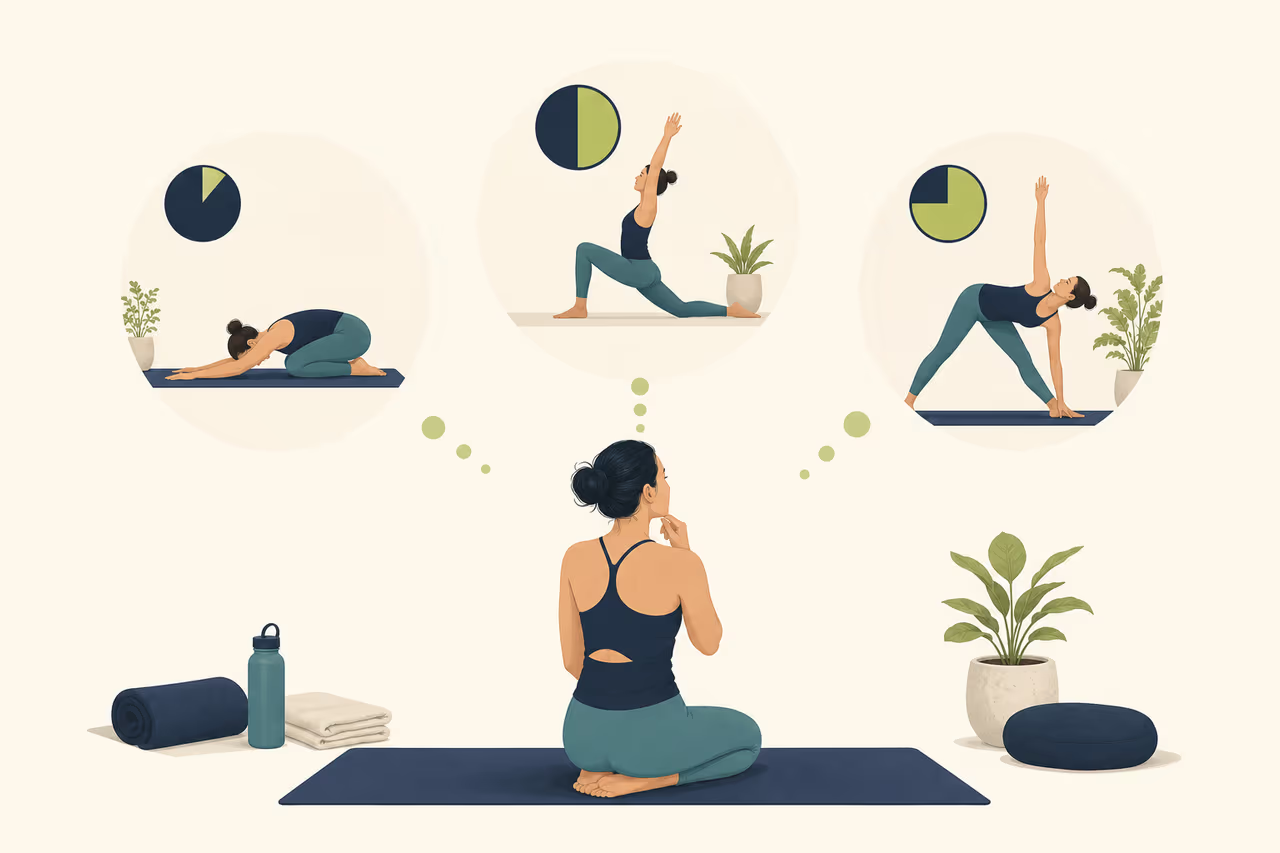
Matching Session Length to Your Real Schedule
Different session lengths meet different practical needs. There is a clear trade-off between short and long practices: shorter sessions fit busy schedules easily but offer less time for deep relaxation, while longer sessions allow thorough exploration but are harder to maintain consistently.
| Session Length | Best Used For | Practical Trade-Offs |
|---|---|---|
| 5 to 15 Minutes | Maintaining daily continuity, relieving sudden tension, or fitting movement into high-stress days. | Limited time for deep unwinding, advanced postures, or comprehensive sequencing. |
| 30 to 45 Minutes | Building moderate strength, exploring targeted mobility, and establishing a steady rhythm. | Requires carving out a dedicated block of time that may be harder to hit daily. |
| 60+ Minutes | Thorough physical exploration, deep relaxation, and comprehensive restorative sequences. | High friction for busy schedules; prone to abandonment if life gets unpredictable. |
If you find yourself short on time, a brief check-in can maintain your continuity. For more on what micro-sessions can achieve, read Five-Minute Yoga on Busy Days: What It Can (and Can't) Do.
Choosing Your Session Length Framework
When a rigid schedule fails, dropping back to a minimal session length you can reliably complete helps preserve your momentum. You can use a structured framework to audit your time and set realistic expectations:
- Audit your available weekly time honestly without planning for an ideal future schedule. Look at your actual calendar rather than hoping for extra hours.
- Choose a minimum viable session length (such as 5 to 10 minutes) for busy days to maintain continuity without guilt.
- Select one or two longer blocks (such as 30 to 45 minutes) for deeper movement and strengthening when time permits.
- Evaluate whether your self-directed practice is stalling and explore trainer support if you need external accountability.
When Self-Directed Practice Stops Being Enough
A solo routine is an effective way to explore movement at your own pace, but it has natural limits. Over time, self-guided practitioners often hit plateaus, lose motivation, or struggle with consistency when novelty wears off.
When a self-directed routine stops being enough, Prime Tempr helps readers find a trainer, studio, or trainer-shared program that adds structure and accountability. External guidance provides personalized feedback, breaks through plateaus, and introduces fresh perspectives that solo practice cannot match.
Next Steps: Finding Ongoing Practice Support
If you are ready to move beyond solo scheduling and want to build a more resilient routine, exploring guided options can make all the difference. You can Find ongoing practice support to connect with professionals who match your schedule and goals, or Browse yoga programmes designed to add reliable structure to your week.
Sources
- Physical activity (opens in a new tab), World Health Organization
- Top 10 Things to Know About the Physical Activity Guidelines (opens in a new tab), Office of Disease Prevention and Health Promotion
Watch alongside this guide
A 22-minute home yoga practice
Use the session as a realistic practice option while testing the article's advice on consistency and manageable scope. Source: Yoga With Adriene. This optional video is context, not evidence or personal instruction.
The YouTube player stays unloaded until you choose to watch. Loading it connects to YouTube and may allow that service to process usage data.