How to Choose the Next Backpack Load Without Guessing
Choose your next backpack load safely with clear progression steps, stable packing habits, and realistic everyday recovery goals.
https://primetempr.com/blog/how-to-choose-the-next-backpack-load-without-guessing
Choosing the next backpack load should rely on steady control and manageable daily recovery rather than guesswork or heavy jumps. Many people want to use a backpack for strength and daily carrying practice, but they guess at weight increments, risk shoulder strain, or overload themselves without a clear progression path. Physical activity guidelines note that any amount of physical activity is better than none, all activity counts, and muscle strengthening benefits everyone. Adults can work toward 150 to 300 weekly minutes of moderate aerobic activity and muscle strengthening on at least two days.
Building practical strength for daily tasks and independence does not require heavy gym equipment or specialized bodybuilding gear. Instead, you can use everyday items inside a sturdy backpack. This approach fits into familiar routines such as desk jobs, small homes, and changing daily schedules. However, progressing without a system can lead to shoulder strain, lower back discomfort, or poor posture. Understanding how to scale your load keeps practice sustainable and protects your joints.
Recognising when it is time to increase your load
You can tell your current backpack load is too light when you can carry it for several minutes without any noticeable challenge to your breathing or posture. Muscle strengthening benefits everyone, but you do not need to rush the process. If your current weight feels effortless and you maintain complete control over your stride, it is appropriate to consider a modest adjustment.
Avoid adding heavy items all at once. Any amount of physical activity is better than none, and steady, incremental progress prevents sudden muscle fatigue. If you finish your practice session and feel entirely normal with zero residual challenge, your body is likely ready for a small increase during your next session.
Safe increments and how to pack your bag
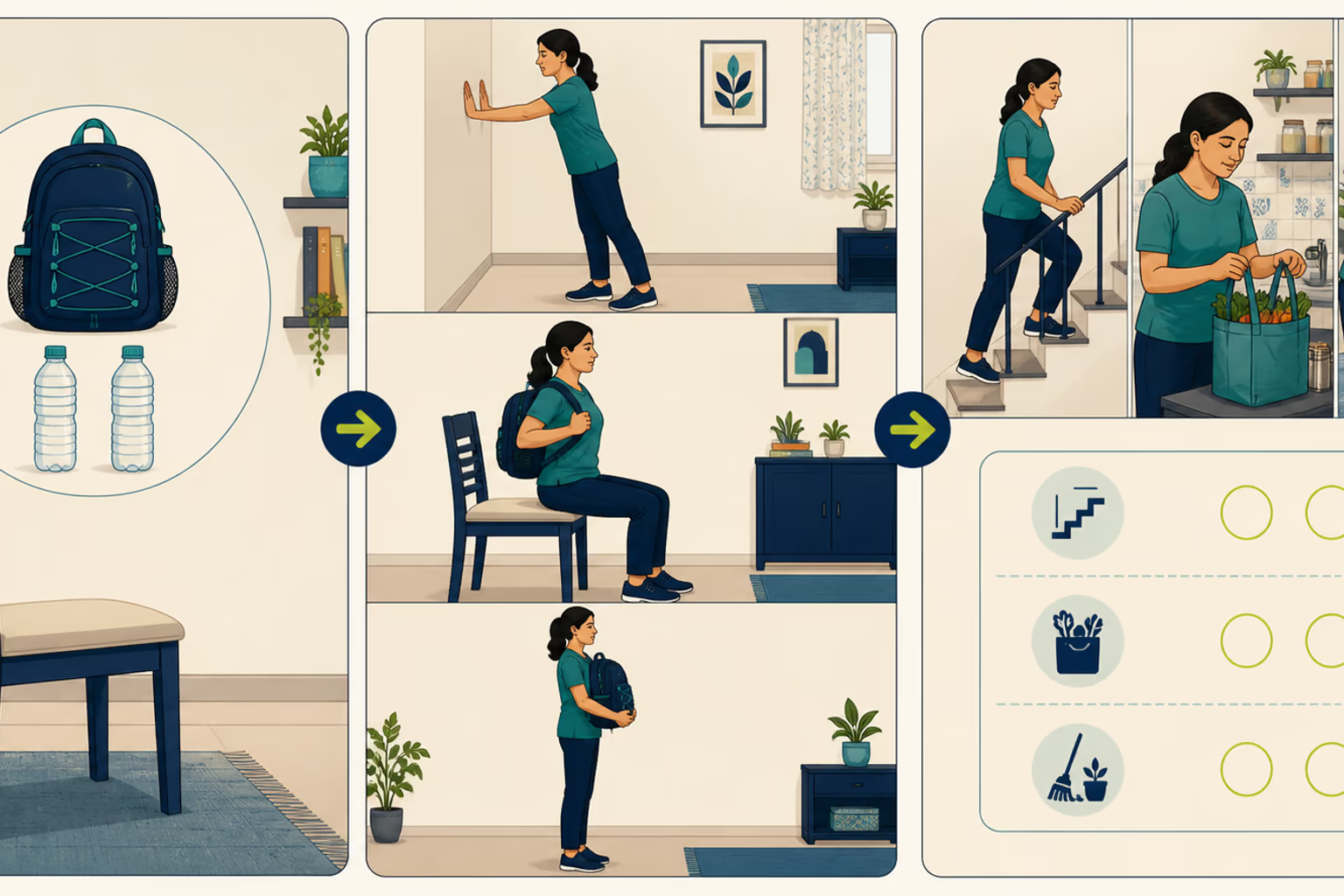
When you decide to increase your backpack weight, keep the increment small. Add a single book, a small water bottle, or a small pouch of rice rather than loading several extra kilograms at once.
How you pack the bag matters just as much as the total weight. Place denser items flat and close to your back rather than letting them shift loosely to the bottom of the bag. Shifting items throw off your balance and force your lower back to overcompensate. Adjust the shoulder straps so the backpack sits evenly across your upper back and shoulders. If the bag pulls you backward or causes you to slouch, the pack is either too heavy or packed incorrectly.
Trade-offs and limits of backpack practice
Backpacks simulate everyday carrying tasks well, but they do not replace formal strength training or medical rehabilitation. Progress is intentionally gradual, meaning dramatic strength leaps will not happen overnight. If a weight increment feels unstable or causes strain, reduce the load immediately, repack items securely against the spine, and practice shorter, controlled carries.
When you need personalised feedback, Prime Tempr helps readers compare strength, yoga and mobility trainers who can turn general everyday goals into an appropriately progressed practice. Working with a qualified professional ensures your home routine matches your specific physical needs and recovery capacity.
Backpack load decision guide
Use this structured decision guide to manage your backpack weight progression safely at home.
- Check your baseline: Confirm that your current load can be carried for several minutes with steady breathing and upright posture.
- Pack with stability: Arrange denser items flat and close to your back rather than loose at the bottom of the bag.
- Take small steps: Increase weight by small, manageable increments, such as adding a single book or a small water bottle, rather than heavy jumps.
- Stop if strained: Stop and reduce the load immediately if you feel sharp discomfort or noticeable slouching.
- Seek tailored support: Consult a qualified professional via Build useful strength with guidance if you need a tailored progression plan.
For more ideas on working without traditional weights, explore A Backpack Strength Workout for People Who Do Not Own Weights and review broader concepts in Strength for Everyday Life.
Follow-along reflection
Use the prompts below to review the idea in context, without turning it into a diagnosis or a fixed rule.
Backpack load decision guide
- Check that your current load can be carried for several minutes with steady breathing and upright posture.
- Pack denser items flat and close to your back rather than loose at the bottom.
- Increase weight by small, manageable increments (such as adding a small book or water bottle) rather than heavy jumps.
- Stop and reduce load if you feel sharp discomfort or noticeable slouching.
- Consult a qualified professional via /discover/trainers if you need a tailored progression plan.
Questions to carry forward
- How do I know when my current backpack load is too light?
- What is a safe increment when increasing backpack weight?
- How should I pack the load inside the bag to protect my back?
- How often should I practise carrying a loaded backpack?
- When should I ask a trainer for personalised guidance?
Sources
- Physical activity (opens in a new tab), World Health Organization
- Top 10 Things to Know About the Physical Activity Guidelines (opens in a new tab), Office of Disease Prevention and Health Promotion
Watch alongside this guide
Functional training explained
This ACE Fitness overview adds visual context for linking strength practice to everyday tasks while the article provides the more specific home progression.
The YouTube player stays unloaded until you choose to watch. Loading it connects to YouTube and may allow that service to process usage data.