How to Choose a Personal Trainer: A Realistic Guide
Find a personal trainer who matches your goals and communication style rather than chasing the loudest personality in the room.
https://primetempr.com/blog/how-to-choose-a-personal-trainer-a-realistic-guide
Choosing a personal trainer relies less on finding the most intense personality and more on securing a professional who prioritizes your specific goals, sustainable movement patterns, and clear communication. The right trainer acts as a partner in your movement journey, helping you navigate the shift from general exercise to a tailored, progressive routine.
When to seek professional guidance
Many people begin their movement journey with self-guided resources like online videos or general strength programs. This approach remains valid and effective. According to the World Health Organization, any amount of physical activity is better than none, and all activity counts toward your health. Adults can work toward 150 to 300 weekly minutes of moderate aerobic activity and muscle strengthening on at least two days.
However, you may reach a point where a general strength guide no longer helps you progress safely or effectively. Consider working with a trainer when:
- You have hit a plateau in your strength or mobility progress and need a fresh perspective.
- You are recovering from a minor injury and need guidance on adapting your movements to avoid further strain.
- You feel overwhelmed by the sheer volume of conflicting fitness information and want a structured, personalized plan.
- You are looking for accountability that goes beyond an app or a generic checklist.
Prime Tempr helps readers compare trainer approaches and ongoing programmes, making it easier to add qualified progression when a general strength guide is no longer enough. You can Find a trainer for your goals to see how different professionals structure their coaching.
Defining your movement goals
Before starting your search, define what you actually want to achieve. A trainer’s effectiveness depends on how well their expertise aligns with your specific needs. Do you want to improve mobility for daily tasks? Build foundational strength? Or explore specific breathwork and recovery techniques?
Avoid picking a trainer based solely on their social media presence or personal physical intensity. A trainer who performs advanced feats of strength is not necessarily equipped to teach a beginner or someone managing physical limitations. Look for someone who explains the why behind a movement, not just the how.
What to look for in a trainer
When evaluating a potential trainer, focus on objective criteria that demonstrate professional competence and a commitment to your long-term health.
- Credentials and Continuing Education: Look for trainers who hold recognized certifications. While no single certification is the "correct" one, a commitment to continuing education suggests the trainer stays updated on current movement science.
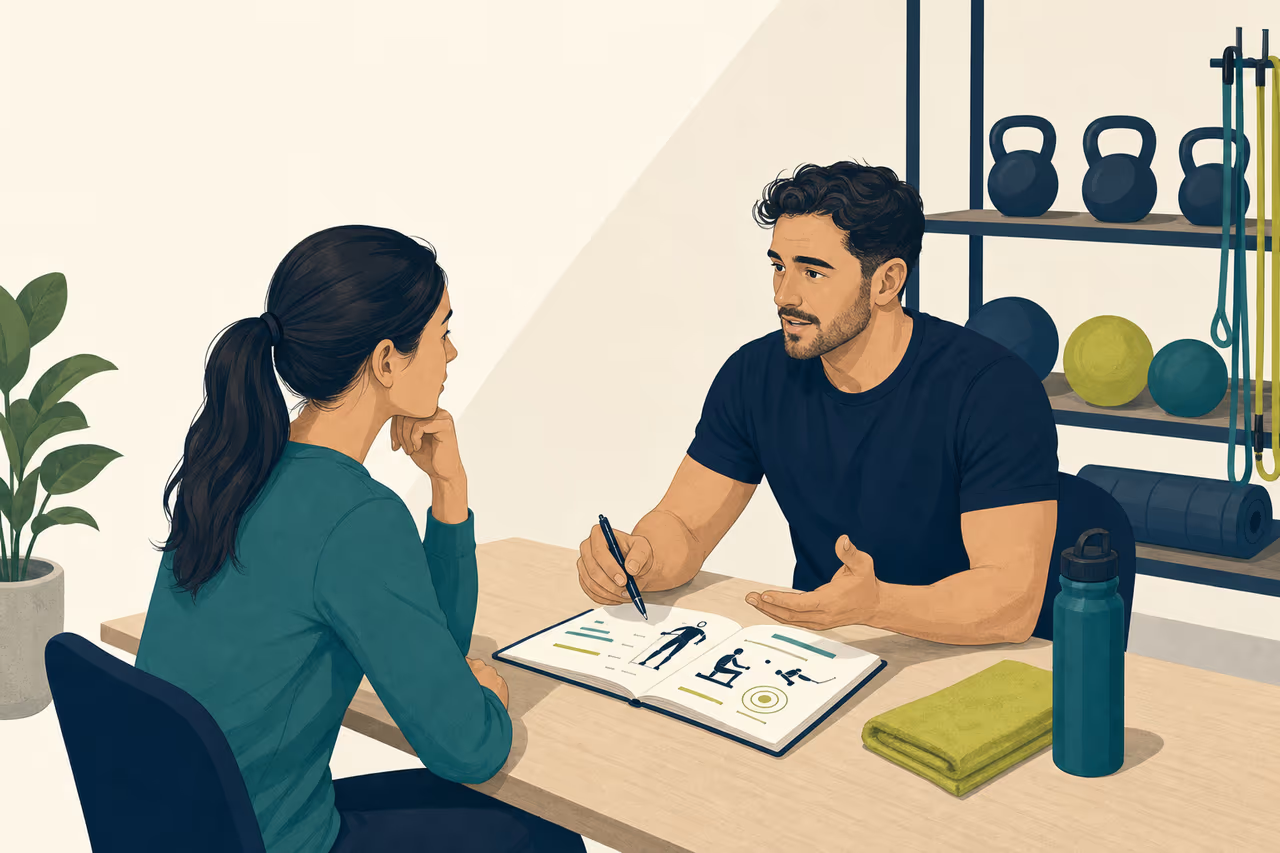
- Communication Style: Does the trainer listen more than they talk? A good coach asks questions about your history, your current energy levels, and your preferences. If a trainer immediately dictates a rigid, high-intensity routine without asking about your background, it may be a sign that they prioritize their own methodology over your individual needs.
- Approach to Progression: Ask how they plan to advance your routine. A sustainable approach involves gradual, measurable increases in difficulty, rather than jumping into high-intensity sessions immediately.
- Transparency: A professional trainer will be honest about what they can and cannot do. If you have specific medical or clinical needs, they should be willing to coordinate with your healthcare provider or refer you to a specialist.
Evaluating the fit
The initial consultation lets you assess rapport. Do not feel pressured to commit to a long-term package after a single meeting. You can treat the first few sessions as a trial period.
Red flags to watch out for during an initial consultation:
- Dismissiveness: If a trainer brushes off your concerns about pain or discomfort, or insists that "no pain, no gain" is the only path to progress, look elsewhere.
- Lack of Personalization: If the trainer uses the exact same program for every client regardless of their goals or history, they are not providing true personal training.
- Over-promising: Be wary of anyone who guarantees specific physical outcomes, rapid transformation, or injury prevention. No trainer can guarantee these results, as individual responses to training vary significantly.
If a trainer proves to be a poor fit, ending the relationship after a trial period is completely fine. Your goal is to find someone who listens to your feedback rather than dictates your routine.
The trade-offs of professional coaching
Working with a trainer requires a financial and time commitment that may not suit everyone. Remember that while a trainer provides guidance, responsibility for consistency, recovery, and daily movement habits remains yours.
If you are just starting out, Strength & Functional Fitness resources may suffice for your current needs. Transitioning to a trainer is a step to consider when you are ready to invest in specific, guided progression.
Trainer Consultation Checklist
Use this reflection guide to prepare for your search and your initial meetings with potential trainers:
- Define your primary goal: Be specific (e.g., "I want to improve my squat mobility," or "I want to safely build upper body strength").
- Ask about their experience: Inquire if they have worked with clients who have similar goals or physical backgrounds.
- Inquire about methodology: Ask how they approach progression and recovery. A good trainer will emphasize rest as much as work.
- Confirm logistics: Ensure their availability, location, and communication style align with your life.
- Schedule a trial: Request a single session to assess if you feel comfortable and heard during the practice.
Choosing a trainer is a personal decision. Focusing on clear communication and sustainable movement helps you find a partner to build a lasting practice.
Sources
- Physical activity (opens in a new tab), World Health Organization.
- Top 10 Things to Know About the Physical Activity Guidelines (opens in a new tab), Office of Disease Prevention and Health Promotion.
Watch alongside this guide
High-intensity functional training explained
This ACE overview shows how functional training is framed so you can compare it with the article's safer progression advice. Source: ACE Fitness. This optional video is context, not evidence or personal instruction.
The YouTube player stays unloaded until you choose to watch. Loading it connects to YouTube and may allow that service to process usage data.