How to Check Whether Household Furniture Is Stable Enough for Support
Test your household furniture for grip, frame rigidity, and tipping points before using it for movement support during exercise.
https://primetempr.com/blog/how-to-check-whether-household-furniture-is-stable-enough-fo
Using a household chair, bed frame, or table for balance or movement support requires a quick physical check of its grip, frame rigidity, and tipping point to prevent unexpected slips. Many adults living in small or shared homes turn to everyday furniture when seeking useful movement without jumping, expensive equipment, or a dedicated room. Because household items are designed for sitting or storage rather than lateral exercise loads, support must always be gentle and distributed.
Checking every piece of furniture adds a minute of setup time before every session, but it protects against common failure modes. For instance, assuming a heavy-looking wooden chair is stable without checking if its legs are loose can lead to sudden shifts. Similarly, placing wheels or caster-mounted furniture on a slick floor for balance creates an immediate slip hazard, while leaning sideways into a lightweight side table designed only for vertical loads can cause a tip.
Why furniture stability matters in small-space movement
Any amount of physical activity is better than none, all activity counts, and muscle strengthening benefits everyone. Adults can work toward 150 to 300 weekly minutes of moderate aerobic activity and muscle strengthening on at least two days. When fitting this movement into a modest room or shared apartment, reliable support helps maintain steadiness without needing heavy gym gear. Taking a moment to verify your setup ensures that your practice remains safe and uninterrupted.
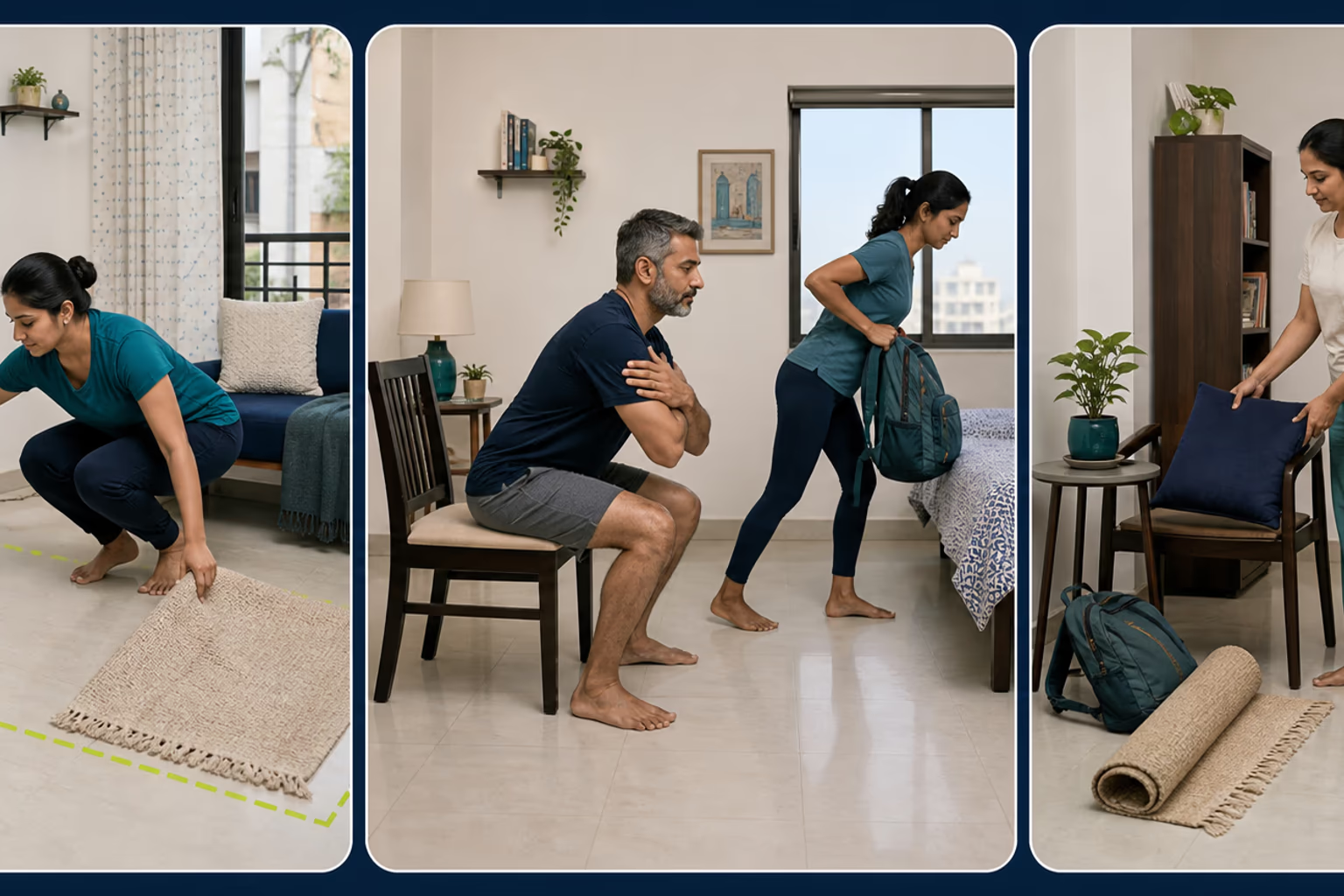
The three-step stability test for chairs and tables
To determine whether a dining chair, stool, or table is ready for support, apply a systematic physical check before you begin moving.
- Check leg joints and screws for any lateral wiggle or looseness. Grab the backrest or edges and test if the frame shifts.
- Test floor friction by applying a firm sideways push on a non-slip or tiled surface to ensure the feet do not slide.
- Verify that downward pressure on the edge does not cause the opposite side to lift.
Household furniture is designed for sitting or storage, not lateral exercise loads, so support must always be gentle and distributed. If you want to explore more structured options, you can read about How to Use a Sturdy Chair in a Small Space Routine or browse broader ideas in Small-Space Home Exercise.
Common household furniture red flags
Certain items should always be avoided for balance support. Watch out for caster wheels that roll freely on smooth tile or wooden floors, uneven leg lengths that cause rocking, and hollow composite wood frames that can crack under uneven sideways pressure. If an item relies on folding latches that click loosely, skip it in favor of a heavier, solid-wood piece.
Safe alternatives when furniture is not reliable
If household furniture wobbles or lacks secure grip, move your practice to a bare wall corner, place a non-slip mat underneath, or connect with a trainer for prop-light alternatives. Prime Tempr helps home exercisers find trainers who offer online sessions, prop-light programmes and realistic modifications for the space they actually have. You can also Find a home-practice trainer to guide your sessions safely.
Three-Step furniture stability check
Use this checklist before every movement session that involves household props.
- Check leg joints and screws for any lateral wiggle or looseness.
- Test floor friction by applying a firm sideways push on a non-slip or tiled surface.
- Verify that downward pressure on the edge does not cause the opposite side to lift.
Follow-along reflection
Use the prompts below to review the idea in context, without turning it into a diagnosis or a fixed rule.
Trade-offs to keep in view
- Checking every piece of furniture adds a minute of setup time before every session.
Questions to carry forward
- How can I test if a dining chair or stool will slide on a tiled floor?
- Which household furniture items are safest for gentle balance support?
- How much downward or sideways pressure should I apply during a stability check?
- What are the warning signs that a piece of furniture is unsafe for exercise?
- What can I do if my home has no heavy, immobile furniture to use?
Sources
- World Health Organization, Physical Activity. https://www.who.int/news-room/fact-sheets/detail/physical-activity (opens in a new tab)
- Office of Disease Prevention and Health Promotion, Top 10 Things to Know About the Physical Activity Guidelines. https://odphp.health.gov/our-work/nutrition-physical-activity/physical-activity-guidelines/current-guidelines/top-10-things-know (opens in a new tab)
- Physical activity (opens in a new tab)
- Top 10 Things to Know About the Physical Activity Guidelines (opens in a new tab)
Watch alongside this guide
Yoga for complete beginners
This complete beginner session shows how a guided practice can fit into one mat-sized area. Pause freely, use stable support and skip movements that do not suit the room or body.
The YouTube player stays unloaded until you choose to watch. Loading it connects to YouTube and may allow that service to process usage data.