How to Build a Weekly Yoga Schedule That Actually Lasts
Learn how to build a sustainable weekly yoga schedule that balances flexibility, strength, and real life without relying on burnout streaks or rigid discipline.
https://primetempr.com/blog/how-to-build-a-weekly-yoga-schedule-that-actually-lasts
Building a sustainable weekly yoga schedule starts with letting go of the all-or-nothing mindset. Many practitioners stumble because they aim for an aggressive, daily 60-minute streak, only to quit entirely after missing three days. A sustainable weekly yoga schedule relies on flexible pacing and mixing varied movement rather than chasing rigid streaks or punishing daily intensity.
Any amount of physical activity is better than none, all activity counts, and muscle strengthening benefits everyone. When you design a routine that accommodates low-energy weeks, shifting work hours, and unexpected rest days, you create a foundation that lasts.
Why rigid yoga streaks fail
When you treat yoga as an unbroken daily obligation, missing a single session can feel like complete failure. This perfectionist approach creates a heavy psychological barrier. If you miss Tuesday and Wednesday, the temptation is to abandon the rest of the week entirely rather than simply resuming on Thursday.
Another common failure mode is treating all yoga styles as equal intensity. Power flows, restorative classes, and alignment-based holds place entirely different demands on your nervous system and joints. Scheduling intense, strength-heavy practices every single day often leads to physical fatigue or under-recovery, which stalls progress just as fast as skipping practice altogether.
Accepting flexibility means acknowledging that your schedule will bend around your life. A durable routine adapts to your energy levels, sleep quality, and time constraints rather than demanding absolute conformity.
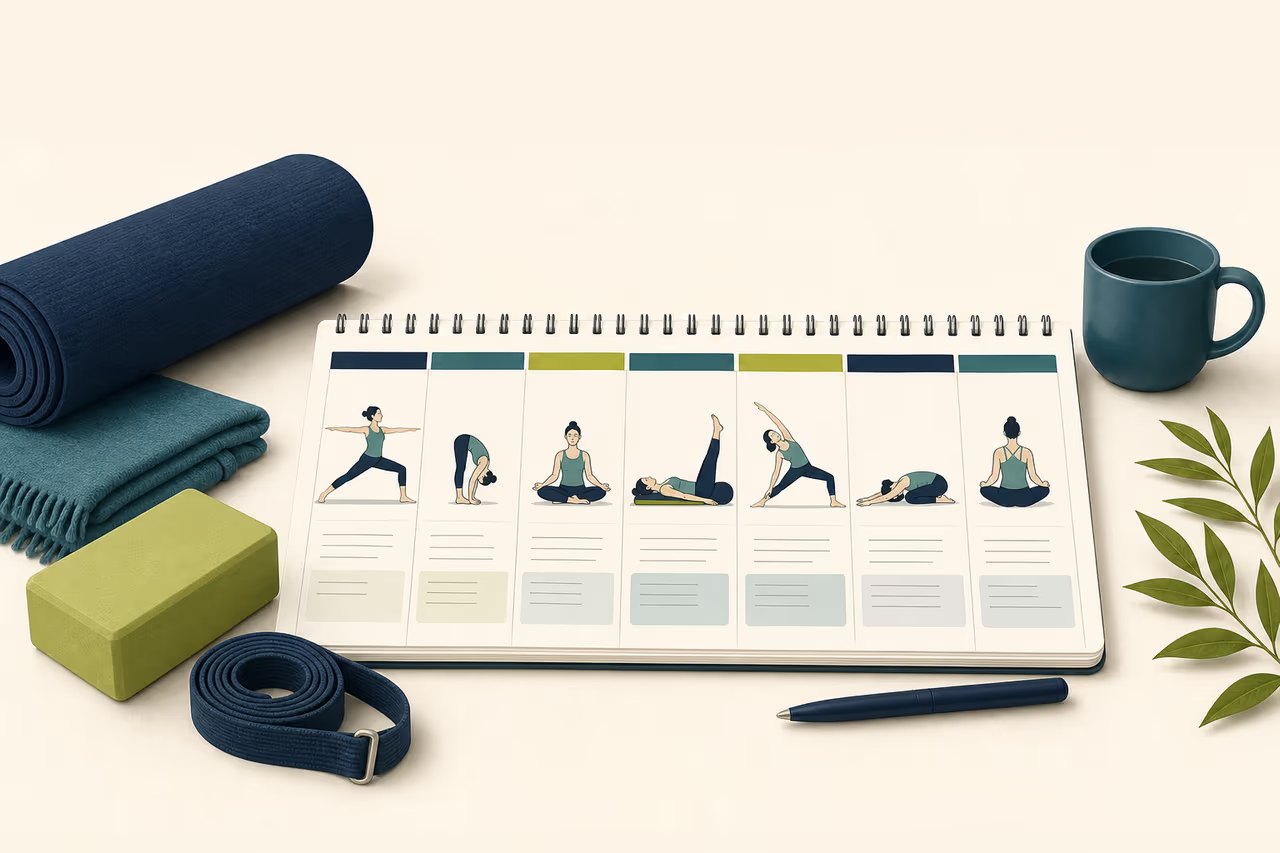
Structuring your week: volume and strengthening
Adults can work toward 150 to 300 weekly minutes of moderate aerobic activity and muscle strengthening on at least two days. Integrating yoga into this framework requires looking at how different classes serve your overall health and mobility.
To build a balanced week, combine active, strength-building practices with lighter movement days. You do not need to do advanced balances or long flows every day to see progress.
| Day Type | Primary Focus | Example Activity |
|---|---|---|
| Anchor Days | Muscle strengthening and structured mobility | 30 to 45 minutes of active, alignment-focused yoga or bodyweight conditioning |
| Active Recovery | Gentle movement and mobility | Walking, restorative stretching, or a short breathwork-focused session |
| Minimum Viable Days | Low friction maintenance | A 10-minute movement sequence to keep the habit active |
Balancing strength and aerobic activity ensures your weekly schedule supports longevity and joint health without overloading your tissues.
The minimum, normal, and return paths
Life inevitably interrupts the best-laid plans. Having pre-defined scaling options keeps a missed workout from turning into a weeks-long hiatus.
- The Normal Path: Your standard weekly plan, featuring two to three anchor days of structured yoga alongside walking or other physical activity.
- The Minimum Viable Path: When you are short on time or energy, drop back to a 10-minute session or a single gentle movement day. Any movement counts, and maintaining the habit loop matters more than duration.
- The Return Path: If you miss an entire week, restart immediately at the minimum viable version. Do not attempt to "make up" for missed time by doubling your duration, as this often triggers physical strain or renewed burnout.
Your weekly schedule blueprint
- Pick 2 to 3 anchor days for structured yoga or muscle-strengthening sessions.
- Incorporate light movement or walking on remaining days so all activity counts.
- Define a 10-minute minimum viable version for low-energy weeks.
- Identify when self-guided pacing stalls and consider exploring trainer-led support.
When self-guided practice is not enough
Self-directed scheduling offers complete flexibility, but it lacks external accountability, which can cause consistency to drift over time. You might find that practicing alone leads to plateaued motivation, repetitive movement patterns, or uncertainty about your alignment.
When your self-guided routine stops being enough to keep you engaged or progressing, external structure makes a significant difference. Prime Tempr helps readers find a trainer, studio or trainer-shared programme that can add structure and accountability after a self-directed routine stops being enough. Exploring trainer-led classes or personalized programs can help you refine your practice, deepen your understanding, and reconnect with a supportive community. You can Find ongoing practice support to match your current goals and schedule.
Sources
- Physical activity (opens in a new tab), World Health Organization
- Top 10 Things to Know About the Physical Activity Guidelines (opens in a new tab), Office of Disease Prevention and Health Promotion
Watch alongside this guide
A 22-minute home yoga practice
Use the session as a realistic practice option while testing the article's advice on consistency and manageable scope. Source: Yoga With Adriene. This optional video is context, not evidence or personal instruction.
The YouTube player stays unloaded until you choose to watch. Loading it connects to YouTube and may allow that service to process usage data.