How to Build a Routine Around School Drop-Off and Pickup
Build a realistic wellness routine around school runs using small anchored versions that survive daily traffic and family chaos.
https://primetempr.com/blog/how-to-build-a-routine-around-school-drop-off-and-pickup
School drop-offs and pickups create temporal bookends that easily swallow personal movement or wind-down time, leaving parents feeling constantly rushed and inconsistent. If you have ever tried to maintain a rigid forty-five-minute morning yoga session, only to abandon it the first time traffic crawls or a child forgets their lunch bag, you know the frustration. Rigid plans break under real-world friction.
A sustainable wellness routine around school runs does not require waking at dawn or an hour of uninterrupted silence. Instead, it relies on small, non-negotiable minimum versions anchored directly to the drop-off or pickup window.
Why school runs break traditional wellness routines
Traditional wellness advice often assumes an empty calendar, quiet rooms, and predictable mornings. For most adults juggling household duties, desk jobs, and school transport, those conditions are rare. Mornings move fast. You manage breakfast, clothing checks, and departure times, leaving zero margin for a leisurely sequence.
When your entire wellness plan depends on one perfect time slot, any delay ruins the day. If you miss that single window, the internal narrative shifts from flexibility to failure. You skip the rest of the week because the streak is broken.
The solution is not trying harder or waking up earlier. The solution is redesigning your expectations around how time actually works during family transitions.
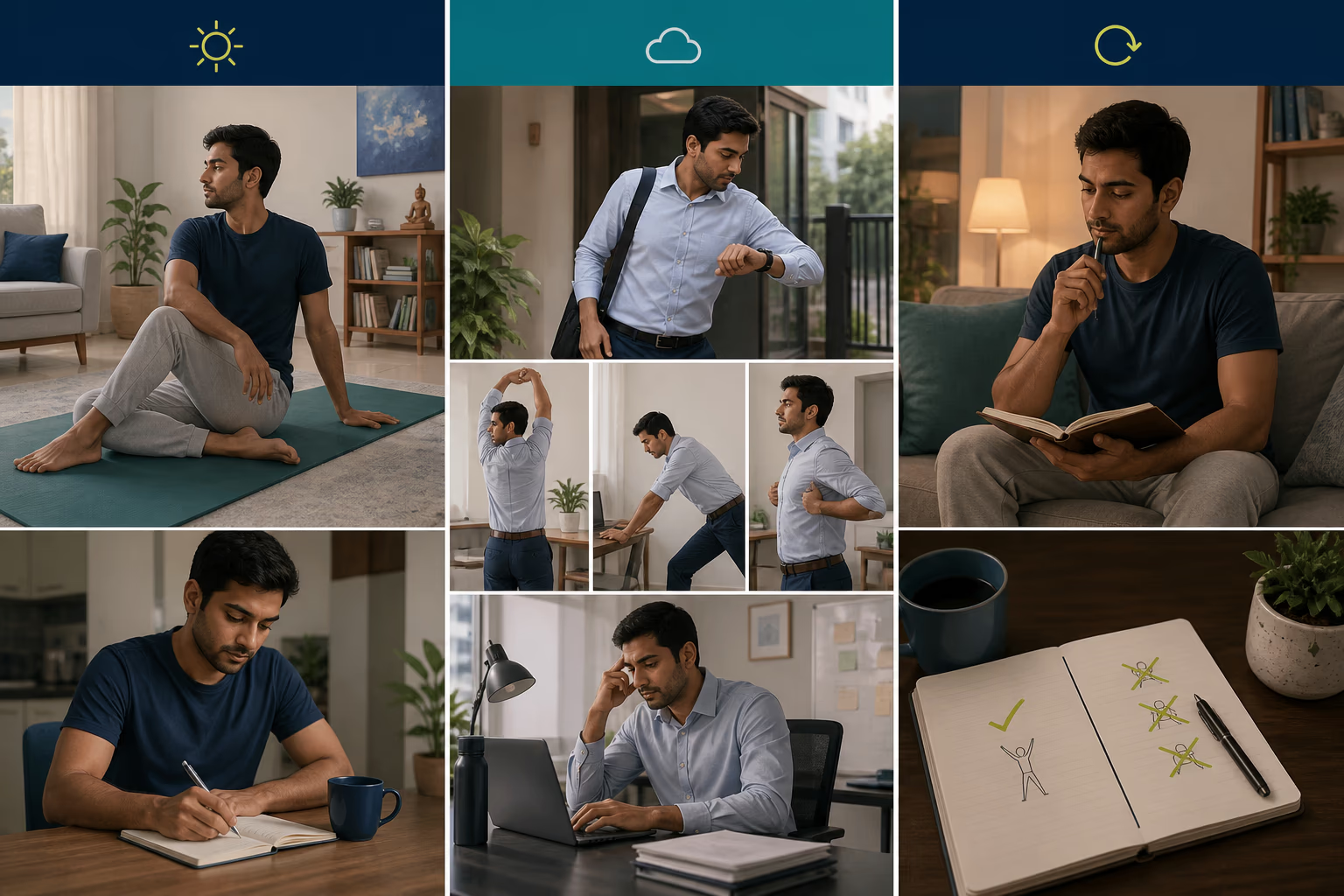
Designing your minimum and normal versions
To build resilience against a busy schedule, split your practice into two clear tiers: a normal version for steady days and a minimum version for chaotic days.
The normal version might be a twenty-minute movement flow or a guided breathing session when time allows. The minimum version is a three-minute anchor that requires zero equipment and minimal floor space. It can be done in your living room before you walk out the door, or quietly in a parked car while waiting for school gates to open.
Relaxation approaches include breathing, guided imagery and progressive relaxation; they should not replace conventional care. When time is tight, a few slow breaths with an extended exhale act as a physiological reset. They lower your heart rate and shift your nervous system out of high gear, even if you never roll out a full mat.
| Routine Tier | Time Commitment | When to Use | What It Involves |
|---|---|---|---|
| Normal Version | 15 to 30 minutes | Calm mornings with open schedule | Full movement flow or guided practice |
| Minimum Version | 3 minutes | Heavy traffic days, late nights, or rushed mornings | Simple seated breathing or targeted mobility stretches |
When the normal routine fails due to school delays or family needs, drop back to the three-minute minimum version or a calm breathing reset rather than abandoning the habit entirely. Frequency matters more than duration when building long-term consistency.
Using Prime Tempr to flex around your day
Shorter, anchored routines mean trading long uninterrupted sessions for frequency and realistic consistency. Prime Tempr lets readers save short practices and compare trainer schedules so a routine can flex around real days instead of depending on one perfect time slot.
Instead of searching for a random video every time you have a spare ten minutes, you can open your saved library and select a practice that matches the exact window you have available today. If your afternoon pickup is delayed by thirty minutes, or if a morning meeting shifts, you can check available trainer-led sessions or execute your saved fallback routine without second-guessing.
The school-run routine anchor checklist
To put these principles into practice without adding mental clutter, use this step-by-step checklist to set up your schedule:
- Identify your fixed school drop-off or pickup time window.
- Choose a minimum three-minute practice version that requires no equipment.
- Save your preferred short practice or trainer session using Prime Tempr.
- Accept a flexible fallback plan for days when traffic or morning chaos disrupts the schedule.
If you want to explore further, you can Build a realistic routine that adapts to your changing hours, read more about Routines for Busy Days, or test A Three-Minute Version of Your Normal Morning Practice the next time your schedule tightens up unexpectedly.
Follow-along reflection
Use the prompts below to review the idea in context, without turning it into a diagnosis or a fixed rule.
Questions to carry forward
- How do I fit movement around school runs without waking up at five?
- What is the minimum viable version of a routine on chaotic mornings?
- How can I use the car or waiting window effectively?
- What happens when the school schedule changes or traffic delays everything?
- How do I choose a next step without adding another overwhelming habit?
Sources
- Relaxation Techniques: What You Need To Know (opens in a new tab), National Center for Complementary and Integrative Health
- Heart-Healthy Living: Get Enough Good-Quality Sleep (opens in a new tab)
Watch alongside this guide
A flexible home yoga practice
This optional home session helps readers see how a complete practice can be scaled to the time and energy available rather than treated as a compulsory daily target.
The YouTube player stays unloaded until you choose to watch. Loading it connects to YouTube and may allow that service to process usage data.