How to Ask for Space and Support in a Busy Yoga Class
Use this simple, respectful script to advocate for your physical needs and ensure a safe, comfortable practice.
https://primetempr.com/blog/how-to-ask-for-space-and-support-in-a-busy-yoga-class
If you feel crowded or unsupported in a busy yoga class, you can address it directly by arriving five minutes early to speak with your instructor. A clear, respectful script for a teacher is: "I have [specific need], could you please help me find a modification or a spot where I have enough room?"
This approach moves the conversation away from a public disruption and into a private, professional exchange. By stating your need clearly before the class begins, you allow the teacher to provide guidance without the pressure of the entire room watching.
Why speaking up is part of the practice
Advocating for your own safety and comfort is a standard part of a responsible yoga practice. Yoga is a diverse living Indian tradition transmitted through teachers, communities, institutions, texts, and modern media. Because these traditions and styles vary, so do the physical demands placed on your body.
Qualified instruction and appropriate modification can reduce avoidable risk. When you ask for a modification or more space, you are not being a nuisance. You are taking ownership of your physical boundaries. If a studio is packed to capacity, requesting a spot with more room for your arms or legs is a matter of safety, not preference. It prevents accidental contact with other students and allows you to move through postures with the intended range of motion.
When the script isn't enough
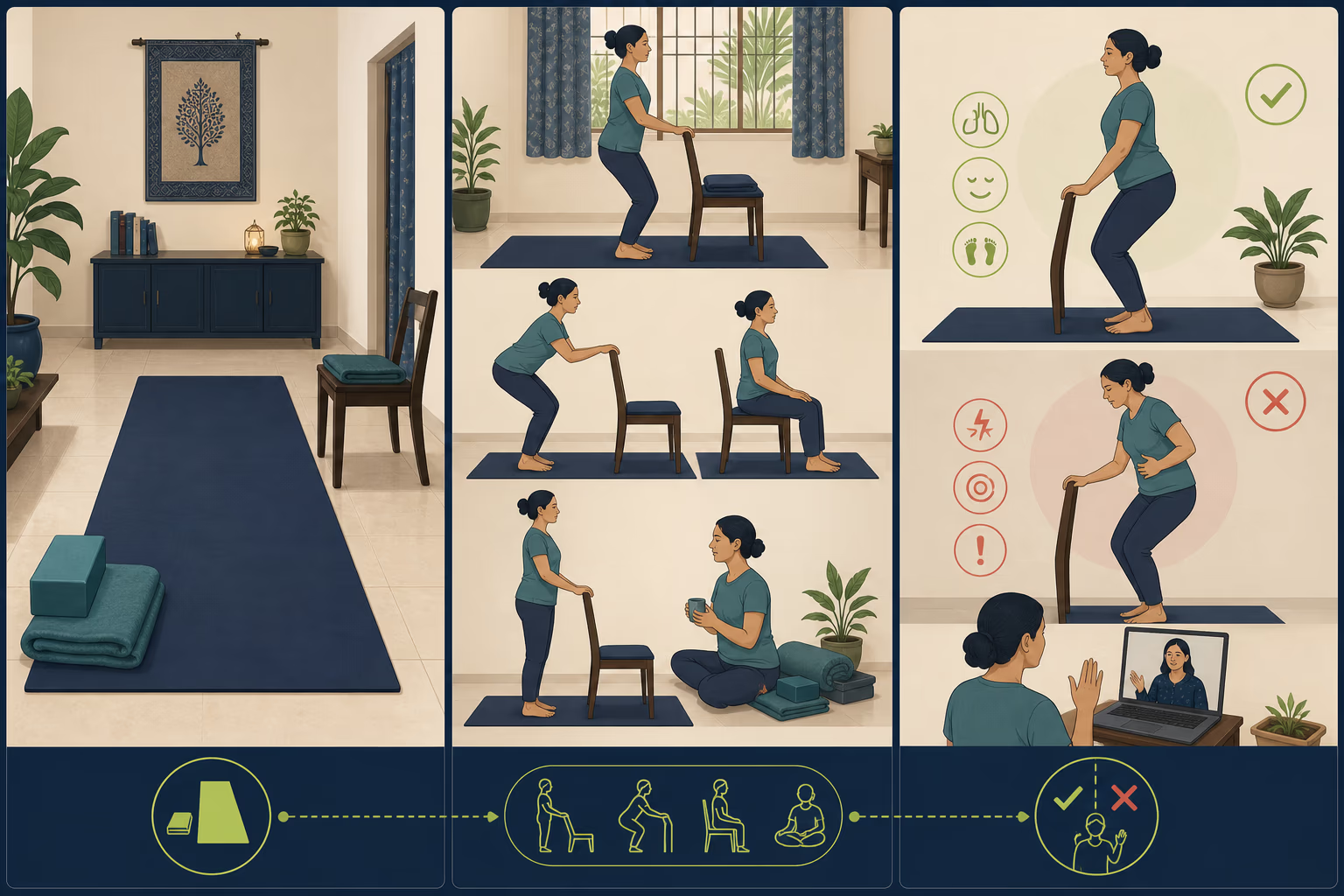
While a clear script helps in many situations, Be sure to recognize its limitations. A script cannot fix a studio that is fundamentally overcrowded or a teacher who is not trained to offer modifications.
If you use the script and the teacher remains dismissive, suggests that you simply "push through" pain, or refuses to help you find a safer way to practice, you have reached a clear signal to move on. Your safety is more important than the convenience of staying in a specific class.
If you find that your needs are consistently unmet, it may be time to seek a different class or a teacher who prioritizes individual student needs. Prime Tempr helps beginners compare teacher profiles, nearby studios, and online offerings so a general article can lead to responsive instruction when needed. Finding an instructor who understands your specific constraints,whether they involve a desk job, limited home space, or a need for more personal attention,is the best way to ensure your practice remains sustainable and safe.
Your pre-class communication checklist
Use this reflection tool to prepare for your next session. It is designed to help you identify your needs and assess whether your current environment supports them.
- Identify your primary need: Be specific. Do you need more physical space for your arms during standing poses? Do you have a recurring tightness in your lower back that requires a modified version of a forward fold? Write this down before you leave for class.
- Choose your moment: Aim to arrive at the studio five minutes early. This is the optimal window to speak to the teacher privately before they are occupied with the start of the session.
- Use the script: Approach the teacher calmly and say: "I have [specific need], could you please help me find a modification or a spot where I have enough room?"
- Assess the response: Did the teacher listen and offer a solution? A helpful teacher will either adjust your mat placement or provide a clear, safe alternative for the poses that challenge you. If the teacher dismisses your request or seems unable to accommodate basic safety needs, consider this a data point for your future planning.
Managing the trade-offs
It is natural to feel uncomfortable when you first start speaking up. You might worry about drawing attention to yourself or moving your mat in a crowded room. These feelings are common, especially when you are new to a studio environment.
However, remember that most teachers prefer to know about your needs beforehand. It allows them to keep an eye on you during the session and provide cues that actually help you, rather than generic instructions that might not fit your body. If you feel exposed or unsure about how to navigate these social dynamics, read more about feeling exposed in yoga and how to reclaim your practice.
By being proactive, you shift the dynamic from one of passive frustration to one of active participation. You are not just a body in a room; you are a student engaging with a tradition that should serve your health and well-being. If the environment does not allow for that, the most effective recovery is to find a teacher who does.
Sources
Watch alongside this guide
Yoga for complete beginners
This optional beginner session lets readers observe pacing and rest choices in a complete practice. Pause, adapt or stop rather than matching every shape.
The YouTube player stays unloaded until you choose to watch. Loading it connects to YouTube and may allow that service to process usage data.