How Seasons Can Change a Home Yoga Routine (Without Starting Over)
Energy levels and daily schedules fluctuate throughout the year. Learn how to adapt your home yoga routine across the seasons without losing consistency.
https://primetempr.com/blog/how-seasons-can-change-a-home-yoga-routine-without-starting-
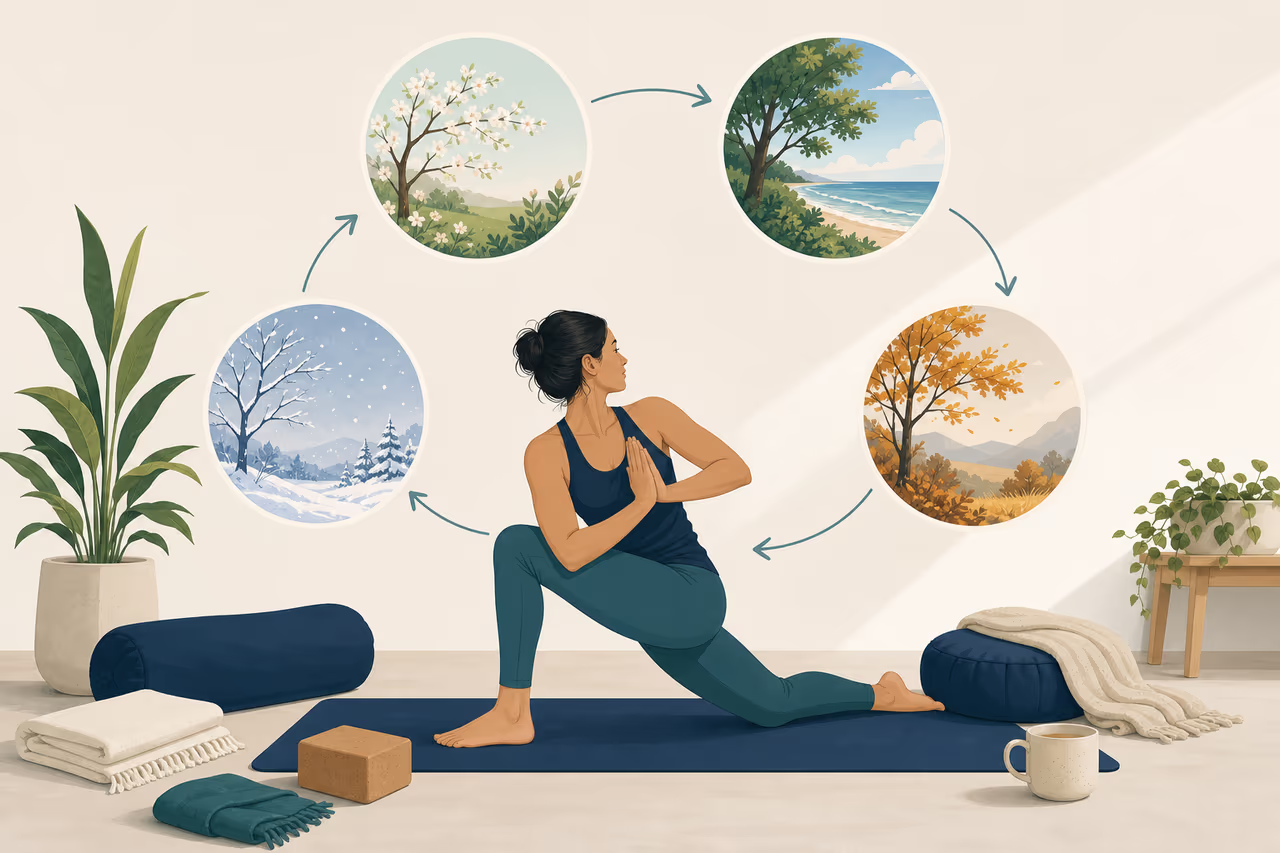
Energy levels, daylight hours, and home environments shift throughout the year, causing rigid self-guided yoga routines to break down as seasons change. When winter darkness arrives or summer schedules pull you outdoors, trying to force the exact same year-round routine often leads to frustration and abandoned habits.
Your home yoga routine should change with the seasons because physical energy and daily schedules naturally fluctuate, and adapting your practice is more sustainable than forcing a rigid year-round routine. Treating seasonal shifts as a normal cue to adapt pace and duration rather than a failure of discipline helps you maintain movement without constantly starting over.
Why Seasonal Shifts Disrupt Home Yoga
When seasons change, your environment, circadian rhythms, and available free time alter your capacity for self-directed discipline. Many practitioners experience a drop in motivation as daylight hours shorten or temperatures shift, translating environmental changes into a harsh internal critique of their willpower.
This disruption is rarely a personal failure. Physical activity guidelines emphasize that any amount of physical activity is better than none, all activity counts, and muscle strengthening benefits everyone. When your environment changes, your practice environment must flex to match your actual capacity rather than holding fast to an arbitrary summer peak or winter ideal.
| Season Type | Common Environmental Shift | Typical Impact on Practice | Sustainable Response |
|---|---|---|---|
| Darker/Colder Months | Shorter daylight, lower morning energy | Reduced motivation for long morning sessions | Shorten duration, prioritize gentle movement |
| Active/Warmer Months | Increased travel, outdoor activities | Fragmented weekly schedule | Integrate shorter sequences, accept irregular pacing |
For more ideas on keeping habits alive through changing schedules, read How to Build a Consistent Home Yoga Practice Without Starting Over.
Adjusting Volume and Intensity Without Guilt
A common failure mode is trying to overhaul your entire practice overnight or forcing a high-intensity routine during low-energy months. Instead of abandoning your mat entirely when time or energy runs short, make small, proportionate adjustments.
Adults can work toward 150 to 300 weekly minutes of moderate aerobic activity and muscle strengthening on at least two days. Your yoga practice can contribute to this broader movement goal without requiring hour-long daily sessions.
The Seasonal Scaling Strategy
- Scale Back Duration: On low-energy days, reduce your planned session to a minimal five-to-ten-minute window focusing on basic movement and breathing.
- Simplify the Sequence: You do not need a completely new sequence for every season. Retain two or three familiar, reliable postures that require minimal cognitive effort to set up.
- Accept the Trade-off: Adjusting your routine downward for lower-energy seasons means slower progression in advanced postures, but it preserves overall consistency and habit longevity.
To find a duration that realistically fits your calendar during busy transitions, explore How to Choose the Right Yoga Session Length for Your Schedule.
Seasonal Home Yoga Adjustment Checklist
Before abandoning your routine or forcing an unsustainable volume of practice, run through this practical checklist to recalibrate your home sessions:
- Review your current weekly practice time against changing daylight and energy levels.
- Identify one element to scale back (such as session length or strenuous peak poses) during high-demand or low-energy months.
- Keep at least one simple, reliable sequence that you can complete on your lowest-energy days.
- Decide if self-guided adjustments are enough or if you need to explore trainer-led support.
When Self-Directed Seasonal Adjustments Stop Working
Self-guided practice relies entirely on internal momentum. When life changes, weather shifts, or routines stall repeatedly, solo adjustments may no longer provide the clarity or engagement you need to stay active.
If you find yourself constantly renegotiating your practice down to zero minutes, or if self-direction leaves you feeling unmotivated and isolated, outside structure can bridge the gap. Prime Tempr helps readers find a trainer, studio or trainer-shared programme that can add structure and accountability after a self-directed routine stops being enough. Professional guidance or a community studio class can introduce fresh perspectives, external accountability, and renewed momentum when your home routine needs a stabilizing anchor. You can find ongoing practice support to match your schedule and seasonal needs.
Sources
- Physical activity (opens in a new tab), World Health Organization
- Top 10 Things to Know About the Physical Activity Guidelines (opens in a new tab), Office of Disease Prevention and Health Promotion
Watch alongside this guide
A 22-minute home yoga practice
Use the session as a realistic practice option while testing the article's advice on consistency and manageable scope. Source: Yoga With Adriene. This optional video is context, not evidence or personal instruction.
The YouTube player stays unloaded until you choose to watch. Loading it connects to YouTube and may allow that service to process usage data.