How Mantra Meditation Works: A Practical Guide
Discover how mantra meditation anchors focus through repetitive sound, review the mixed evidence, and start safely with proper context.
https://primetempr.com/blog/how-mantra-meditation-works-a-practical-guide
Mantra meditation uses the repetition of a sound, word, or phrase to anchor attention, but practices vary widely and require realistic expectations rather than treatment promises. Rather than promising instant mystical states or guaranteed psychological breakthroughs, this practice functions as a cognitive anchor designed to help notice and manage a wandering mind.
Understanding what happens during a session, recognizing the inherent trade-offs, and knowing when to look for responsive guidance will help you approach the practice without unnecessary pressure.
What Is Mantra Meditation
Mantra meditation is a focused-attention practice where you repeat a specific word, syllable, or short phrase silently or aloud. The central goal is not to stop all thoughts or achieve a blank mind, but to give your attention a steady focal point. When your mind drifts, which it inevitably will, the mantra is the vehicle that guides your awareness back.
Different traditions use different sounds, but the mechanical function remains similar: replacing a chaotic stream of internal chatter with a single, steady stimulus. This approach shares conceptual roots with other relaxation methods, though it relies specifically on auditory or verbal repetition rather than physical relaxation alone [c2].
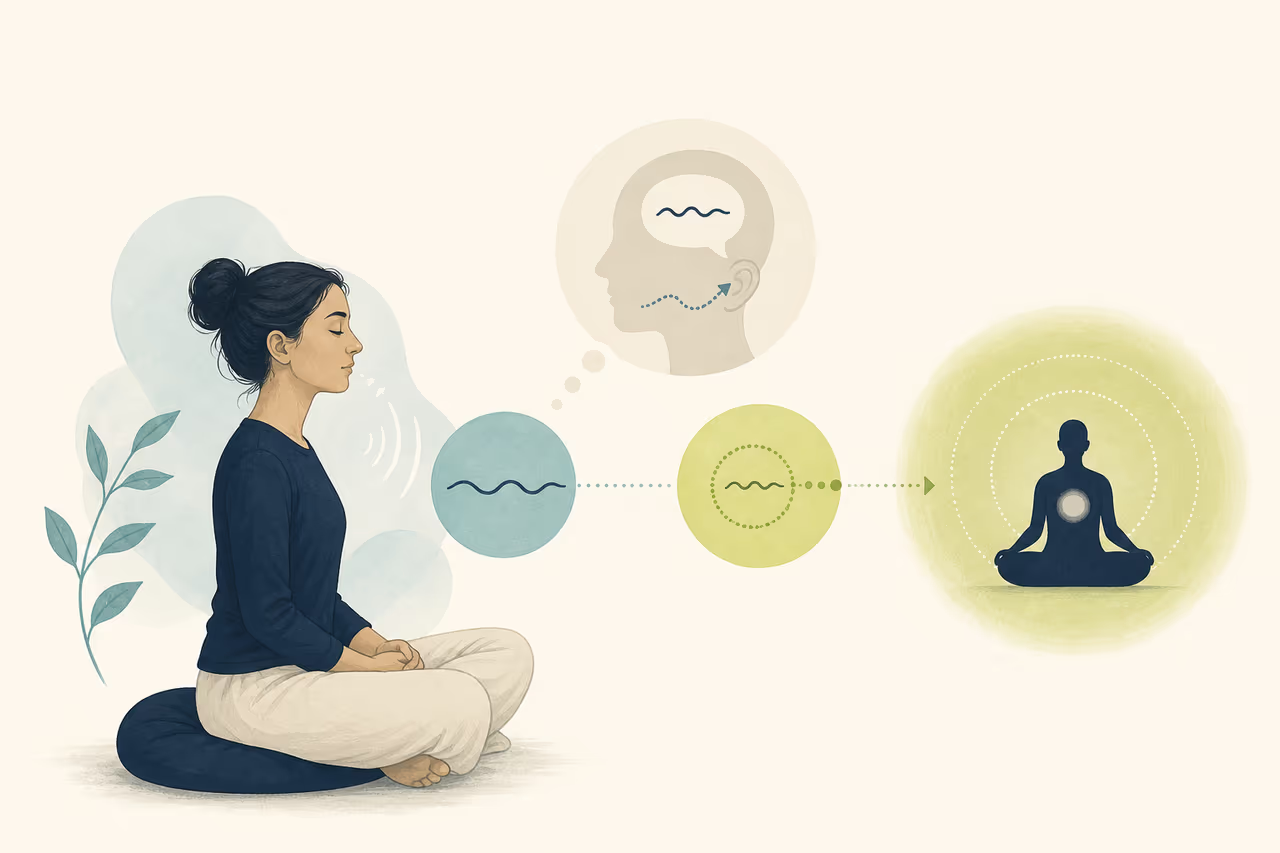
How the Practice Works in Daily Life
In a typical session, you sit in a comfortable, upright posture, close your eyes, and introduce the chosen mantra at a steady, easy rhythm. You match the repetition to your natural breathing pattern or keep a continuous internal cadence.
When you practice, you will likely notice several distinct phases:
- Initial focus: You actively repeat the word or phrase, and your attention stays relatively close to the anchor.
- Distraction: Thoughts about work, daily chores, or random memories drift in, and you temporarily forget the mantra.
- Realization: You notice that your mind has wandered off.
- Return: Without self-judgment, you gently bring your attention back to the repeating sound.
This cycle is the practice itself. Catching the wandering mind and returning to the anchor is how attention is trained over time, rather than expecting uninterrupted concentration from the start.
Practical Trade-offs and Limitations
While many people find value in focused sound repetition, Be sure to look at the practice objectively. Meditation practices vary significantly, and the scientific evidence for specific outcomes is mixed by design, population, and technique [c1]. A minority of participants report negative or challenging experiences during meditation, such as increased anxiety, uncomfortable emotional releases, or heightened self-critical focus [c1]. If sitting quietly with your thoughts brings up distress rather than calm, it is entirely reasonable to pause, adjust your approach, or stop altogether. Meditation is not a universal remedy, and relaxation approaches should not replace conventional medical or psychological care [c2].
| Aspect | Realistic Expectation | Common Misconception |
|---|---|---|
| Mind Activity | The mind wanders, and you gently return to the anchor. | You will instantly achieve a completely blank mind. |
| Outcomes | Mixed evidence; varies widely by individual [c1]. | Guaranteed stress relief or psychological transformation. |
| Role in Health | A complementary wellbeing tool. | A replacement for professional medical or mental health care [c2]. |
When to Seek Qualified Guidance
Self-guided exploration is a common starting point, but it has boundaries. If you find that silent repetition leaves you feeling ungrounded, anxious, or frustrated by a rigid adherence to rules, you do not need to push through the discomfort.
Working with an experienced professional can help you contextualize your practice. Prime Tempr helps readers find trainers who can explain breathing and meditation in context, so an introductory article becomes a starting point rather than a substitute for responsive guidance. A qualified teacher can help you adjust your posture, shorten your sessions, or explore alternative modalities like walking meditation or breath awareness if mantra repetition is not a good fit for your current state.
Mantra Meditation Practice Reflection
Before deciding how to incorporate sound-based focus into your routine, you can walk through this simple reflection framework:
- Choose a simple word, sound, or phrase to work with for a short session.
- Set a comfortable posture where you can remain alert yet relaxed.
- Notice when your mind wanders without judging yourself, and gently return to the chosen anchor.
- Observe how you feel afterward and stop if you experience undue mental strain.
- Consider exploring trainer-led support if you want personalized context.
To explore further options for your practice, you can look into How to Start Meditating for Beginners: A Practical Guide, browse the broader Breathwork & Meditation resource hub, or Find guided breath and meditation support to connect with knowledgeable teachers.
Sources
Watch alongside this guide
Breathing meditation
This short guided meditation lets you follow the basic attention and breathing ideas described in the article. Source: UCLA Health. This optional video is context, not evidence or personal instruction.
The YouTube player stays unloaded until you choose to watch. Loading it connects to YouTube and may allow that service to process usage data.